Shut out of PG syllabus review, says Delhi University history faculty, writes to Vice-Chancellor
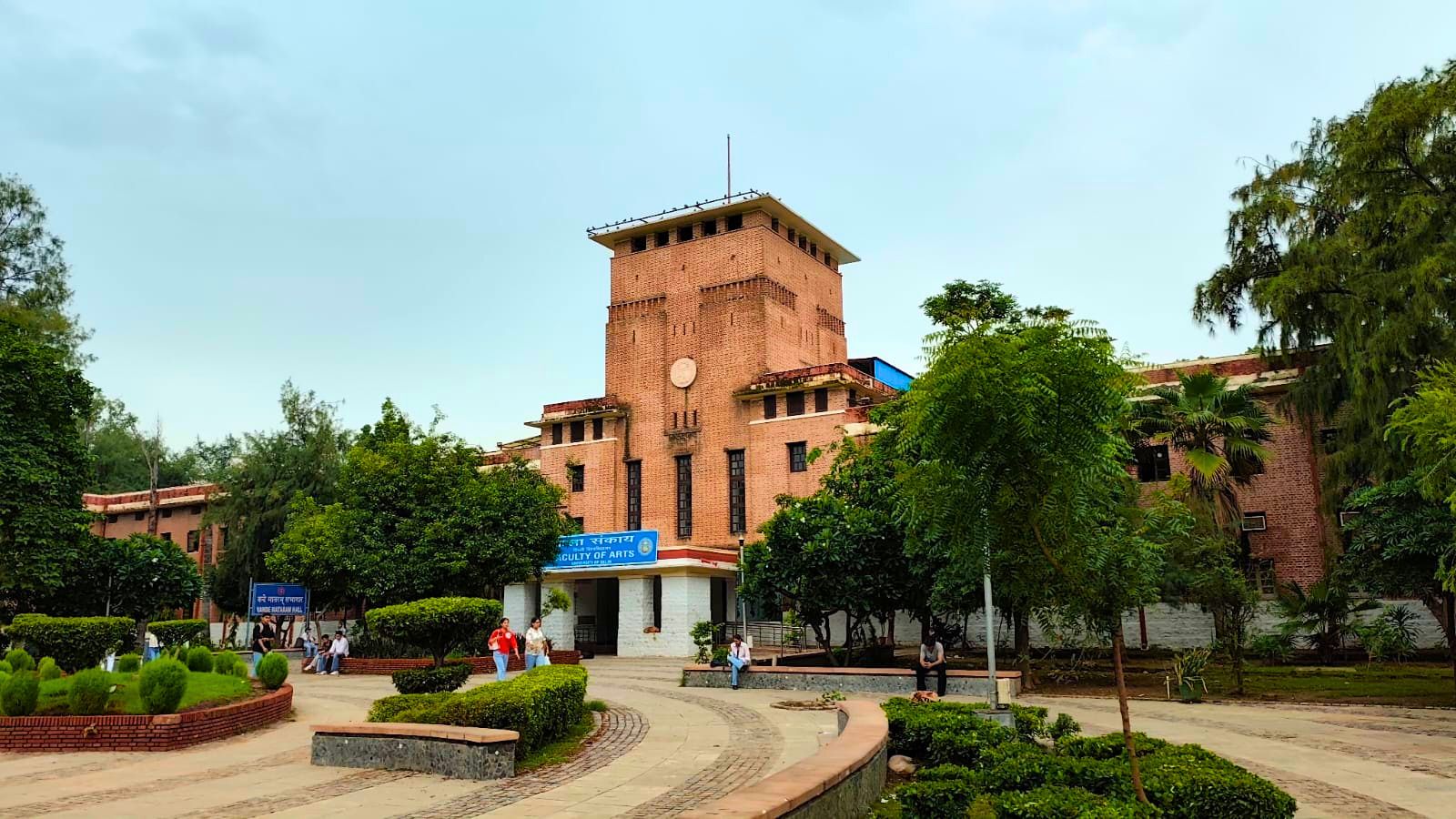
The Department of History of Delhi University has questioned the functioning of an Expert Committee constituted by the Vice-Chancellor to review its Post Graduate third-semester syllabus, claiming that the head of the department, who is a member of the panel, was being kept out of final decisions. It has also disputed some of the changes recommended by the Expert Committee, including that a paper taught for over a decade be dropped as it was “ideologically loaded”.
According to the minutes of a Department Council meeting held on September 10 and accessed by The Indian Express, HoD Anirudh Deshpande told the faculty of the History Department that he was “not being made a party to final decisions” regarding the syllabus review. The council subsequently “expressed dismay at the composition of the Expert Committee” and asked Deshpande to convey its concerns to Vice-Chancellor Yogesh Singh.
On October 9, Deshpande wrote to the V-C on behalf of the department, placing on record concerns raised by the faculty over the composition, functioning and recommendations of the Expert Committee.
Both Expert Committee Chairperson Shriprakash Singh and Deshpande refused to comment on the matter when contacted.
The History Department’s objections come against the backdrop of wider concerns over changes to syllabi of various courses at DU under the National Education Policy (NEP) 2020. The Indian Express reported in August that several history papers taught at the university for decades, including ‘The Delhi Sultanate: Structures of Authority in Medieval North India (13th-14th Centuries)’, did not feature in the revised PG syllabus.
The October 9 letter pointed to the number of PG papers still awaiting notification. “Almost half of our DSE (Discipline Specific Elective) papers in the Semester III syllabus are yet to be notified,” the letter said. These include papers on the history of caste, gender, labour and the Northeast.
The letter sought an early meeting with the V-C for discussion on issues “affecting the working of the department”. The Indian Express reached out to V-C Singh over calls and messages but did not receive a response.
Story continues below this ad
Dr Ankit Agrawal, Assistant Professor of History at PGDAV College and a member of the Expert Committee, denied that Deshpande or the Department’s views had been sidelined. “All papers brought by the History Department were discussed by the Expert Committee, and nothing was rejected out of goodwill and with an intention to make things better. Experts only made suggestions for the department to incorporate… The HoD participated in all the meetings, discussed the papers, and his opinions were taken into account,” Agrawal told The Indian Express.
The university had earlier defended its syllabus review exercise, saying some papers in History had been altered even after they were cleared by DU’s Standing Committee, including changes to course units and reading lists. Dean of Academic Affairs K Ratnabali told The Indian Express then that the Expert Committee for History was constituted by the V-C to examine courses that required further review.
In the October 9 letter to the V-C, Deshpande referred to online meetings held by the Expert Committee on July 30 and August 5, where Chairperson Singh told members to submit written suggestions, to be passed on to the V-C. However, the HoD wrote, the Expert Committee’s final report “does not record the detailed justifications, rationale and arguments presented by (me) in response to the issues raised by committee members”.
The letter also took issue with the academic basis of some of the committee’s observations, describing them as “vague, unsubstantiated and lacking the academic rigour and seriousness usually associated with discussions on course content”. One example cited in the letter was the committee’s recommendation to drop a paper titled ‘History of Education in Colonial India (DSE 31)’.
Story continues below this ad
Deshpande’s letter said the Department Council found the charge that the paper was “ideologically loaded” disturbing. “Even a cursory glance at the range of historians included in the reading list and the course content of DSE 31 proves this charge to be devoid of substance,” the letter said, calling for overturning the recommendation.
‘History of Education in Colonial India’ examines indigenous education, Orientalist-Anglicist debates, Dalit and Adivasi educational experiences, missionaries and reformers, and nationalist alternatives, including Swadeshi education and Nai Talim (an idea proposed by Mahatma Gandhi). As per the letter, the paper had already been “substantially revised to pass muster” with the Standing Committee.
DU Academic Council member Maya John said: “It has now become a practice in DU that due process for syllabi framing is continually compromised. Amendments in papers are often sought at the level of the Standing Committee of Academic Affairs wherein Department Heads are frequently directed to make changes in syllabi like the removal of entire papers vetted by the Departmental Committee of Courses (CoCs) / subject experts and numerous revisions in papers. Notably, any ‘oversight’ committee constituted on issues of syllabi should be constituted via the university’s statutory bodies like the Academic Council, but in the case of the MA History syllabus, it is disturbing to see hand-picked persons constituting the ‘Expert’ or so-called ‘Oversight Committee’… Their recommendations often appear political, and not academic in nature.”
Another Academic Council Member, Monami Sinha, said: “If the university wanted a fully egalitarian view of the history syllabus, space should have been given to faculty members who are already a part of the Academic Council. Instead, the Expert Committee has members who have a background in Political Science and Commerce.”
Story continues below this ad
A member of the Faculty of Social Sciences said changes to DU syllabi for both PG and undergraduate courses are part of “a pattern of courses and papers which were being taught for decades being axed, especially in the Social Sciences”, in line with NEP 2020.
In August 2023, The Indian Express had reported on NEP-linked revisions to DU’s UG History syllabus too, with references to Brahmanisation removed and a paper titled ‘Inequality and Difference’ withdrawn, among other changes.
DU’s syllabus approval process involves several stages: proposed courses are first discussed by the department concerned’s Committee of Courses, and the proposals then sent to the Standing Committee and the Academic Council, the university’s apex academic body. Once approved by the Academic Council, the new syllabus goes to the Executive Council for final approval.
The letter said that before the Expert Committee was set up, papers suggested by the history faculty “were repeatedly not discussed at Standing Committee meetings over three months due to reasons unknown to us”.
Story continues below this ad
The letter further argued that the number of papers notified by the university were insufficient for second-year MA history students, whose cohort includes those enrolled in the one-year PG programme.
Raising concerns about the process for the next semester, the department wants the papers submitted to the DU’s Dean of Academic Affairs to be discussed through the university’s statutory academic bodies rather than be referred to another Expert Committee, without any such discussion. It wants the Semester IV syllabus to be discussed before the semester begins in January 2027.
KioskNews shows a cleaned-up reading view extracted from the publisher’s page — the original always lives on their site, not ours.