As Israel votes, meet the leaders fighting for years to give Indian Jews a voice in Knesset
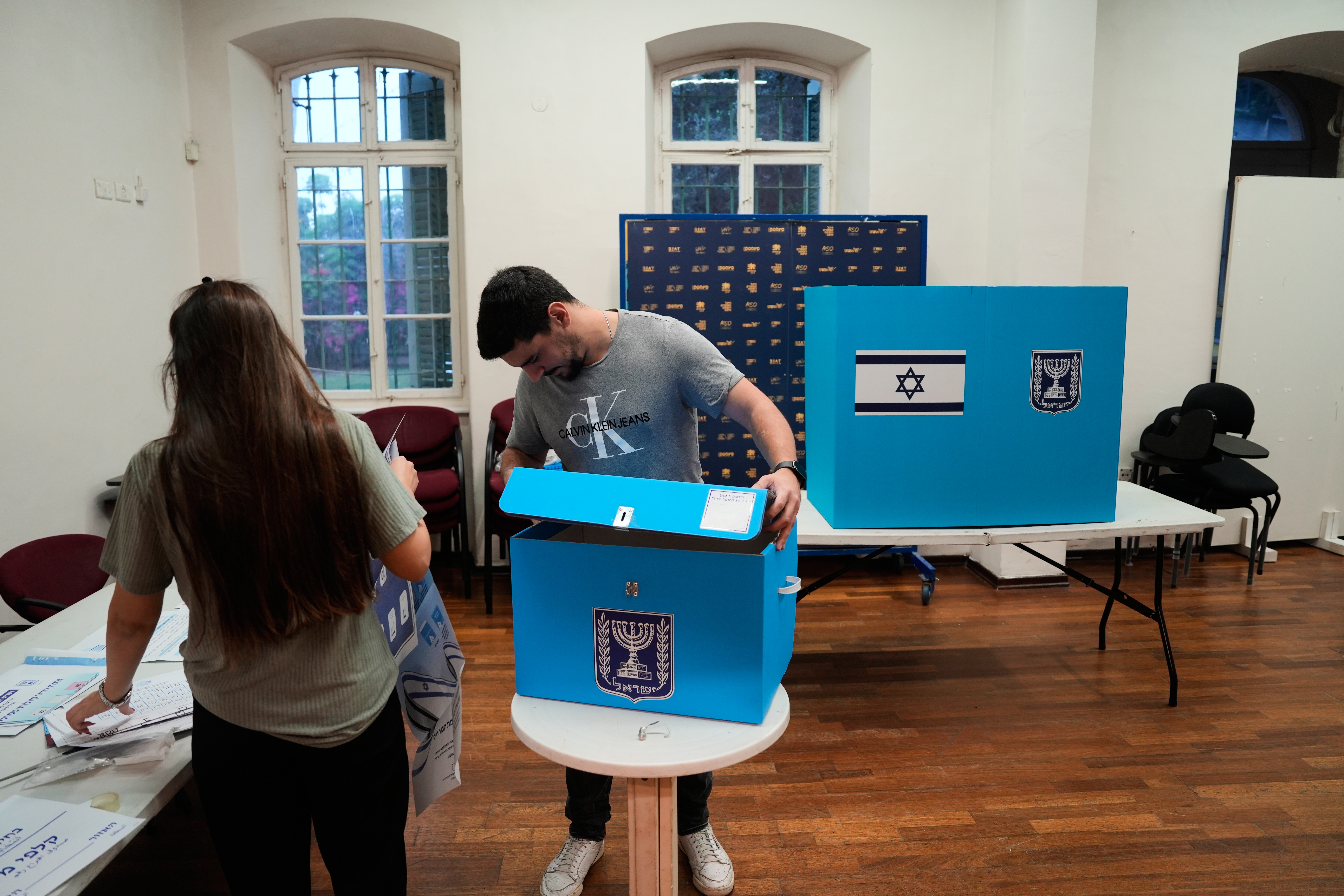
As Israelis voted on Tuesday to elect the 26th Knesset, Yaniv Ashtamker, a community leader from Kiryat Gat, is contesting on the Tzomet Beit Yisrael ticket, seeking to take the concerns of Indian origin Jews into Parliament. He is placed third on the party’s list. His candidature comes four decades after an earlier attempt by the community to win representation by contesting the July 1984 election.
The bid failed, but the question of how the community could translate its presence into national political representation has persisted. Israel Election Results 2026 LIVE Updates
The story begins with the Bene Israel, the largest Indian-origin Jewish community, whose history is centred largely in Maharashtra, particularly the Konkan coast.
After Israel was established in 1948, thousands of Bene Israel migrated from Maharashtra. But their arrival was followed by a dispute over their religious status.
“Almost two thousand Indian Jews marched in the streets of Jerusalem to end the ‘religious fascist rule’ in Israel. During the protest, they said that ‘for two thousand years they lived as loyal Jews in India and only to come to Israel and suffer anti-Semitism at the hands of our brethren,” a research paper by Suraj Rajan Kadanthodu titled Migration, Discrimination and Assimilation in the State of Israel states.
In August 1964, Parliament adopted a resolution affirming that members of the Bene Israel community were Jews in every respect.
National ballot
Dimona in southern Israel, where many Indian Jews settled, became a centre of community activism. According to Kadanthodu’s account in The Times of Israel, Bene Israel activists formed a municipal party, Kiddum Dimona, in 1980 and won a seat on the city council.
Story continues below this ad
Four years later, the movement sought a national platform. The party Shiluv, meaning “integration”, contested the election to the 11th Knesset, seeking to represent Indian Jews independently rather than through established parties.
The party secured 5,499 votes, or 0.3 per cent of the total, falling short of the 1 per cent electoral threshold in force at the time. It won no seats and soon faded.
Indian born MP
Indian born politicians have served in the Knesset through mainstream parties. One was Eli Ben Menachem, born in Bombay in 1947, who moved to Israel with his family in 1949. He served in the Knesset from 1988 to 2006, representing the Alignment, Labour Party and One Israel alliance.
He also held government posts, including deputy minister of Housing and Construction and deputy minister of Industry and Trade, and served as a deputy speaker of the Knesset.
Indian Jews well-integrated
Story continues below this ad
There are approximately 85,000 Jews of Indian origin in Israel, according to the Indian Embassy in Tel Aviv. They include the Bene Israel of Maharashtra, Cochin Jews from Kerala, Baghdadi Jews and more recent immigrants from northeastern India.
Rafi Bhonker, an Indian-origin Israeli, chairs the Indian Jewish Heritage Centre, which represents Jewish communities from India, said the community had generally remained less involved in politics.
“Indian origin Jews in Israel take immense pride in their Indian heritage but they are very well-integrated into Israeli society. This marks first election after the attacks of 7th October and as such, for most Indian origin Jews, like any other Israeli citizen, this is a paramount national issue that will factor in heavily while casting their vote,” said Bhonker.
Revital Moses, who moved to Israel in March 2020, said the community’s small numbers meant parties had not mounted targeted campaigns to reach Indian Jewish voters.
The limits of numbers
Story continues below this ad
Israel’s 120-member Knesset is elected through a nationwide proportional representation system. A party must secure at least 3.25 per cent of the valid vote to enter Parliament.
For a small community, an independent party faces a steep hurdle unless it attracts support beyond its own electorate. Ashtamker’s candidature on a broader party list offers another route to representation, though his place on the list does not by itself guarantee a seat.
KioskNews shows a cleaned-up reading view extracted from the publisher’s page — the original always lives on their site, not ours.