Sanae Takaichi slammed online for praising calligraphy without mentioning China
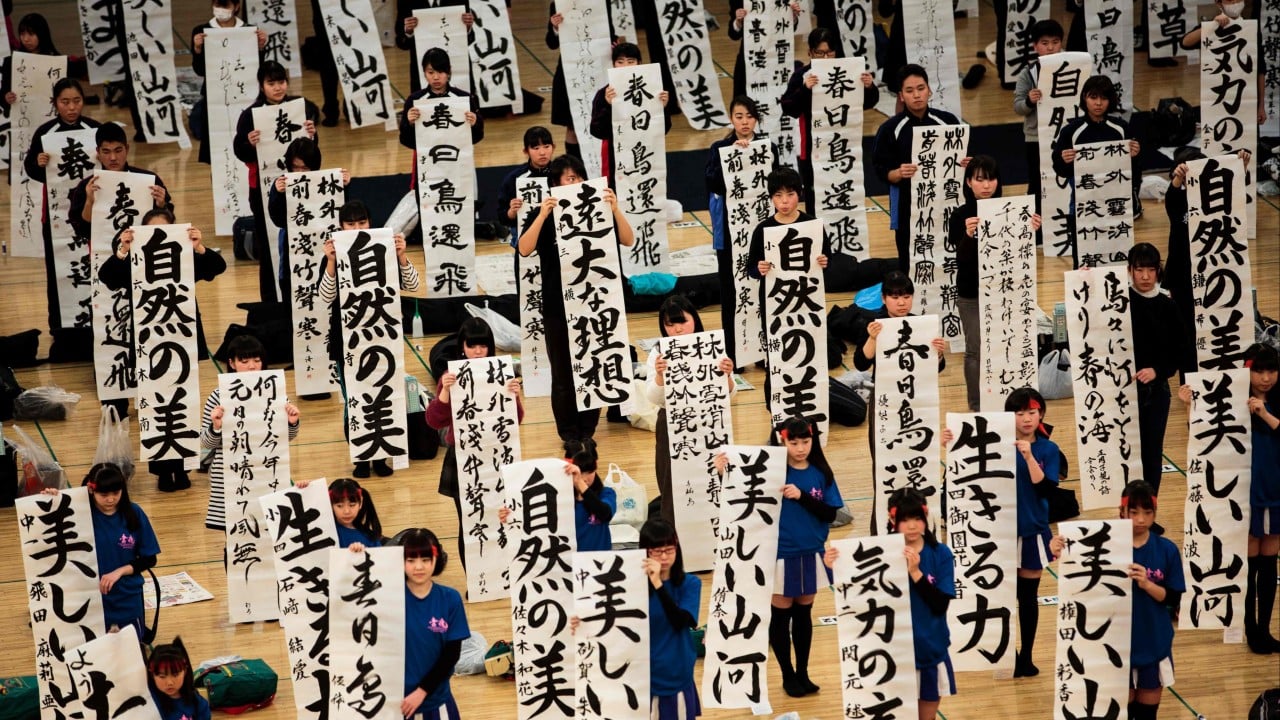
Japanese Prime Minister Sanae Takaichi has faced backlash online after writing a social media post celebrating Japan’s shodo calligraphy without mentioning its Chinese roots.
On Thursday, Unesco released this year’s nominations for inclusion on its Representative List of the Intangible Cultural Heritage of Humanity.
The 59 nominations submitted for consideration for the UN cultural body’s list include Chinese cuisine, Spain’s traditional jota music and dance genre and Japan’s shodo calligraphy.
Takaichi welcomed the recommendation on Thursday, writing that she was delighted that shodo “has been recognised as worthy of being passed down to future generations as a Unesco intangible cultural heritage”.
“Shodo is a precious Japanese cultural practice that expresses characters through traditional brush techniques and methods using tools such as brushes, ink, inkstones and paper,” she wrote.
“As an endeavour to infuse handwritten characters with one’s own thoughts and emotions, it has been passed down through Japanese life over many long years.”
But her post, which made no mention of the tradition’s roots in Chinese calligraphy, drew criticism from some social media users.
01:32
Woman, 79, charged with attempted murder for driving with a man clinging to her car bonnet
“The brush, ink, inkstone and paper all originated in China. I suggest you study history more,” read the top reply.
“Trying to register a culture derived from China as Japanese heritage without any shame whatsoever … whatever, I’m done,” read another comment.
Japan did not have its own writing system before Chinese characters were introduced from China around the 4th and 5th centuries, according to Japan’s Agency for Cultural Affairs.
Exchanges between the two countries continued over the following centuries, with Japan sending envoys to China to study its political system, religion, literature and urban planning.
Japanese calligraphy eventually took on local characteristics. By the 10th century, Japanese calligraphers had helped establish the country’s own style, according to the Tokyo National Museum.
Shodo was registered as an intangible cultural property in Japan in 2021.
In 2023, the Agency for Cultural Affairs selected shodo as a candidate for nomination to Unesco’s intangible cultural heritage list.
The move drew criticism at the time, with some questioning whether the move was necessary as Chinese calligraphy was inscribed on the list in 2009, according to Chinese state-run newspaper the Global Times.
Unesco’s intangible cultural heritage list comprises 849 elements across five regions and 157 countries, according to its official website.
States propose elements for inclusion on the list to promote greater understanding of humanity’s intangible cultural heritage and its significance in general, according to Unesco.
The Unesco Intergovernmental Committee for the Safeguarding of the Intangible Cultural Heritage will decide on this year’s inclusions at a session in Xiamen, southeast China’s Fujian province, from November 30 to December 5.
KioskNews shows a cleaned-up reading view extracted from the publisher’s page — the original always lives on their site, not ours.