Exclusive: Bengaluru Minister Krishna Byre Gowda Lists Fixes For Potholes, Traffic Jams, Flooding
Potholes that return weeks after roads are laid, flooding that brings parts of the city to a standstill, traffic congestion and infrastructure projects that routinely miss deadlines, Bengaluru continues to grapple with a long list of civic and infrastructure challenges.
Now, the city has a new minister in charge of Bengaluru Development, Krishna Byre Gowda, who has promised to bring about systematic change by improving the basics while simultaneously working on long-term solutions.
Gowda has been making his presence felt on the ground, with videos of him pulling up officials during meetings going viral on social media. His blunt questioning of officials has resonated with many Bengaluru residents who have long voiced similar frustrations about the functioning of the civic administration.
But for citizens, the bigger question remains: Will the confrontations with officials translate into permanent solutions on the ground?
What happens after an official is pulled up? Where is the accountability? Why do roads deteriorate so quickly? Where is the money being spent? Why are major infrastructure projects delayed? And can Bengaluru find a lasting solution to its recurring flooding problem?
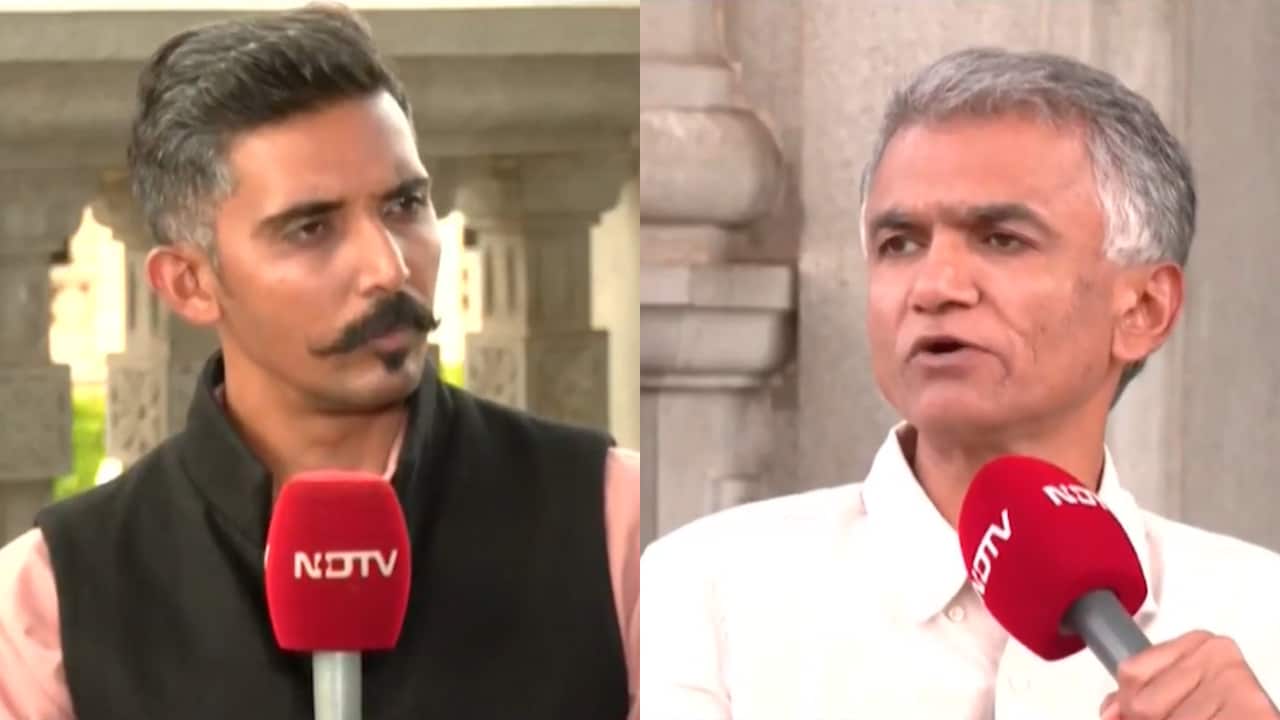
To get answers to these questions, NDTV's Deepak Bopanna sat down with Bengaluru Development Minister Krishna Byre Gowda and put the concerns of Bengaluru's citizens directly to him.
Gowda spoke about his plans for Bengaluru, the need for greater accountability within the civic administration, the city's road and flooding problems, delays in major infrastructure projects, and the government's plans for short-, medium- and long-term solutions.
'Improve The Basics Immediately'
Gowda said Bengaluru's problems are large and systemic, but argued that improving basic governance and municipal service delivery could provide immediate relief to citizens.
"There are mega problems, but which need to be fixed. There is no denying - whether it's traffic, waste management, or mobility. These are large, systemic issues which require large-scale systemic solutions," he said.
At the same time, he said the administration must focus on making the existing governance system more functional.
"My mission statement in a nutshell: improve the basics immediately, at the same time, simultaneously work on long-term solutions," Gowda said.
'Why Can't We Build Decent Quality Roads?'
Among Bengaluru's most persistent problems is the condition of its roads. Gowda had earlier gone viral after questioning officials over the quality of roads in the city and asking whether building a road in Bengaluru was "rocket science".
Asked by NDTV whether he now had an answer from his officials, Gowda said accountability in Bengaluru's governance system remained low.
"Let me be upfront with it. Let me not try to tiptoe around it. Let's accept it that accountability is very low," he said.
He also acknowledged that the quality of roads built in Bengaluru "leaves a lot to be desired".
"Road building has been around for more than 100 years. By now we have mastered the art and science of building a road, but why can't we build decent-quality roads that last a decent number of years?" he asked.
Gowda said he was working with officials, engineers and contractors to improve the quality of road construction.
BJP Responsible For 'Bad Practices': Gowda
Asked why these issues were being raised now when Gowda has been in public life and government for several years, the minister hit back at the Opposition.
Gowda attributed what he described as "bad practices" in the system to the previous BJP government.
"I am schooling them now because my opposition party, when they were in power, they schooled them all the wrong things. They taught them how to build poor quality roads, how to siphon public money," he said.
Gowda, however, said he did not want the issue to become a political blame game.
"That's a tu-tu main-main line which is zero-sum game, doesn't solve the problems of the people," he said.
According to Gowda, the problems have accumulated over several years and the focus now should be on fixing them.
What Happens To Officials After Gowda Pulls Them Up?
Gowda's videos confronting officials have attracted considerable attention online. But citizens have also questioned whether publicly pulling up officials leads to actual disciplinary action.
Asked whether officials he had confronted had been suspended, demoted or otherwise punished, Gowda said disciplinary action was only one tool available to improve governance.
"I ask the questions so that they wake up and they make amends, they make improvements. That is my task. I am not simply screaming at them," he said.
Gowda said the government needed to work with officials because the problems were systemic.
"I need to improve them, I need to improve their morale, I need to work with them day in and day out, day and night," he said.
However, he confirmed that disciplinary action had been taken in some cases.
"I have indeed taken disciplinary action. Several officers have been proceeded against in a disciplinary enquiry," he said.
Should Government Jobs Be Performance-Driven?
The interview also touched upon a broader question raised by citizens - whether government employment should have stronger performance-based accountability.
Gowda was asked why government employees should enjoy assured tenure when thousands of candidates compete for a limited number of government posts.
The minister said the structure of government employment was a larger issue that required a national debate.
"Government jobs all over the country have a fixed tenure and a fixed system. It is something the nation should debate and probably come up with," he said.
Gowda acknowledged that there was a low level of accountability and efficiency in government systems, but said his immediate focus was more basic.
"I'm not even going to efficiency; I'm saying let's do the job, at least basics, let's get it done," he said.
He said his immediate objective was to make incremental improvements every day rather than get lost in a larger systemic debate.
Where Is Bengaluru's Infrastructure Money Going?
Several major financial announcements have been made for Bengaluru since the Congress government came to power in 2023. Yet citizens continue to question why the impact of these investments is not always visible on the ground.
Gowda said major infrastructure projects go through a lengthy process involving approvals, financing, tendering and implementation.
"A basic road building maybe has a 1-1.5 year cycle to get the approvals, the budget necessary, then the procurement. But some of the mega projects, they take a much longer period, three years onwards," he said.
Gowda said several projects were now in the procurement and tendering stages.
For the immediate term, he said the government was committing around ₹8,500 crore over the next six to eight months for Bengaluru.
He said the government was simultaneously pursuing short-term, medium-term and long-term infrastructure plans.
Metro, Suburban Rail And Buses
Gowda pointed to investments in public transport as a key part of the government's long-term strategy for Bengaluru.
He said Bengaluru's Metro network, currently around 96 km, is planned to increase to around 170 km in the next 1.5 years, followed by further expansion to 250 km and eventually beyond 300 km.
The government is also investing around ₹23,000 crore in Bengaluru's suburban rail project, he said.
Gowda also pointed to the recent Cabinet approval for the purchase of around 4,500 buses for Bengaluru's city bus fleet, which he said already stands at around 7,000 buses.
'There Are Delays, No Doubt About It'
But with Bengaluru's Metro and suburban rail projects having faced repeated delays, the minister was asked why the city continues to lag behind on project timelines despite being one of India's fastest-growing urban centres.
Gowda acknowledged the delays.
"There are delays, no doubt about it, and we need to push these at a faster pace," he said.
He said the government was targeting completion of around 148 km of suburban rail by 2030, while around 170 km of Metro is planned to be operational by early 2028.
"I'm not denying, I'm not deflecting, or I am not trying to avoid that there have been delays, which is something we need to work on and fast-track these projects," he said.
Bengaluru Flooding: 'Our Job Is To Fix It'
Flooding remains one of Bengaluru's biggest recurring problems, with intense rainfall frequently resulting in waterlogged roads, flooded underpasses and severe traffic disruption.
Asked why the city continues to struggle with flooding, Gowda said urban flooding was a phenomenon being witnessed across the world, particularly amid extreme weather events.
He cited a recent experience in Delhi, where he said a short spell of rain had resulted in flooding.
But Gowda stressed that Bengaluru could not use this as an excuse for its own failures.
"I am not justifying it. Again, I am not deflecting or I am not justifying it," he said.
"We have a job, we have to do it," he added.
The minister said the government was investing ₹2,000 crore in Bengaluru's stormwater drains to address the flooding problem.
'Fix The Basics, Work On Long Term'
Gowda's larger argument is that Bengaluru cannot solve its problems through one-off interventions or headline announcements.
His approach, he said, is to make the existing civic administration more accountable and functional while simultaneously pushing major infrastructure projects.
KioskNews shows a cleaned-up reading view extracted from the publisher’s page — the original always lives on their site, not ours.