Inside the school where dogs learn to sniff out bed bugs and other pests
Lucky works for the Pennsylvania Department of Agriculture. Her job is to track down spotted lanternfly eggs before they can hatch and cause trouble. She could have joined the police force, but during her training she discovered that would involve biting suspects—something she didn’t enjoy. So Lucky, a German Shepherd, joined the ranks of pest detection dogs, becoming the first dog in the United States trained to detect lanternfly eggs. Lanternflies are invasive pests that feed on a wide range of plants, damaging them in the process.
Lucky was a graduate from the Penn Vet Working Dog Center, founded by veterinarian Dr. Cynthia Otto. Many dogs from the program go on to be police dogs or search-and-rescue dogs, but Lucky became “the poster child for detection of spotted lanternfly,” Otto says.
A history of canine pest detection
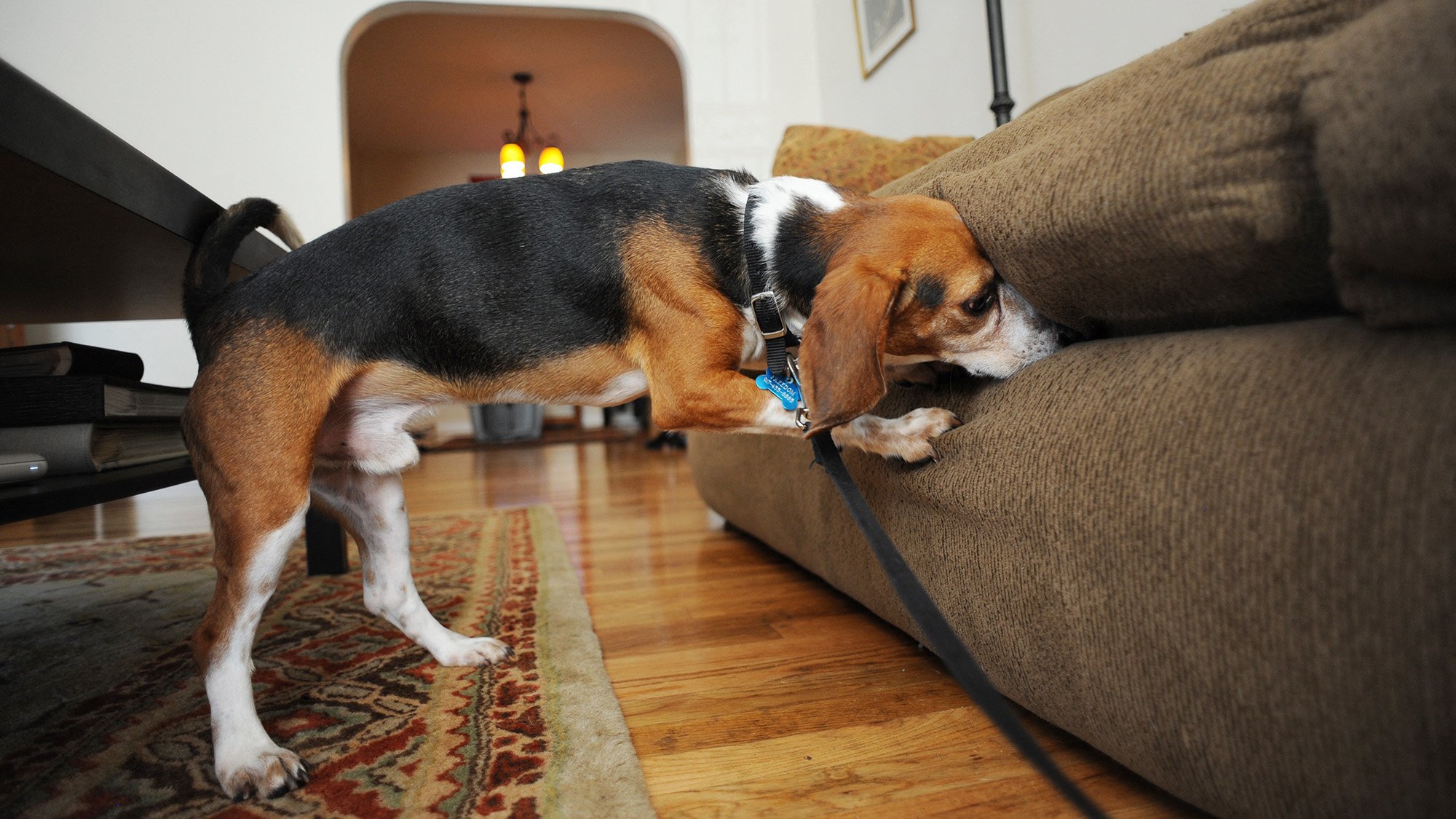
Thanks to their extraordinary sense of smell, dogs have been helping humans hunt down pests for decades. In 1979, a former police officer who once trained dogs to detect drugs and explosives, set up TADD (Termite and Ant Detection Dogs) Services Corporation. The employees were a team of beagles, trained to sniff out termites and carpenter ants, both of which cause damage to wooden structures.

Where You Might Find Carpenter Ants
Research found that trained dogs could detect the presence of termites with about 96 percent accuracy, and dogs trained to find one termite species could also detect four other types. This suggests that the dogs can smell a shared, termite scent, possibly something in the termite’s tough outer shell, or gases like methane and carbon dioxide given off by termite colonies.
When bed bugs made a major comeback in the early 2000s, dogs were able to help, too. A 2008 study found that trained dogs could distinguish bed bugs from other household insects, like cockroaches, carpenter ants, and termites, with a 97.5 percent success rate. The dogs didn’t misidentify bed bugs when none were present, and could differentiate live bed bugs and their eggs from dead bed bugs, their empty outer shells, and feces with a 95 percent success rate.
More recently, researchers have been training dogs to detect a host of agricultural pests, including a bacterium that attacks citrus trees (Candidatus Liberibacter asiaticus), wood boring longhorn beetles, and the spotted lanternfly.
Now Otto and her team are about to launch a project to see if dogs can help detect the New World screwworm. Unlike typical maggots that just feed on dead tissue, screwworm larvae eat live tissue as well.
“It’s just horrific, and it’s very devastating to the animals and to agriculture,” Otto says. The U.S. had previously wiped it out, but now it’s back, with several cases reported this year in cows, sheep, and dogs. If dogs can reliably find it, Otto hopes their work will create new approaches to eradicate the pest again.
Related 'Ask Us Anything' Stories
How training works
Dogs typically join the program at the Penn Vet Working Dog Center when they’re about eight weeks old. They learn to associate the target odor with a reward, Otto explains. Trainers first use a synthetic odor, 1‑bromooctane, a safe chemical that’s uncommon in the natural environment, to teach the rules of the sniff‑and‑reward game, before switching to real targets like lanternfly eggs.
Most dogs are trained in multiple locations, with special emphasis placed on environments similar to where they’ll eventually be working, explains Otto. “They often start training in a simple environment and then as they progress, it gets more complex and more naturalistic.”
The length of training depends on several factors. One is the uniqueness of the target odor. Otto explains that teaching a dog how to detect a pest is harder than teaching it to detect an explosive.
With explosives, it’s often a simple “is it here or not?” problem. With pests, dogs have to tease out one very specific smell from a crowd of nearly identical smells, which makes the training much more demanding.
Other factors that influence the length of training are the dog’s history (For instance, have they already learned to use their nose to find things?) and their personality. Otto says that dogs are like people: Some are “big‑picture” while others are very detail‑oriented. For pest detection, the detail‑focused dogs tend to do better.
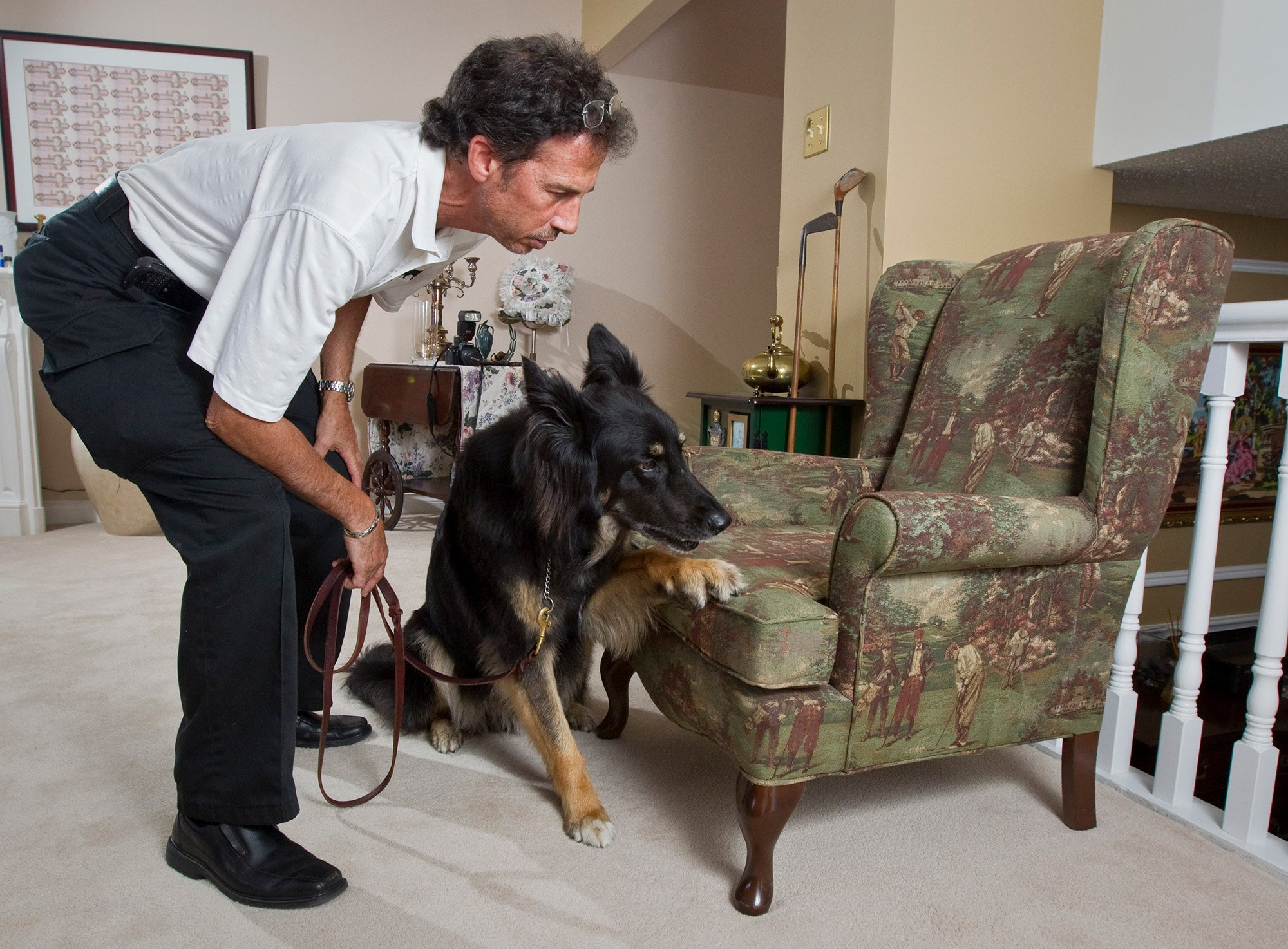
Pest detection is not an easy task to teach. Sometimes dogs learn to “cheat.” For example, if a trainer always presents a lanternfly egg on a piece of tree bark, the dog may decide that “tree bark = reward” and never truly learn to detect the egg itself.
The process of training dogs to detect pests has been a big learning curve for Otto and her colleagues: “What I like to say in our training is we’ve made every mistake, so we’ve learned a lot,” she jokes.
Could your pet dog help fight pests?
Some researchers are trying to see if people’s pet dogs can do pest detection work.
A 2025 study at Virginia Tech found that pet dogs, with only hobby-level scent training, could detect lanternfly egg masses 82 percent of the time in controlled conditions. In real-world settings, accuracy dropped to 61 percent, which is still better than many human searches.
Otto pushes back against the common misconception that only a few breeds can do this work. While some breeds may rely more on their sharp eyesight than they do on smell, such as sighthounds, “In general, most dogs are going to be pretty good at using their noses,” Otto says.
“In our program, we tend to use a lot of Labradors and shepherds, but so many different breeds are good at it and can be good at it.” What really matters is the dog’s personality and their motivation to do scent work, not their breed, she says.
In Ask Us Anything, Popular Science answers your most outlandish, mind-burning questions, from the everyday things you’ve always wondered to the bizarre things you never thought to ask. Have something you’ve always wanted to know? Ask us.
KioskNews shows a cleaned-up reading view extracted from the publisher’s page — the original always lives on their site, not ours.