Happy World Kindness Day! Check out our kind photos of kindness to humans -- and cats
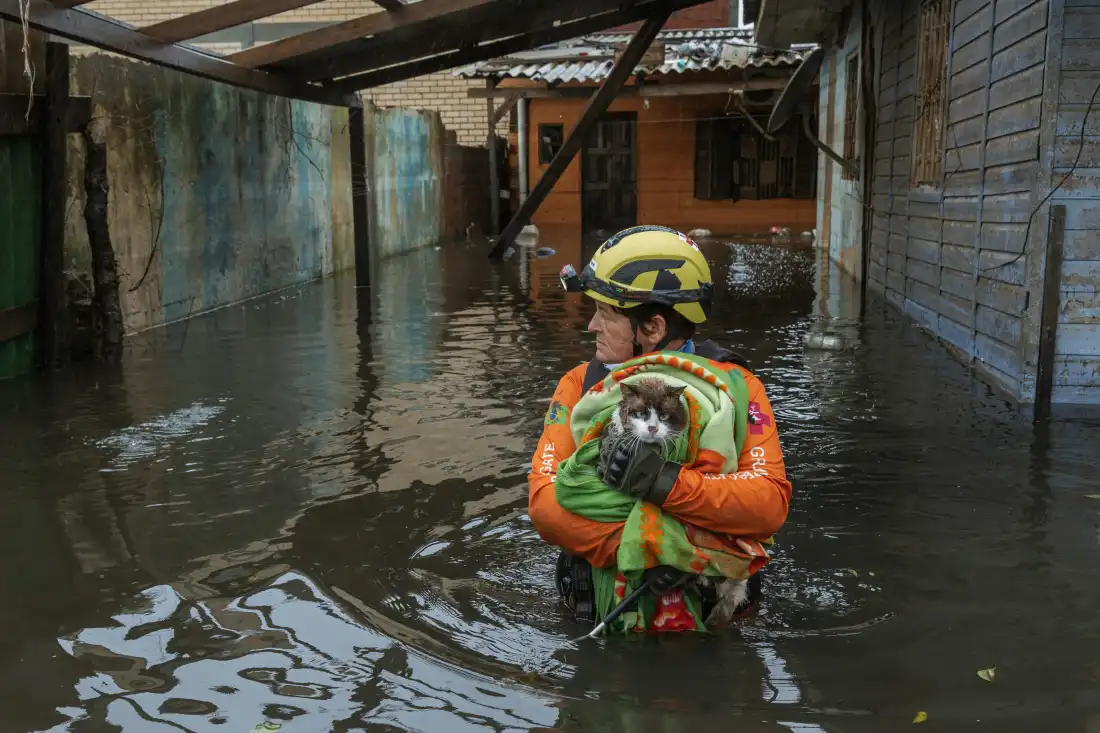
An animal rescuer carries a cat to safety amid severe floods that hit Rio Grande do Sul, Brazil, in May 2024. Thousands of people — and animals — were affected in the wake of heavy rainfall and overflowing rivers. Tuane Fernandes/The Everyday Projects/Everyday Brasil hide caption
Tuane Fernandes/The Everyday Projects/Everyday Brasil
Editor's note: Today, November 13, is World Kindness Day!
Kind-minded organizations from various countries came up with the idea and announced it on November 13, 1998. (And the date stuck.) The goal is kinda obvious — do something kind!
It doesn't matter if it's a modest action. One of the founding groups is the Small Kindness Movement of Japan. And no kind deed is too small to acknowledge. One year, the Japanese movement gave an award to a cabbie who pulled over to clear trash bags off the road lest they cause an accident. According to a report in the Christian Science Monitor, the cab driver humbly said it was "no big deal."
So on Friday, November 13, 2026, try a little kindness. To inspire you, we've talked to folks whose lives were changed by kindness — and asked the photojournalists of The Everyday Projects, a global network, to submit pictures that capture a kind moment. Animal lovers will be happy to see photos of kindness toward animals as well as an image of a support donkey — a reminder that animals can be kind to us humans, too.
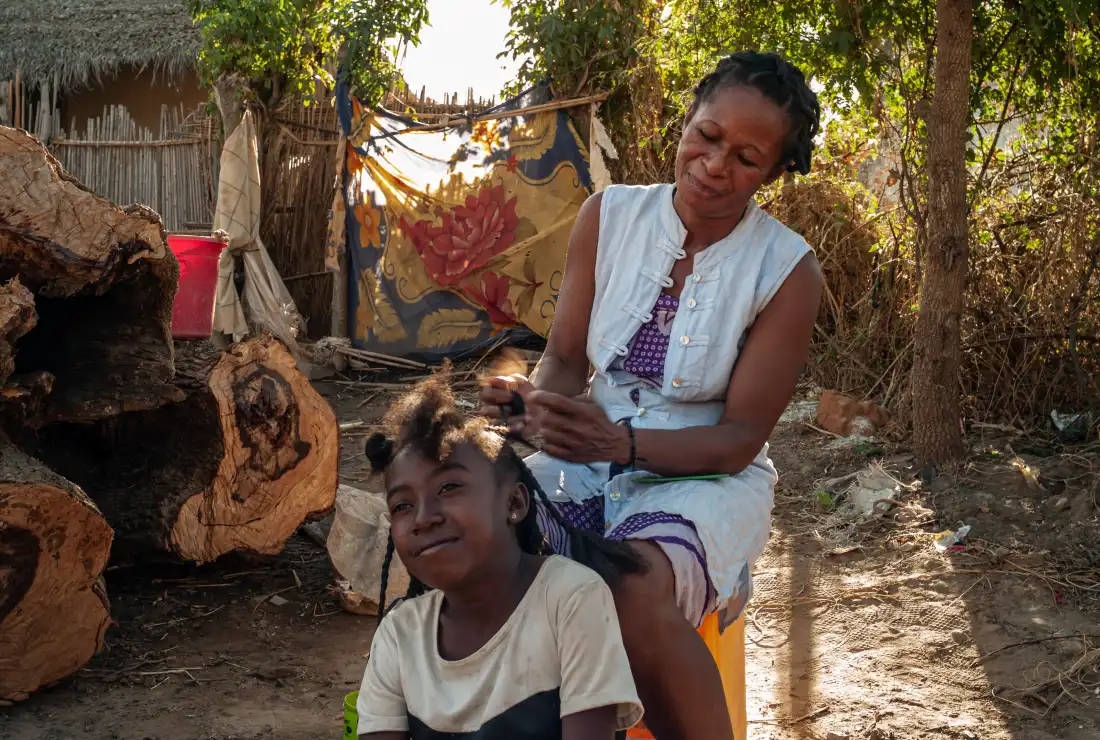
A woman in Madagascar fixes a girl's hair — a gesture of tenderness, connection and kindness. Henitsoa RAFALIA hide caption
Henitsoa RAFALIA
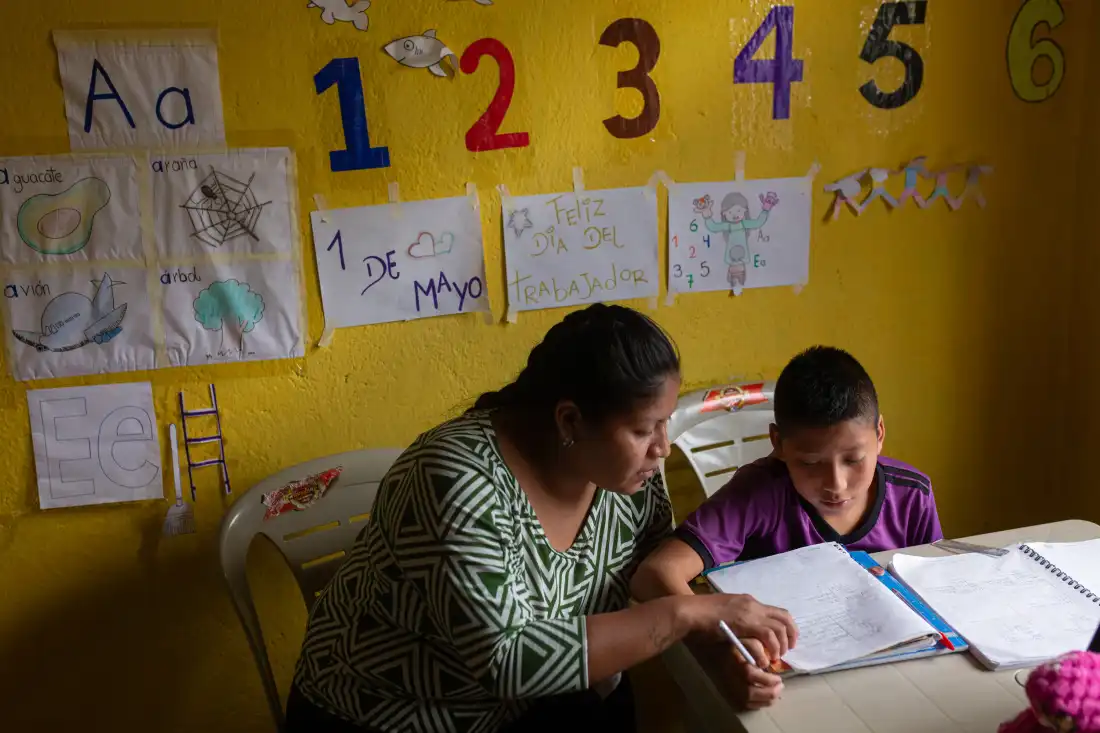
Erika Pozo helps her 12-year-old nephew, Josthyn Neira, with his math homework. Andres Yepez/EverydayEcuador hide caption
Andres Yepez/EverydayEcuador
Let's start with a simple yet profound story about a snack.
Back in 2004, Maymunah Yusuf Kadiri, a neuro-psychiatrist and mental health advocate in Nigeria, was a young doctor working in the emergency room at the Lagos State University Teaching hospital. One night sticks in her mind. It was chaos. There were accident victims everywhere. She recalls the blood, the cries and her own exhaustion.
"I hadn't eaten for over 12 hours, and my hands were shaking," says Kadiri, who was 28 at the time. "Then an elderly cleaner, one of those invisible heroes in hospitals, walked up to me with a small nylon bag." Inside was a biscuit and a sachet of water.
"Doctor," she said, "you need small strength to save people."
"It sounds simple, but I'll never forget it. That biscuit tasted like hope. Her kindness reminded me that healing isn't only about medicine, it's about humanity," says Kadiri. "As a psychiatrist, I've seen it over and over: People don't just heal in hospitals, they heal in human connections."
And while one isolated act of kindness may seem random, it can lead to much more.
Juana is a fruit seller from northern Ecuador. Every week, she takes the bus to sell strawberries that she buys from local farmers, as she cannot afford to own a farm of her own. Since money can be tight in some families, she'll let customers pay later. And her long-time clients are grateful, giving her fruit for a snack since she sometimes doesn't have time to eat on a busy day. "We're all human," she says. "I don't know when I'm happiest: when I'm selling, when I'm giving, or when I'm receiving. That's the beauty of life and friendship." Ana Caroline de Lima hide caption
Ana Caroline de Lima
A police officer helps a woman step off a bus during a rainy afternoon in Guatemala City, Guatemala. Photographer James Rodriguez says, "At first sight, it's a simple decisive moment image where an indigenous woman is about to step barefoot on a rain-soaked street in Guatemala City. Being helped by a police officer is a very kind gesture and an unexpected one, as he appeared suddenly when he noticed she needed help." The woman was planning to visit the police archive as part of a delegation of war survivors seeking clues to the whereabouts of family members who disappeared during the war years as part of military and police actions, says the photographer: "It is ironic that she is helped by a Police Officer and in a way, also representative of how some things have changed over the years." James A. Rodriguez/James Rodriguez / Everyday Latin/James Rodriguez / Everyday Latin hide caption
James A. Rodriguez/James Rodriguez / Everyday Latin/James Rodriguez / Everyday Latin
Huguette Diakabana remembers when she had to drop out of school at age 10 — until a mysterious donor came to her rescue. Her family was planning to emigrate to the U.S. from Zaire (now the Democratic Republic of Congo) and couldn't afford school fees. They figured she'd make up the year later. She had a different idea: "I put on my previous year's uniform and sat outside under the street window of my would-be classroom." One day, the director invited her inside. Diakabana realized someone must have paid her school fees, but who?
Returning to the school years later, Diakabana discovered it was a school guard. She wanted to repay him. "He told me to help others when I could, so I launched a scholarship program," says Diakabana, who now lives in Switzerland and is co-founder of The Luminous Agency, which focuses on digital literacy.
Dr. Junaid Nabi, a physician-scientist who conducts research in health care technology at the RAND School in Washington, D.C. and is a senior fellow at the Aspen Institute, says he's come to realize that kindness isn't actually a trickle in the ocean. An act of kindness is more like dropping a stone that creates expanding ripples, he says.
"There are studies that illustrate how kindness spreads through social networks in measurable ways. When we are kind to someone, they don't just feel better — they become 25% more likely to help others."
One such investigation described how kindness can be contagious. It was sparked by reports of an outbreak of kindness on a cold December morning in 2012. A stranger picked up the tab for the coffee order of the next customer in the drive-through line at a Tim Hortons coffeehouse in Winnipeg, Canada. And that customer picked up the tab of the person behind him. In the end, 226 customers passed on this act of kindness.
The study authors, citing other examples of "pay it forward" kindness at fast food restaurants and their own experiments encouraging subjects to help others, write: "Why, in the absence of external sanctions and opportunities for reciprocation, do people help strangers? One possible explanation is that helping is driven by receiving or observing help. In other words, generosity towards strangers may be socially contagious."
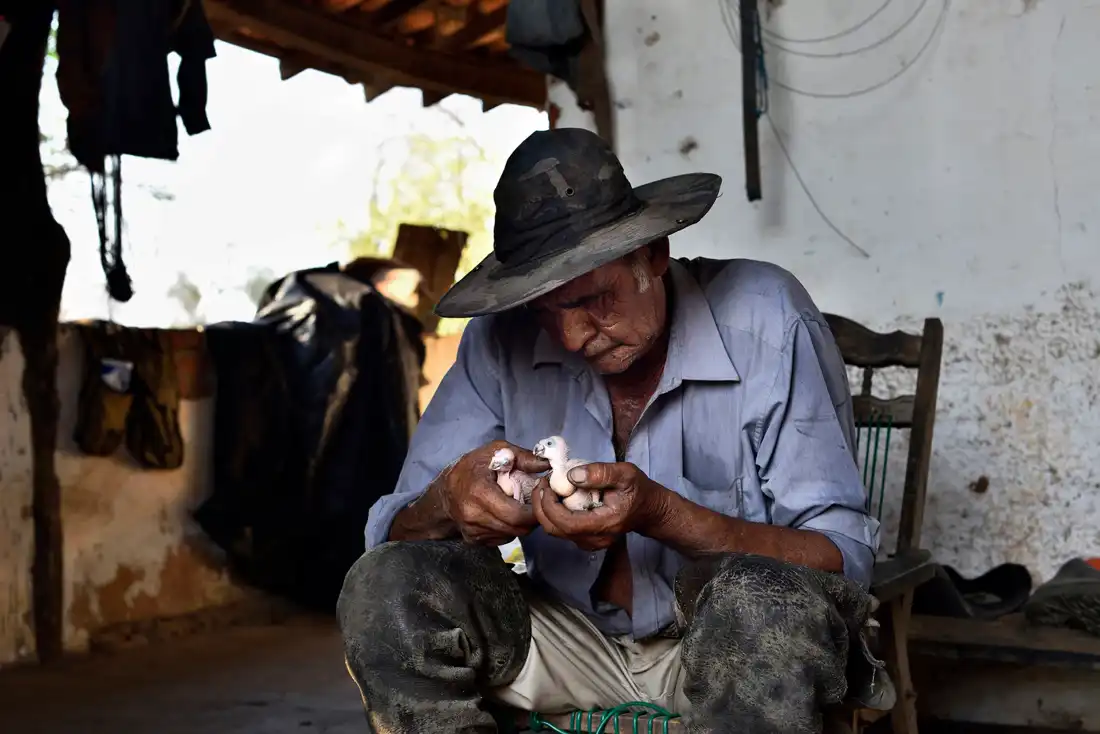
Curepa, a tough cowboy in Bolivia, cradles a couple of baby parrots that he found while walking in a region burnt by fires in 2019. He found them in the hollow of a tree trunk. "Their mother is probably dead or flew to somewhere safer," he told the photographer. "Thank God I found them or they would die as many other animals did." As he looks at the chicks, he says, that it "is not easy to take care of them. They don't even have opened they eyes yet!" Ana Caroline de Lima hide caption
Ana Caroline de Lima
A couple in Old Havana, Cuba, puts out meals they've prepared for stray dogs and cats. They collect donations to purchase the food. Paulo Ermantino/Everyday Social Justice hide caption
Paulo Ermantino/Everyday Social Justice
Don't talk yourself out of it
It might sound contradictory, but researchers studying the psychology of altruism, kindness and giving have uncovered this curious paradox: Sometimes, people can be kind-hearted, have a genuine desire to help someone, but in spite of that, not give at all.
Marta Serra-Garcia, a professor of economics and strategy at the Rady School of Management in the University of California, San Diego, is one of the authors of the study Give Enough or Not at all.
"There's a growing body of work in economics and psychology trying to understand altruism. Altruism is a result of a feeling of empathy and the emotion of feeling warm and well when you help others. We know people are altruistic, but we're trying to understand when, why and how," she says.
The study, published in the September Journal of Economic Behavior & Organization, revealed that people may prefer to give nothing rather than donate an amount they consider too small — even when those on the receiving end would welcome whatever they can get.
"It seems like an odd thing," Serra-Garcia says in an interview over a video call with NPR. "You're generous, but because you want to do the right thing, you might end up not giving at all, out of concern that your gift would be viewed as inappropriate or might even offend the other person."
In one experiment in the study, givers tended to overestimate the minimum amount recipients would consider acceptable.
"We tend to think there are givers and non-givers," says Serra-Garcia. "The people who give are the generous and kind ones, the non-givers are just not generous." But the study indicates otherwise.
"That perception of appropriateness makes them think, "I'd rather not give at all, although I'm a generous person," says Serra-Garcia.
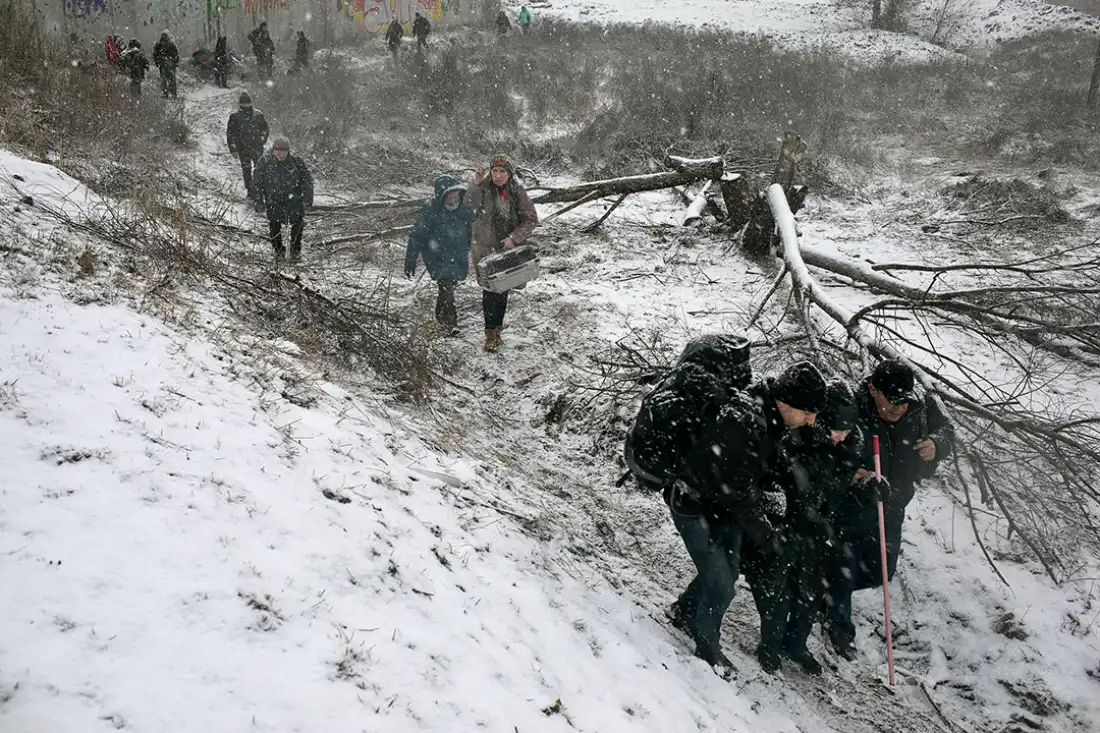
Residents of Irpin in Ukraine help each other while evacuating during heavy artillery shelling by the Russians. Amnon Gutman hide caption
Amnon Gutman
Runners cheer a boy completing a one-mile race in Mdantsane, South Africa. Alan Eason/Everyday Africa hide caption
Alan Eason/Everyday Africa
Nature or nurture?
And where does kindness come from? Are you born with it? Or can you learn to be compassionate and empathetic?
Jeff R. Temple, a professor and psychologist with UTHealth Houston, says kindness is a central thread running through his studies on healthy relationships among adolescents and young adults.
"In our intervention work — including with the Fourth R program and other school-based curricula — we teach adolescents to practice perspective-taking, to express care even during disagreement and recognize the impact of their words and actions. These are essentially the behavioral expressions of kindness."
Such kids are less likely to bully others because they know what healthy relationships are like, he says.
McBean is an emotional support donkey at the McClelland Adult Centre in KuGompu, South Africa, a facility for intellectually impaired adults. The donkey gets an affectionate moment with operations manager Gus Dreyer. The centre staff says donkeys have a calm temperament and intuitive nature suitable for moments of kindness with humans. Alan Eason/Everyday Africa hide caption
Alan Eason/Everyday Africa
A ripple effect
And let's not forget that kindness can change not only the life of the recipient of the kind deed but of the kind person, says Nabi, who offers this anecdote.
In the 2013 Savar building collapse in Bangladesh, where 1,040 garment workers were crushed under concrete. Rescue workers managed to pull out 2,400 people from the rubble two weeks after the collapse. Nabi arrived at the disaster site as a Red Cross volunteer, expecting to gain experience in trauma care. Instead, he says, the experience changed his psyche, teaching him about the nature of true kindness.
In the 2013 Savar building collapse in Bangladesh, more than 1,000 garment workers died and thousands were injured. Nabi arrived at the disaster site as a Red Cross volunteer, expecting to gain experience in trauma care. Instead, he says, the experience changed his psyche, teaching him about the nature of true kindness.
"In the midst of chaos, with bodies awaiting identification, kindness came down to being present during others' darkest moments," says Nabi. "I performed CPR on workers I knew wouldn't survive and when I couldn't save someone, I stayed by their side, holding their hand."
"Before Savar, I was mechanistic, rushing through clinical work like tasks," he recalls. "The image of workers who had embraced each other as concrete crushed them — that final act of human kindness in the face of death — shattered my callousness completely."
When he returned to the hospital, he listened to patients differently, giving them more of his time. He also urges doctors to volunteer for humanitarian causes to practice compassion.
"Kindness, I learned, is about showing up completely for another person's suffering," Navi reflects, "and letting that experience fundamentally change who you are."
So if you began reading this story with the thought that World Kindness Day is … a gimmick … it is a gimmick imbued with heart and hope.
It's a good reminder to practice kindness more, Dr. Kadiri says. "And here's the beautiful part: When someone receives kindness, they don't just feel better, they become better." They may be inspired to perform their own act of kindness. And that, she says, makes the world a kinder, better place too.
Your turn: Readers! Have you ever had a life-changing moment because of an act of kindness. Share your story with us by emailing globalhealth@npr.org. We'll consider all submissions for a follow-up story. Be sure to tell us how to contact you if we are interested in featuring your anecdote.
Special thanks to the photojournalists of The Everyday Projects, who shared their beautiful images of kind moments for this story.
Kamala Thiagarajan is a freelance journalist based in Madurai, Southern India. She reports on global health, science and development and has been published in The New York Times, The British Medical Journal, the BBC, The Guardian and other outlets. You can find her on X @kamal_t
KioskNews shows a cleaned-up reading view extracted from the publisher’s page — the original always lives on their site, not ours.