Royal Navy launches its first autonomous squadron of uncrewed boats
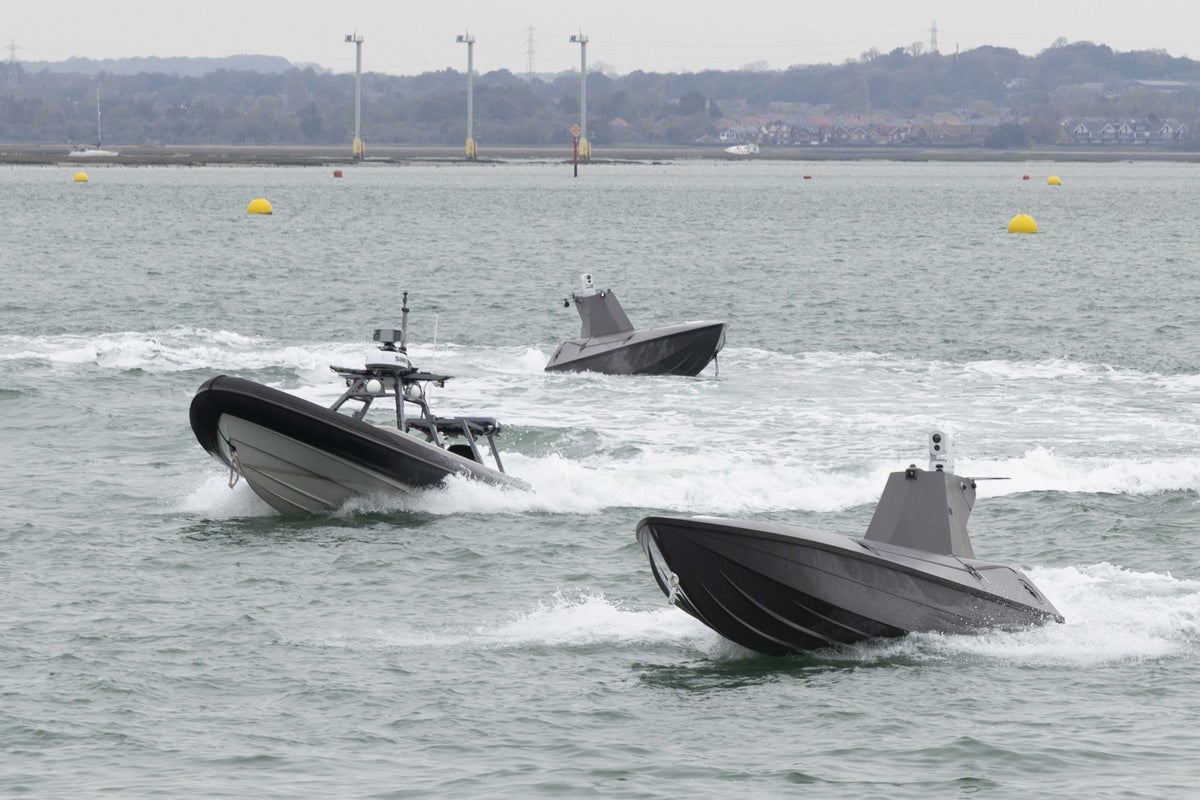
The Royal Navy has created its first autonomous squadron to operate uncrewed boats on frontline operations.
The 1st Autonomous Squadron, which was formally launched on Thursday, is based at Portsmouth Naval Base and comprises about 180 personnel who will operate two craft – Rattler training vessels and the Kraken K3 Scout boats.
Defence Secretary Wes Streeting said the force has been created in response to the changing face of modern warfare.
A Navy spokesperson said that the Rattlers are designed to perform a range of operations and have been trialled escorting warships in Scotland while being remotely piloted from 500 miles away.
The Kraken K3 Scout has a range of 600 miles, extendable to 1,100 miles, and has also been tested off the south coast “in force protection, surveillance and reconnaissance roles”, the spokesperson said.
Mr Streeting said: “The threat environment we are facing is fundamentally different from that of recent decades. A major determinant of military power now is who can innovate fastest.
“That’s why we are using the biggest sustained increase in defence spending since the Cold War to put the latest autonomous technology in the hands of our sailors, to help them protect our shores and those of our Nato allies.
“The more ready we are to fight and win, the less likely we are to have to.
“This investment strengthens our warfighting readiness and therefore our deterrence.”
The creation of the new squadron is part of a move towards a “hybrid navy” with £1.5 billion being earmarked for the initiative over four years.
Royal Navy Fleet Commander Vice-Admiral Steve Moorhouse said: “For generations, the Fleet has been built around ships, submarines, and aircraft, manned by sailors and Royal Marines. From today, an autonomous squadron takes its place alongside them.
“The seas are becoming more contested, more dangerous and harder to operate in.
“A hybrid navy is about giving our people better tools. It means more reach, more striking power and more options.
“It will help make the Fleet more lethal, harder to knock out of the fight and quicker to adapt. People will remain at the heart of it.”
KioskNews shows a cleaned-up reading view extracted from the publisher’s page — the original always lives on their site, not ours.