Japan and US strike deal on missile assembly as Tokyo expands long-range arsenal
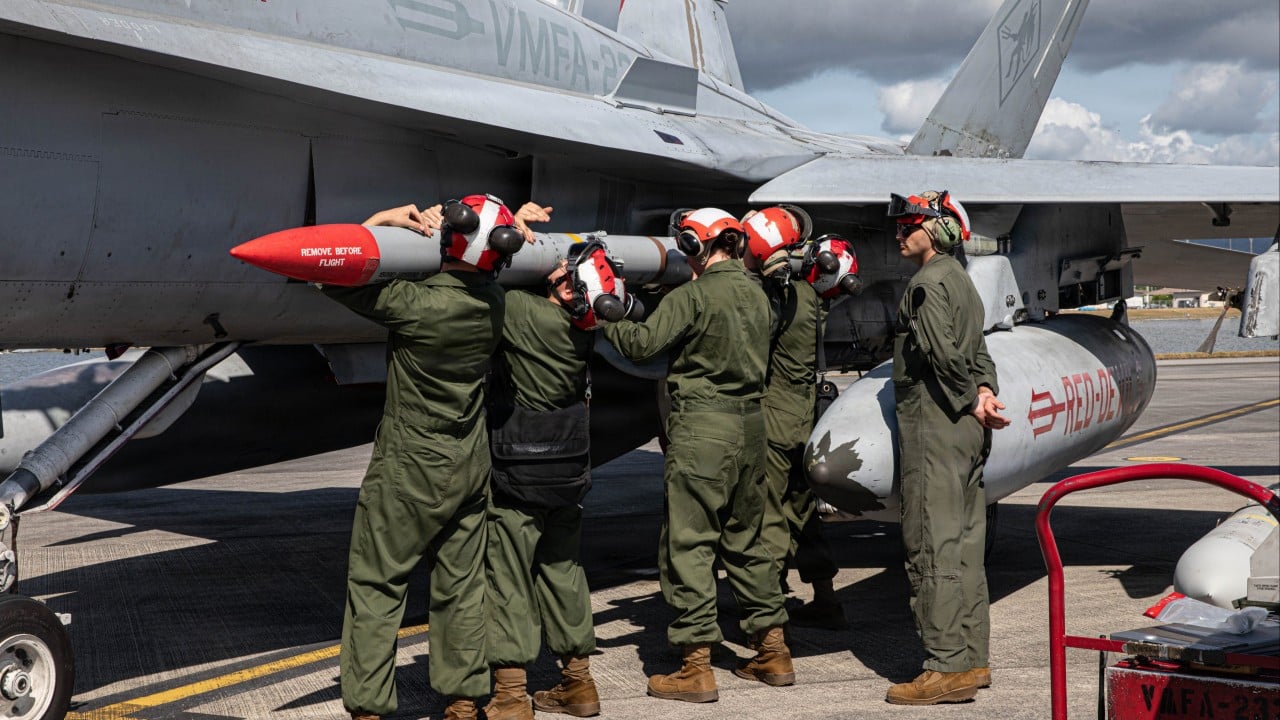
Tokyo has struck a deal to build an assembly line for advanced American air-to-air missiles, while simultaneously exploring missile testing in India and Australia, moves which further mark Japan’s shift away from its post-war pacifist defence posture.
Japanese Defence Minister Shinjiro Koizumi announced late Wednesday that the two allies would construct a final assembly facility in Japan for the AIM-120 Advanced Medium-Range Air-to-Air Missile (AMRAAM). The facility’s location has not been disclosed.
Koizumi made the announcement on the sidelines of an annual meeting of Southeast Asian defence chiefs and their Asian and Western counterparts in the Philippines. He said the missiles produced under the project would be essential equipment for Japan’s US-made F-35 fighter jets.
The AMRAAM has long served as the US military’s beyond-visual-range interception weapon. The latest variant, the AIM-120D, features GPS-aided guidance and improved range, lethality and electronic interference protection.
When asked about the Japan-US deal, Chinese foreign ministry spokesman Guo Jiakun said Wednesday that their bilateral security cooperation “should not target or harm the interests of other countries”.
“Since taking office, the current Japanese administration has used the pretext of responding to threats to continuously breach constraints imposed by international and domestic law, challenging the post-war international order.”
The international community must maintain a high degree of vigilance towards this trend, Guo added.
The announcement comes months after Japan released its annual defence white paper in which the country laid out plans to utilise various stand-off missiles – those with a greater range than the enemy’s air defences – in a conflict scenario. The document also laid out a commitment to procuring foreign-made stand-off missiles while supporting the expansion of production capacity for domestic variants.
02:12
US Marine arrested on suspicion of murdering a Japanese woman
The road map also envisions additional deployment of naval and airborne versions of the domestically developed Type 25 stand-off missile in military bases and naval vessels.
Citing China’s military build-up as Japan’s “greatest strategic challenge”, the defence white paper provides the policy foundation for Tokyo’s rearmament, combining domestic manufacturing and regional partnerships to build a layered defence network.
China was mentioned around 1,200 times in the over 600-page document.
Beijing has repeatedly condemned Tokyo’s military expansion, accusing Japan of hyping a fabricated “China threat” to justify deviating from its post-World War II pacifist constitution that limits the country’s military to self-defence operations.
As Tokyo rapidly acquires long-range armaments, geographic constraints have created an operational training bottleneck, prompting it to seek overseas partners.
Tokyo announced earlier this week that a military delegation had inspected potential live-fire training sites in India for surface-to-ship missiles and autonomous attack drones.
“When operating relatively long-range missiles, such as surface-to-ship missiles, how to conduct training that makes use of their range is a major challenge,” said Masayoshi Arai, chief of staff of the Ground Self-Defense Force (GSDF).
Arai said that Tokyo was actively examining how to secure domestic training environments.
01:47
North Korea launches second 5,000-tonne nuclear destroyer in 75 days
The India initiative follows a 10-year defence arrangement announced in August between Japan and Australia, allowing Japanese forces to test hypersonic and long-range stand-off missiles on Australian soil.
Japan has previously conducted live-fire exercises with surface-to-ship missiles in the United States and Australia, as well as during joint drills in the Philippines, where GSDF personnel fired the Type 88 anti-ship missile.
The overseas initiatives follow major hardware milestones at home. In March, the GSDF deployed the indigenous Type 25 surface-to-ship missile to Camp Kengun in the southeastern city of Kumamoto.
The deployment of the weapon in Kumamoto places parts of the Chinese mainland within the Type 25’s operational range of roughly 1,000 kilometres (620 miles).
KioskNews shows a cleaned-up reading view extracted from the publisher’s page — the original always lives on their site, not ours.