Indonesian stocks slide to six-year low as MSCI warning weighs
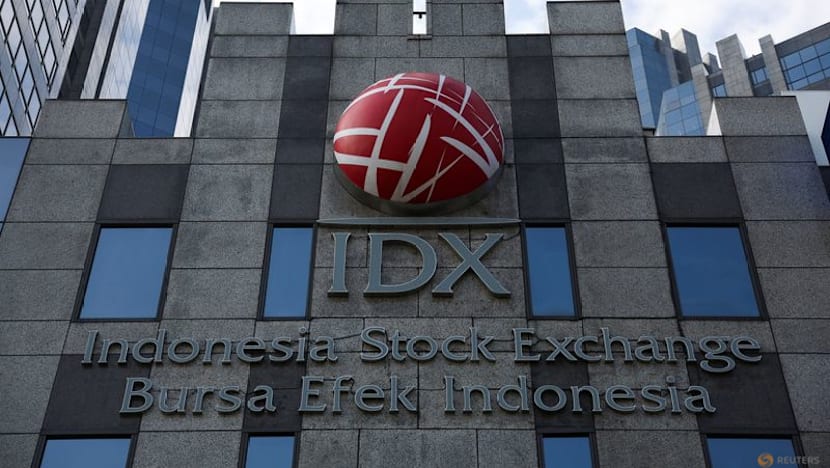
SINGAPORE: Indonesian stocks slid to a six-year low on Monday (Oct 19) as a warning from MSCI over possible expulsion from its global indexes next year rattled fragile investor sentiment, sharpening the focus on how Jakarta intends to allay the index provider's concerns.
Jakarta's benchmark stocks fell over 5 per cent in early trading on Monday after plunging 11.6 per cent on Friday, as the world's worst performers reeled from index provider MSCI saying it was considering shifting Indonesia to "standalone" status from its current "emerging markets" mantle.
A shift to standalone status would risk cutting Southeast Asia's biggest economy off from international capital, relegate it to an investment backwater and club it with a group of standalone markets that includes Lebanon and Zimbabwe.
The more-severe-than-expected move has raised the stakes for Indonesia's regulators and finance officials.
On Monday, the Indonesia Stock Exchange said it cut its lower auto-rejection limit to 7 per cent from 15 per cent to give investors "an opportunity to evaluate and digest available information, helping them make better investment decisions based on Indonesia's economic fundamentals".
The move followed a weekend meeting between the financial regulator and capital market participants, including analysts and economists.
An Indonesian regulator on Friday also unveiled sanctions against those linked to alleged trading manipulation in shares of three firms, with the fines totalling 2.1 trillion rupiah (US$116.4 million).
Angus Mackintosh, an ASEAN specialist at Aletheia Capital in Singapore, said the fact the fines were announced on Friday suggests that Indonesia's Financial Services Authority (OJK) has been working on the matter for a while.
"The fines are a positive move, but there needs to be concerted action to stamp the authority of the OJK and take direct action against certain well-known players who have been involved in market abuse," he said.
MSCI had threatened a downgrade to "frontier" status in January because of opacity in ownership and trading behaviour but said on Friday the lack of progress in remedying those concerns meant even a drop to that status would not reflect the severity of the issues.
"The burden of proof has shifted: avoiding reclassification will require clear evidence that the announced reforms have been consistently implemented and materially improved market functioning," strategists at Goldman Sachs said in a note.
WIDER RISKS FROM MSCI'S WARNING
Goldman Sachs estimates a full MSCI removal could trigger US$5.6 billion of passive outflows. Active funds benchmarked to these indexes hold more than US$8 billion, although any selling would be discretionary rather than benchmark-driven, they wrote.
Foreign investors have net sold US$4.88 billion worth of Indonesian stocks so far this year, on track for the biggest annual outflow in at least 16 years.
Aninda Mitra, head of Asia macro and investment strategy at BNY Investments, said foreign equity exposure to Indonesia has shrunk to the point where "there may not be much more downside from here."
"But at the same time, even if there are some interesting and fundamentally sound companies and banks, attracting sufficiently large amounts of capital will be tougher in this environment," he said.
MSCI's warning raises the stakes for the government of President Prabowo Subianto, which has faced a series of setbacks this year, with Moody's and Fitch having cut their sovereign rating outlooks to negative earlier in 2026.
Investors are also fretting over the ramifications beyond the US$500 billion stock market, with the rupiah weakening to 18,040 per dollar, not far from the record low of 18,190 hit in June.
"Our bigger concern is not index-related selling itself," said Gary Tan, portfolio manager at Allspring Global Investments in Singapore, "but the potential near-term spillover into the rupiah and domestic bond yields, where market dislocation could translate into tighter financial conditions and a more meaningful impact on the real economy."
KioskNews shows a cleaned-up reading view extracted from the publisher’s page — the original always lives on their site, not ours.