Disgraced cloning scientist loses Korean citizenship after becoming UAE national
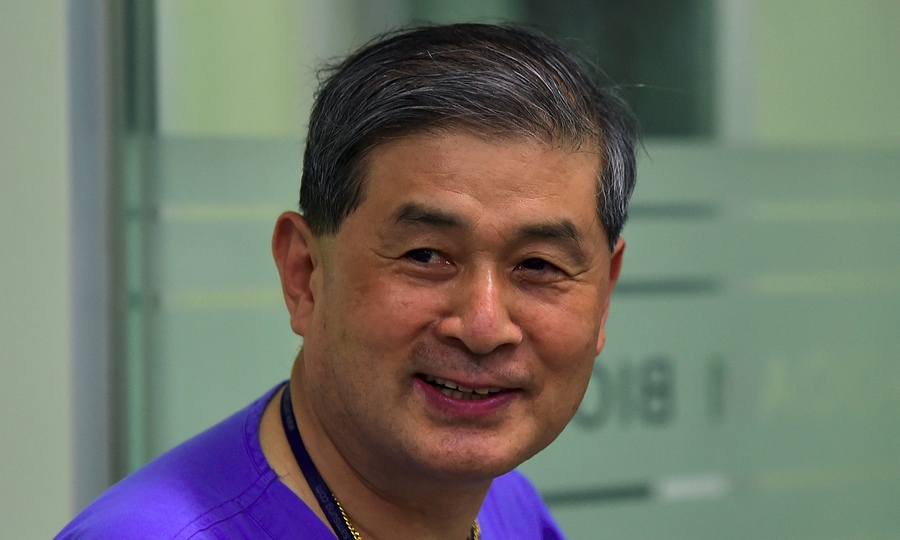
Hwang Woo-suk, the South Korean scientist whose landmark stem cell papers were found to be fabricated, has lost his Korean citizenship after becoming a UAE national and says he has applied to get it back.
A list of people who lost South Korean nationality, issued in August by the Justice Ministry's Cheongju Immigration Office, included a Hwang Woo-suk born in 1953 who acquired UAE citizenship on April 9, The Korea Herald reported.
The man's registered domicile in Buyeo, South Chungcheong Province, and other personal details matched those of the former Seoul National University professor, the newspaper said. Under Article 15 of South Korea's Nationality Act, citizens who voluntarily acquire a foreign nationality automatically lose their Korean one.
Hwang, 73, told The Asia Business Daily in an interview on Monday that he reported the loss to the South Korean Embassy in the UAE on the day he was granted Emirati nationality, then applied to regain Korean citizenship on the embassy's advice. He said he was awaiting the outcome of the Justice Ministry's review.
"I got a call asking me to come for a cup of tea, and when I went, it was a surprise ceremony granting me nationality," he said about acquiring UAE citizenship.
He also said there appeared to be no application or in-person screening in the UAE process, and that the host announced at the ceremony that although the UAE does not in principle allow dual nationality, it would let him hold both South Korean and UAE nationality.
Hwang is CEO of the UAE Biotech Research Center in Abu Dhabi, where he leads research into animal cloning, stem cells and genome editing, with a focus on animal health and biodiversity.
 |
|
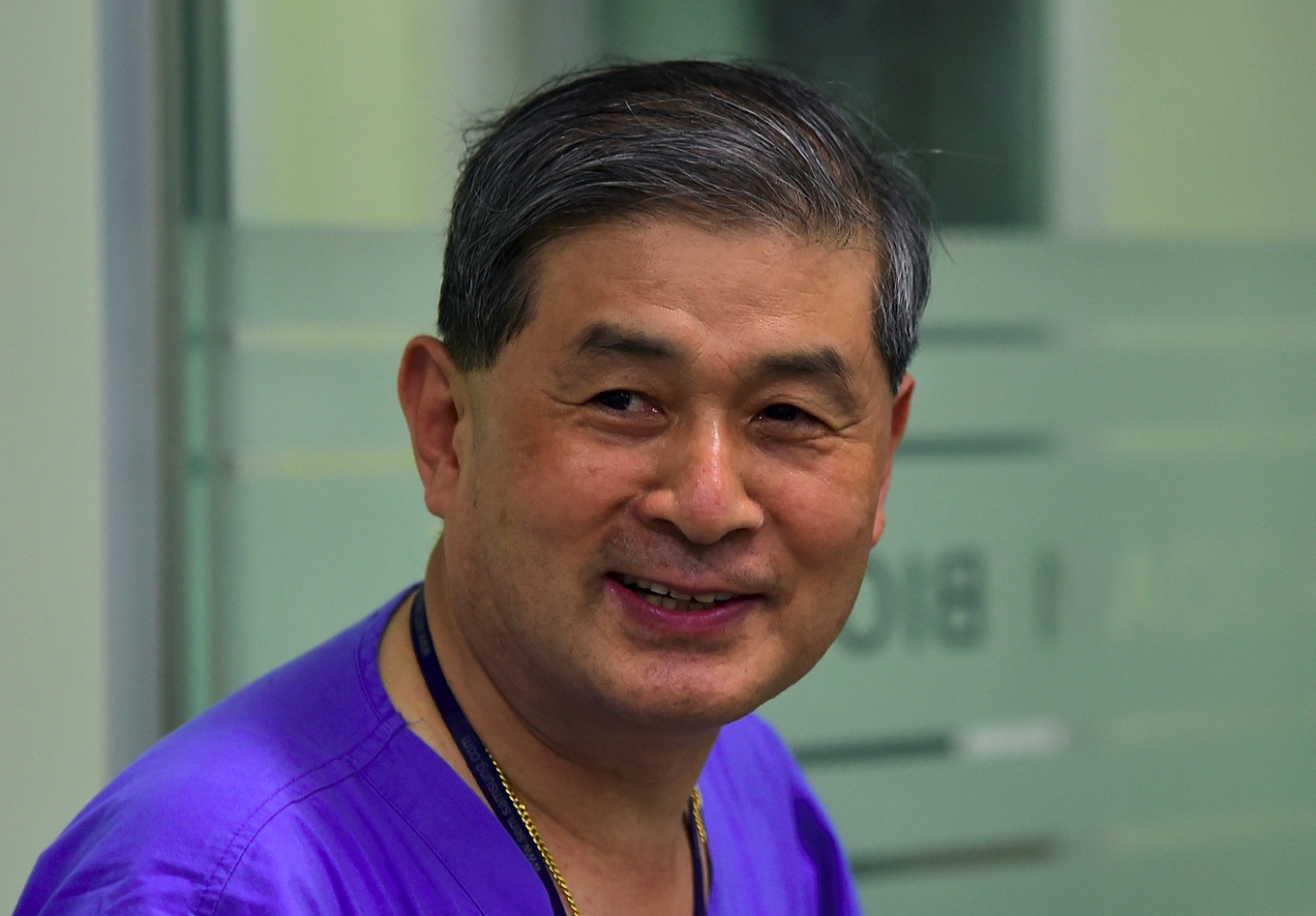
South Korean scientist Hwang Woo-Suk after an embryo injection operation on a surrogate mother dog at the Sooam Biotech Research Foundation, a world leader in pet cloning, in Seoul, June 29, 2016. Photo by AFP |
The Korea Herald said Hwang is believed to have received Emirati citizenship on the recommendation of Sheikh Mansour bin Zayed Al Nahyan, the UAE's vice president and deputy prime minister. In the 2023 Netflix documentary "King of Clones," Hwang called Mansour, who also owns English Premier League club Manchester City, his "boss."
The UAE changed its rules in 2021 to let certain foreigners, including scientists, doctors and investors, obtain citizenship through nominations by rulers, crown princes and government bodies. UAE Prime Minister Sheikh Mohammed bin Rashid Al Maktoum, who is also Dubai's ruler, said when announcing the change that recipients could keep their existing citizenship.
Under South Korea's Nationality Act, regaining citizenship requires the justice minister's approval, and those who regain it must generally renounce their foreign nationality within a year. Former nationals who enter the country at 65 or older to live there permanently can instead pledge not to exercise their foreign nationality in South Korea.
Hwang rose to international fame with two papers in the journal Science in 2004 and 2005 claiming to have created human embryonic stem cells through cloning, including patient-specific stem cell lines.
After the journal Nature raised questions in May 2004 about the source of the human eggs used in his experiments, he admitted in November 2005 that they had come from junior researchers and paid donors.
In January 2006, a Seoul National University investigative committee concluded that both papers contained fabricated data, and the university dismissed him that year.
A February 2006 report by the Board of Audit and Inspection put government funding for his research at 18.6 billion won (US$13.8 million), separate from private donations.
In October 2009, the Seoul Central District Court found him guilty of embezzling research funds and violating the Bioethics and Safety Act, sentencing him to two years in prison, suspended for three years. An appeals court reduced the sentence to 18 months, suspended for two years, and the Supreme Court upheld it in 2014.
In July, the government revoked a presidential science and technology award he received in 2004, 22 years after it was presented.
KioskNews shows a cleaned-up reading view extracted from the publisher’s page — the original always lives on their site, not ours.