Israelis Await Final Election Results As Netanyahu Remains Far From Defeated
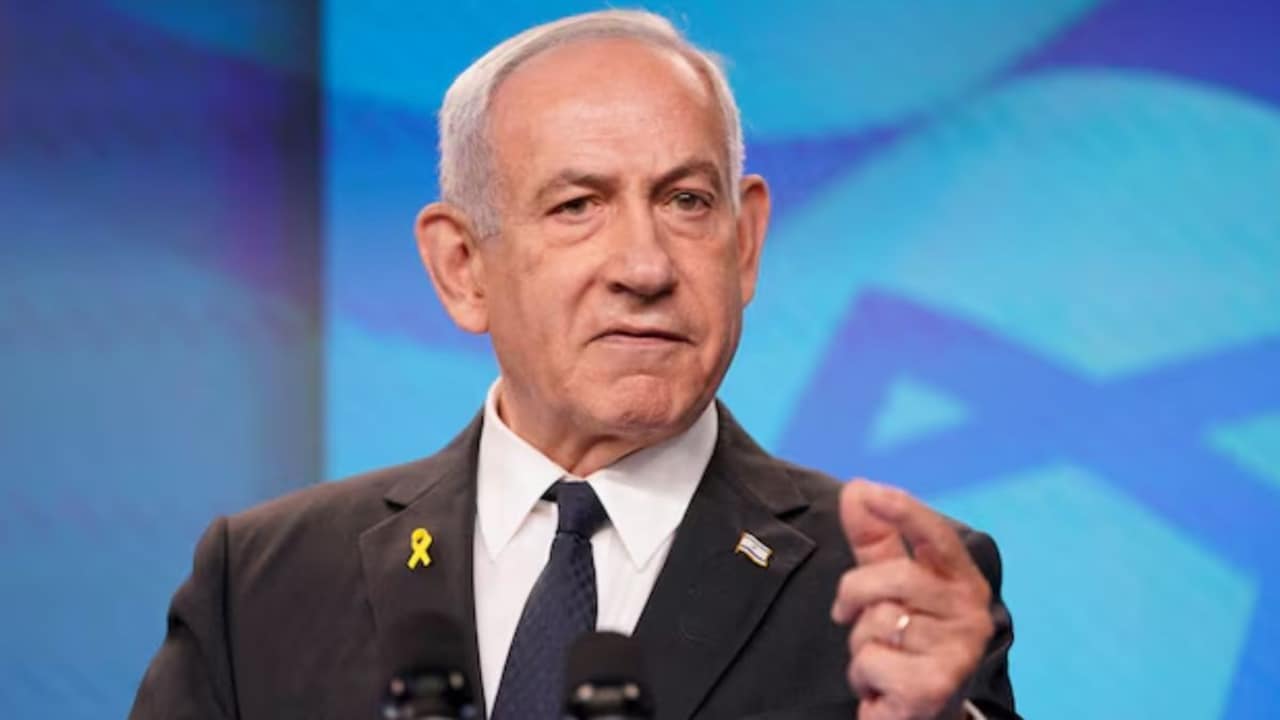
Anxious Israelis watched election results take shape Wednesday after the highest turnout in over a quarter-century, as no clear winner emerged and weeks of negotiating could lie ahead for Prime Minister Benjamin Netanyahu and an array of opposition parties trying to unseat him.
Arab-led parties made a historic showing, but it's not clear if other opponents of Netanyahu's far-right government would form a coalition with them for a majority in the next parliament. Issues around the Palestinians and their descendants remain incredibly sensitive in Israel.
Netanyahu was defiant early Wednesday as he seeks to remain the country's longest-serving prime minister. He dismissed the idea of partnering with Arab parties - whose constituents make up 20% of Israel's population - as treasonous.
"We must establish a strong, right-wing, nationalist government," Netanyahu said. "We must not endanger Israel and establish a government that relies on anti-Zionist Arab parties."
His top challenger, centrist former military chief Gadi Eisenkot, has left the door open to partnering with Arab parties under certain conditions, including their recognition of Israel as a Jewish state and of Hamas as an extremist group.
But whether some of Eisenkot's likely partners who have ruled out such an alliance will change their minds to force Netanyahu from office remains to be seen.
With 70% of votes counted, Netanyahu's Likud party has 20.6% and Eisenkot's Yashar party has 15.9%. The count from Israel's Central Elections Committee does not indicate how many seats each will have in parliament, the 120-seat Knesset. Likud's share remained lower than in the previous election in 2022, when it was 23.4%.
Election turnout was at 77.7% of eligible voters, the highest since 1999. Final results are expected in the coming days, including from hundreds of thousands of absentee ballots yet to be counted from military personnel and diplomats.
Voting reflected unease over Netanyahu's alliance with the far-right and anger over military draft exemptions for the significant ultra-Orthodox Jewish population. But results suggest that opponents were unable to capitalize on the grief sparked by the Hamas-led Oct. 7, 2023, attack and three years of war to decisively push him from office.
One partner losing support, however, was far-right National Security Minister Itamar Ben-Gvir, who for many Israelis represented the worst strain of Netanyahu's government, openly taunting Palestinian detainees and asserting that many in Gaza are "not even people."
Exit polls by major Israeli TV stations Tuesday night suggested Netanyahu's governing coalition shrank. Vote-counting suggested Likud would remain the largest party and best placed to be asked to form a government by Israel's president, Isaac Herzog. The president, however, isn't required to task the party holding the most seats.
Weeks of political negotiating appear to be ahead before a prime minister is declared - or another round of elections is called.
The easiest path to a parliamentary majority would involve Eisenkot partnering with Arab-led parties. In a speech early Wednesday that focused on national unity, Eisenkot pledged to form a government and promised "a new era - an era of hope."
If no one can put together a majority coalition, new elections could be held early next year. Israel held five elections between April 2019 and November 2022 because of a similar stalemate. Whether thousands of Israelis living abroad would again fly back home to vote, and whether Arab voters would again surge to the polls, is unclear.
Confronted with Arab parties' strong election showing, Israelis have renewed a debate about their identity.
"We have no future here if we do not stop being afraid," said Yair Golan, whose Democrats party supports bringing Arab-led parties into a coalition. "We must no longer accept Netanyahu's racist division between Jewish votes and Arab votes,"
Israel's Arab citizens are descendants of Palestinians who remained in the state after its creation in 1948. They often face discrimination and are viewed with wariness because of their solidarity with the Palestinian cause. That suspicion intensified after Oct. 7, even though Arab citizens were also among those killed and abducted.
Netanyahu had warned that Arab parties could make or break the election. He won't work with the Arab-led parties, and they have also ruled that out.
The mood was joyful overnight at the headquarters of the United Arab List, the lone Arab party to ever join a governing coalition, briefly, in 2021.
"We are here, we are not on the sidelines," party leader Mansour Abbas declared.
Some Israelis found that an unusual, if not uncomfortable, prospect.
"We are little by little coming to a situation where we have to face reality," said Hanna Doukhan, a voter in Tel Aviv. "I don't see a possibility to form a government without the Arabs."
"We don't want the government with the Arab people," said Michal Shiloh in Jerusalem, reflecting a rightward shift among some younger Israelis.
Others were hopeful. "This would open the door to repairing our society" while preserving Israel as the national home of the Jewish people, said Eti Wissotzky-Cohen in Tel Aviv.
Minority governments are possible, but they must rely on cooperation from parties outside the government to pass legislation.
Netanyahu has had a nearly unbroken 17-year rule. Israelis were divided over him even before the deadliest attack in the country's history. The resulting wars, along with settler violence in the occupied West Bank, have stoked worldwide outrage, straining ties with Israel's closest allies and fueling a rise in antisemitism.
Netanyahu's supporters believe he is protecting Israel's security and Jewish identity in the face of international pressure and liberal elites at home.
Detractors say Netanyahu, facing an ongoing corruption trial, dragged out the war in Gaza and its hostage crisis for political reasons. They say he is undermining Israel's independent judiciary. And they accuse his government of allowing ultra-Orthodox religious Jews to avoid military conscription.
Eisenkot is viewed by supporters as a capable leader with sterling security credentials. His son and two nephews were killed in Gaza, and his backers believe that he feels deeply the country's pain. Parties that likely would partner with him have vowed to improve Israel's international standing and work to conscript ultra-Orthodox men while bolstering the independence of the judiciary.
(Except for the headline, this story has not been edited by NDTV staff and is published from a syndicated feed.)
KioskNews shows a cleaned-up reading view extracted from the publisher’s page — the original always lives on their site, not ours.