Build up or lock out: How Melbourne’s housing ‘success’ is set to divide voters
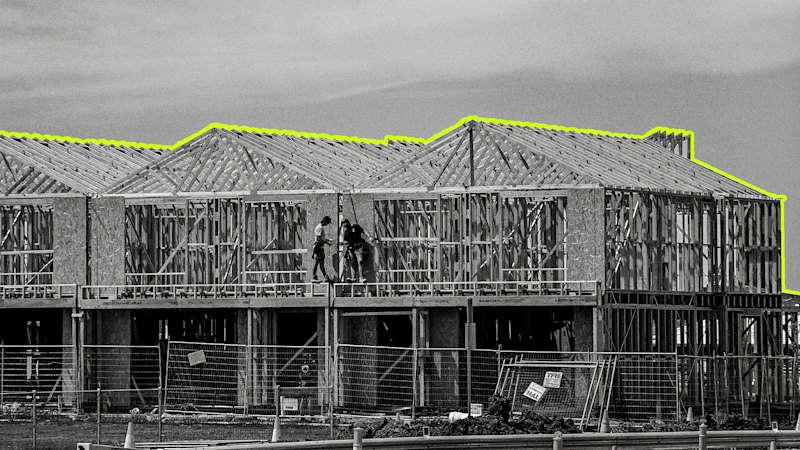
Melburnians can choose to accept apartment buildings around train stations or forever lock young people out of living in the city’s middle and inner suburbs, planning minister Sonya Kilkenny has claimed.
The Coalition is preparing to make Labor’s controversial “activity centres” a key issue in the November election, with Opposition Leader Jess Wilson saying it can increase housing supply while axing the government’s 60 centres, which have rezoned areas around train stations and tram stops through Melbourne’s established suburbs to allow towers of up to 20 storeys – often to the outrage of local communities.
But housing experts and advocates say Melbourne’s relative housing affordability is a bulwark against the national cost-of-living crisis that should be safeguarded by building more homes within established suburbs.
The policy fight comes as rents across the city have risen over the past 12 months to the highest levels on record – sitting at a median of $600 a week for both units and houses in September, according to Domain data.
However, Melbourne still has the cheapest rent of any capital city compared to average rents of $835 a week in Sydney, and $700 in Brisbane.
Buying a home is also cheaper in Melbourne than in all other capitals, bar Hobart and Darwin, with a median price of $780,550, compared to $1.19 million in Sydney and $1.04 million in Brisbane.
Grattan Institute housing expert Matthew Bowes said affordability and the supply of new housing would have declined more in response to rising interest rates and construction costs, if not for the state government’s overhaul of the planning system.
“What we’ve seen since the pandemic is house prices have risen rapidly along with rents around the country, but that growth has been slower in Melbourne,” he said.
“That’s a sign of success in our ability to build the homes in places people want to live, both in greenfield suburbs and in infill areas. And whoever’s elected at the next election needs to be looking at ways to try and continue that success.”
Labor committed in 2023 to build 80,000 homes a year over the following decade across the state, but has so far struggled to reach that target as soaring construction costs and interest rates undermine the viability of new residential works.
Australian Bureau of Statistics data released last week showed that 56,243 dwellings were built in Victoria in the 12 months to June – 140 fewer than the previous year, and 5058 fewer than the average over the previous decade. Construction commenced on 57,589 homes, an increase of 1613 year-on-year but 5446 below the previous 10-year average.
Bowes said it would take time to reverse the large increases in housing unaffordability over the past two decades, but that Melbourne was in a much better position to do so, compared to other capital cities, because of the planning reforms.
The most successful of those was arguably Labor’s townhouse and low-rise code, which permitted multiple low-density properties to be built on a single suburban block, he said. Other states were now looking to adopt this policy.
“We should be trying to keep that trajectory going, even if it does take time to make big gains,” Bowes said.
Jonathan O’Brien, from the pro-housing supply advocacy group YIMBY Melbourne, said Victoria’s relative housing affordability was the state’s “number-one asset” and the biggest lever the state government had to address the cost-of-living crisis.
“The fact that Melbourne can offer Sydney wages and 2019 Brisbane rents is insane. It’s such a good deal for young, aspirational people who want to work at a firm, start a job, meet their partner, do all the things that cities offer, and to be able to do it with more disposable income in Melbourne than anywhere else in the country,” he said.
O’Brien said rolling back the activity centre program, or other reforms intended to unlock supply, would ultimately erode that advantage and Victoria’s ability to grow out of its budgetary woes.
The opposition said rather than rely on activity centres, it would deliver more homes by fast-tracking greenfield developments in the outer suburbs and across regional cities.
It also says it will expand the CBD zone to spread high-rise development into inner-city suburbs such as Southbank, Parkville, North Melbourne, Collingwood, Fitzroy and Fishermans Bend.
“Under Labor, Victorians have no voice and no choice in the future of their own communities,” housing and planning shadow minister David Southwick said.
“Our team will scrap Labor’s high-rise, high-density activity centres, restore the voice and rights of locals in our planning system, and work with communities – not against them – to get more homes built.”
The Coalition has not set an alternative statewide housing target and has not said whether it would keep Labor’s townhouse and low-rise code.
However, Planning Minister Sonya Kilkenny, who has overseen Labor’s reforms, said scrapping the activity centres program would remove 300,000 homes from the state’s long-term housing supply, which could not be met with other types of development.
“That is an enormous cut to the number of homes and will have a big impact on supply and the ability for young Victorians to find homes,” Kilkenny said.
Communities have often been outraged by the activity centre plans, which bypassed local councils.
Kilkenny said that while she respected this feedback, too many middle suburbs – which had benefited from substantial government investment in transport services and other infrastructure – had shut the door to fellow Victorians who needed somewhere to live.
“It is a question of equity and fairness. We have so many young Victorians who are losing hope that they’re going to be able to find a place to live. That is what these planning reforms are about. It’s ensuring that kind of fairness and equity, and sharing our suburbs,” she said.
Kilkenny said outer-ring growth suburbs had also carried a disproportionate share of population growth. While the government has planned for 180,000 new greenfield homes over 10 years, she warned against the Coalition pledge to accelerate that.
“You can’t let the greenfields just rip. If you do, you will end up with suburbs of houses, but no supporting infrastructure, like the schools, the transport, the services, the shops, the parks,” she said.
Victorian Council of Social Services chief executive Juanita Pope said even if Victoria is faring better than other states, it is still in the midst of a housing affordability crisis.
One in three Victorians rent, and are increasingly being driven into financial stress by rent increases, she said.
Pope said whoever wins in November should keep and build on the renter protections introduced in 2021 by limiting how much a landlord can hike rents in a single year.
Pope said Victoria also needs to “turbocharge” social housing investments to bring it up to the national average of 4.5 per cent of all housing stock. That would require building 8000 new social homes annually for 10 years.
There were 58,021 households on the social housing waitlist as of June – 1787 more than a year earlier.
This year’s state budget committed to building just 7000 social homes over the next 10 years. “That’s a great start, but it’s about 10 per cent of what we need,” Pope said. “Decades of underinvestment have left Victoria with the lowest level of social housing nationally.”
Urban Development Institute of Australia’s CEO Linda Allison, whose group represents property developers, said members were struggling to make apartment buildings financially viable in the face of rising construction costs, easing property prices, high taxes and additional levies to build in the areas the government wants more housing – such as the new Suburban Rail Loop precincts.
Allison said the industry supported the Coalition’s plan to accelerate development on the city’s fringe, given the capacity to deliver more detached houses there, which remained the strong preference among Victorians.
However, she also said the industry supported the activity centre program and was concerned about the Coalition’s pledge to scrap them.
“The status quo hasn’t been working in terms of encouraging more density. A lot of that is to do with interference from local councils. So the activity centres and the planning reform we are largely supportive of, and we would be disappointed to see those ripped up,” Allison said.
As part of its housing policy, the Victorian Greens have proposed abolishing stamp duty for homes up to $1.1 million and reducing it on a sliding scale for homes up to $1.6 million, paid for by increasing land tax on investors with residential portfolios worth $5 million or more, along with caps on rent increases and an increase in public housing.
One Nation Victoria says it would improve housing affordability by winding back land taxes to slow rent increase, review other taxes and charges that add to the cost of building new homes, and raising taxes on foreign buyers to reduce competition.
Melbourne Assembly will be held from October 19 to October 21. More information is available on the Melbourne Assembly website.
Get the day’s breaking news, entertainment ideas and a long read to enjoy. Sign up to receive our Evening Edition newsletter.
KioskNews shows a cleaned-up reading view extracted from the publisher’s page — the original always lives on their site, not ours.