Hong Kong mustn’t miss the boat on the Pinglu Canal and Asean trade
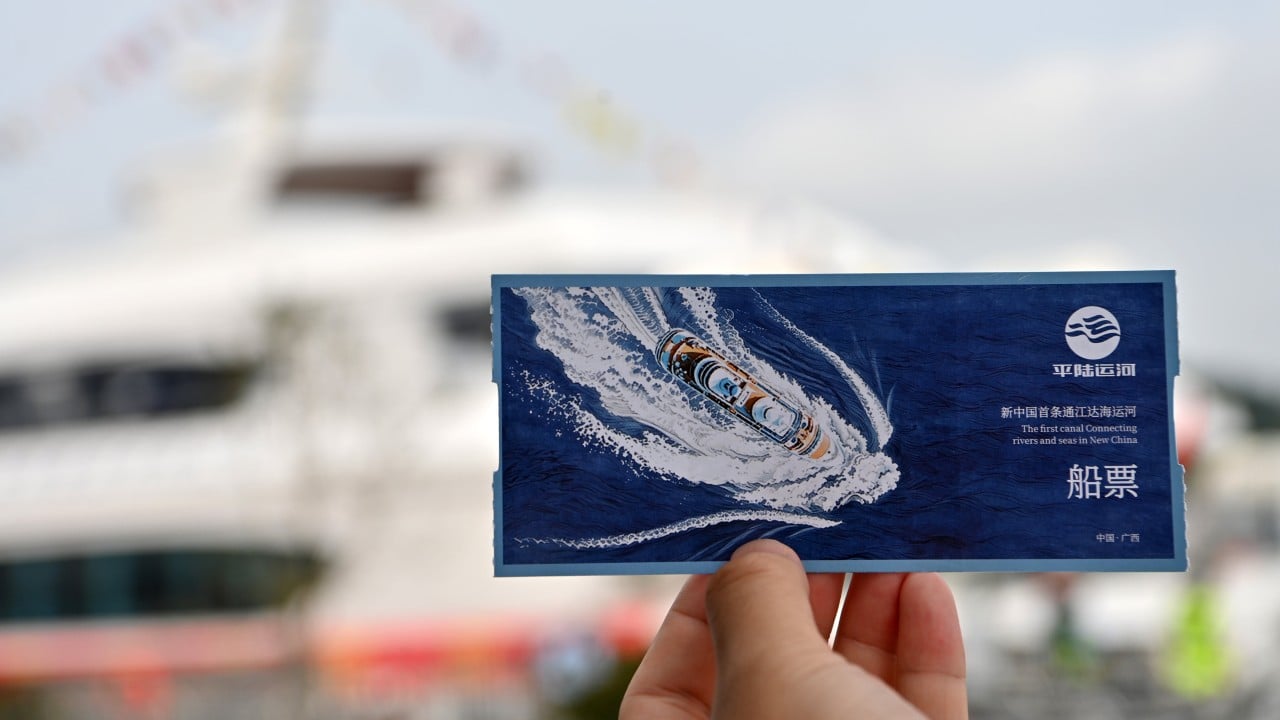
The official opening of the Pinglu Canal on September 16 is a milestone in modern Chinese history. More than an infrastructural feat, it signals a strategic recalibration of how China’s inland economies connect with the sea and Southeast Asia, and augurs the next phase of regional growth.
Designed for vessels of up to 5,000 tonnes, the 134.2km (83.4 mile) waterway stretches from the Xijin reservoir in Hengzhou, an emerging city in Guangxi, to the Gulf of Tonkin (known as the Beibu Gulf in China), providing southwestern inland provinces with a shorter and more cost-effective route to global markets.
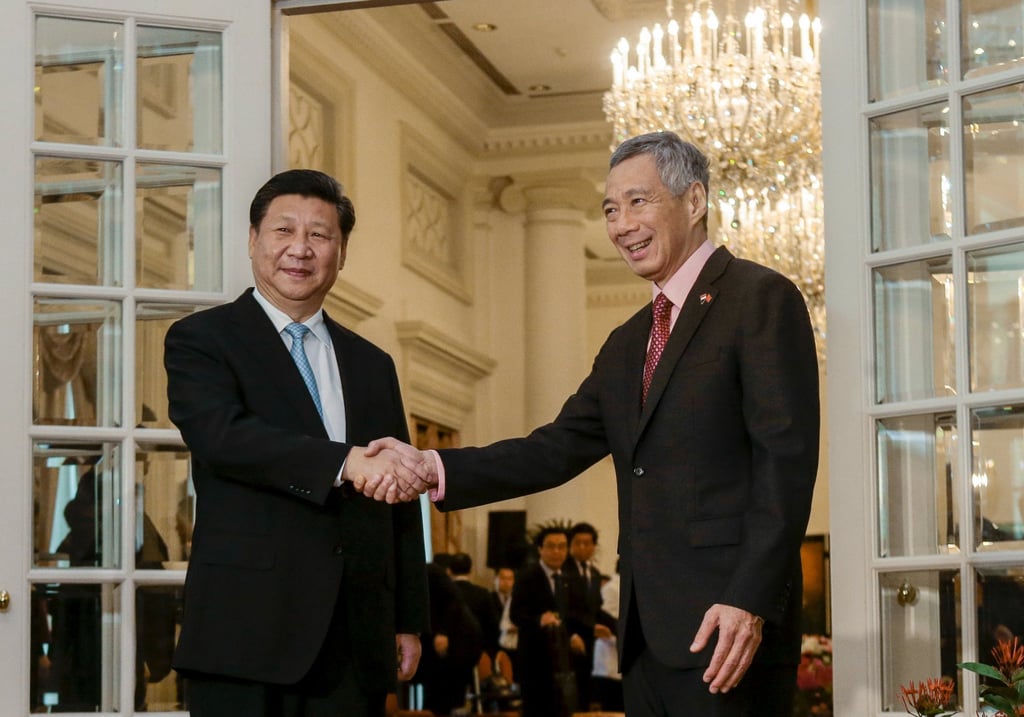
Strategically, it anchors the New International Land-Sea Trade Corridor, a rapidly growing artery that was first conceptualised under the China-Singapore (Chongqing) Connectivity Initiative endorsed in 2015 by President Xi Jinping and Lee Hsien Loong, then prime minister of Singapore.
The Belt and Road Initiative has entered a new phase of growth, with a stronger focus on deepening exchanges between specific Chinese provinces and countries with which they share substantial economic complementarities.
Southwestern China has become a powerhouse for new energy vehicles, auto parts and the kind of products Southeast Asian economies need in the transition from fossil fuels to renewable energy. Chongqing’s new energy vehicle industry is gaining momentum, Guizhou is a major centre for lithium battery materials, while Yunnan draws on its hydropower resources to process silicon for photovoltaic panels; Sichuan, meanwhile, is home to one of China’s largest deposits of lithium ore, vital to long-range batteries.
Traditionally, goods manufactured in these provincial economies would be routed to faraway eastern ports for export. The canal now provides a significantly faster alternative.
Local authorities estimate savings of more than 5 billion yuan (US$744.80 million) annually in logistics expenses. The economic potential extends beyond immediate cost savings: the canal is conducive to expanding the hinterland of the Beibu Gulf and higher-value industrial clusters along the corridor, as well as strengthening the flow of manufactured goods, minerals, agricultural products and energy-related materials between southwestern China and Southeast Asia.
The new waterway also connects with the China-Europe Railway Express, the China-Laos Railway and other key networks, offering enhanced transport and logistics connectivity.
For manufacturers, the heightened efficiency and lower cost will be a boon. Equally significant are the employment opportunities; the canal created substantial employment during its four-year construction period and is expected to sustain jobs in port operations, warehousing, shipping and ancillary services.
Yet the deeper significance lies in the timing. China’s trade with the Association of Southeast Asian Nations exceeded US$1 trillion for the first time in 2025, and continued to gather pace in the first seven months of 2026, rising 24.7 per cent year-on-year to US$744.41 billion.

China has remained Asean’s largest trading partner for 17 consecutive years, while the bloc has been China’s largest trading partner for six years running. The canal is a physical response to an economic reality: Asia’s growth is becoming more regional, more connected and more dependent on efficient corridors for goods, capital and opportunities.
Asean’s economic rise is transformative for its population of 693 million and the rest of Asia. For Chinese businesses, Asean provides a sizeable middle-class consumer base; for Asean firms, China provides access to reliable financing, advanced technology, talent and sophisticated supply chains.
The Pinglu Canal’s significance for Asean is both immediate and strategic. Speaking at the 23rd China-Asean Expo in Nanning, Asean secretary general Kao Kim Hourn stressed that the canal provides China’s landlocked southwest with a crucial direct gateway to maritime routes, opening up new opportunities for both sides.
This complementarity can only deepen, following the signing of the China-Asean Free Trade Area 3.0 upgrade protocol in October 2025, which expands bilateral cooperation into the digital economy and the green economy.
02:22
China links its inland with Asean through new Pinglu Canal in Guangxi
Here in Hong Kong, there are plenty of opportunities for us to contribute. Our city’s strengths in project finance, infrastructure bond issuance and green financing can support the ongoing development of canal-adjacent industrial zones and port facilities.
Hong Kong’s marine insurance and reinsurance specialists can underwrite cargo moving through the canal, while our legal and arbitration services offer a trusted dispute resolution framework for cross-border commercial agreements. Logistics consultants and trade finance providers all have roles to play in optimising the flow of goods along this new corridor.
Asean is one of the most important partners for Hong Kong and its importance will only continue to grow. This was underscored by the signing of the First Protocol to Amend the Investment Agreement between Hong Kong and Asean this month, which ensures non-discriminatory treatment for Hong Kong firms across the 11 Asean member states.
The Pinglu Canal provides fresh impetus to the deepening of China-Asean ties through Hong Kong. The work of the relevant sectors would also reinforce the city’s standing as a global hub, superconnector and value-added partner for both China and Asean.
KioskNews shows a cleaned-up reading view extracted from the publisher’s page — the original always lives on their site, not ours.