LSO/Pappano review – bold, dramatic and cohesive reading of Mahler 2
There have been a fair few Resurrection Symphonies this year, and a positive glut on disc, but Antonio Pappano has form with Mahler and the London Symphony Orchestra can be relied upon to follow where he leads. First, though, the UK premiere of a new work by Dai Fujikura that had precisely nothing to do with the main event but was no less interesting for that.
Amber Alchemy, commissioned to celebrate the centenary of Nomura Holdings, was inspired by the beehives atop the Japanese financial company’s London offices. In his programme note, the composer expressed his intention to evoke rather than illustrate, yet it was hard to ignore the orchestral buzz that underpinned much of this engaging 10-minute work. Quivering strings and a shimmer of vibraphones opened proceedings with striking instrumental gestures trailing off in flickering diminuendos. Pappano and the LSO brought a commendable clarity to Fujikura’s intricately interwoven lines, contrasting the music’s romantic outward sweep with its apian inner restlessness.
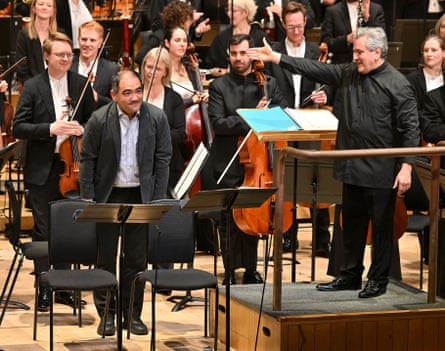
As for the Mahler, conductor and orchestra hit the ground running with a resolute and dramatically turbocharged account of the opening movement. Pappano unearthed much that felt fresh in a ferociously instinctual reading where clipped marches resolved in walloping payoffs and a massive rallentando two-thirds of the way through caused hearts to leap into mouths. Despite the sound and fury, balance and discipline were outstanding, spotlighting limber woodwind solos and clattering col legno strings that bristled with theatricality.
Choices throughout were bold, and yet pretty much everything came out right as Pappano bound potentially disparate episodes into a cohesive whole. The central scherzo was a sinuous delight, an aqueous perpetuum mobile that saw the orchestra transmogrified into a pool of wriggling fishes.
Contralto Noa Beinart delivered an unaffected Urlicht, before the orchestra launched into a formidable finale: at one point the terrifying army of the dead sounded as if it was battering on the very doors of the concert hall. Only the divine apotheosis, where at first the otherwise excellent London Symphony Chorus felt overly urgent, faltered, hampered by the boxy acoustic of an auditorium unable to contain such a heavenly climax.
KioskNews shows a cleaned-up reading view extracted from the publisher’s page — the original always lives on their site, not ours.