NTT Global Data Centers weighs the price tag of not building fast enough
SPONSORED POST: As AI hunger soars, NTT Global Data Centers finds it's permits, not parts, that could cap the datacenter boom
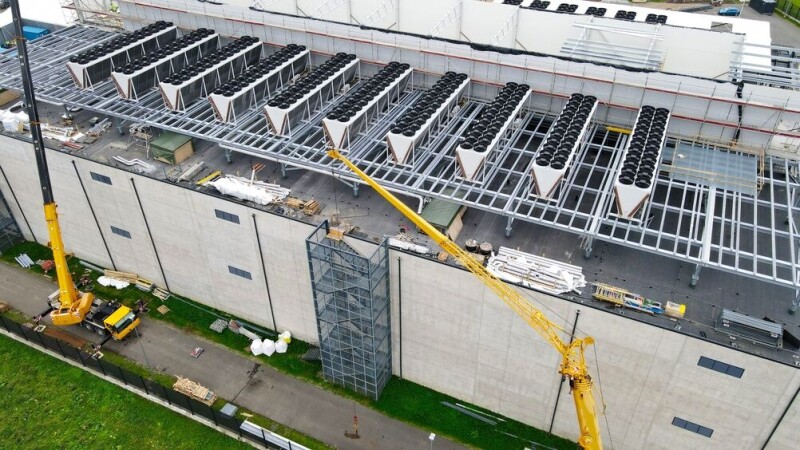
The next 200-megawatt data center permitted in your county probably won't look like the buildings you remember from a decade ago. It will occupy the footprint of two or three football fields and draw more power than most nearby industrial parks combined. It will also likely trigger a town hall meeting before the first pad is poured. That collision between AI-driven demand and physical reality is what NTT Global Data Centers set out to quantify in its new AI Stress Test Report.
The report models three growth trajectories through 2030 and stress-tests each against the constraints operators hit, such as land availability, water consumption, specialized labor and more. The middle (baseline) scenario projects annual demand growth of about 23 percent, which pencils out to roughly $3.8 trillion of additional investment in digital infrastructure. Ramp to the accelerated case and the figure climbs to $5.7 trillion.
Bruno Berti, CTO at NTT Global Data Centers, notes that he has watched the size envelope stretch beyond recognition.
"We used to build ten-megawatt buildings, smaller buildings, to support some of these applications," says Berti. "But now we're building buildings that are hundreds of megawatts, double the size, sizes of two, maybe sometimes three football fields."
Why permitting became the choke point
Ask most operators what will bottleneck AI infrastructure and you'll hear GPUs, transformers, switchgear. NTT Global Data Centers’ stress test suggests something more mundane: paperwork, planning and process. Power availability and deployment timelines, not fiber capacity, are the gating factors in the scenarios modeled. Berti puts it plainly: it doesn't matter how quickly you can get GPUs if you can't get a permit to put them anywhere.
That reframes the strategy question. Berti argues against a "build, baby, build" reflex, preferring a portfolio approach that treats capacity expansion as a system-wide coordination problem rather than a land race.
The misconceptions that stall projects
Two objections come up in almost every community consultation, according to Berti: data centers waste water, and they steal power from the grid. Both are misconceptions and come from an older generation of facilities. Modern designs, he says, use liquid cooling technology, which removes heat more effectively, eliminating excess water waste. Additionally, operators plan the new class of hundred-megawatt-plus sites in partnership with utilities years in advance, often with on-site solar, wind or other renewable generation that can help stabilize the grid rather than drain it.
His conclusion is blunt: transparency builds trust. So, the industry has to stop treating what it does as a secret and start to build that trust through education and partnership if it wants the permits it will need through the decade to turn capacity into reliable AI infrastructure that can benefit communities, policymakers and businesses alike.
KioskNews shows a cleaned-up reading view extracted from the publisher’s page — the original always lives on their site, not ours.