Nigeria should price domestic crude at production cost, says Donald Duke
*Urges commercial sale of other crude-oil products
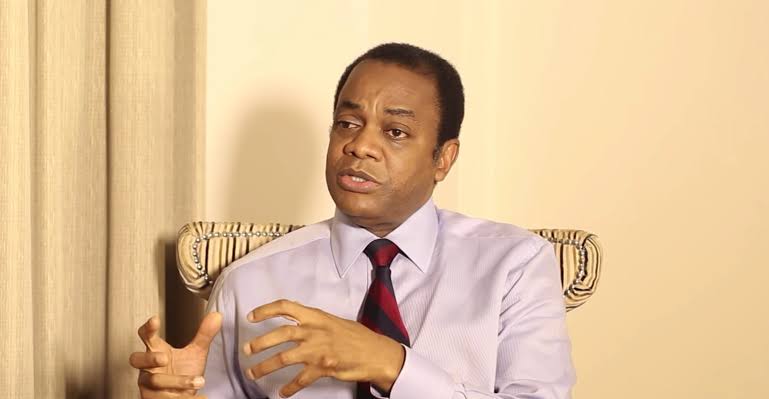
Former Cross River State governor and presidential candidate of Peoples Redemption Party, PRP, Donald Duke, has said Nigeria should supply crude oil for domestic refining at its production cost, rather than its international market price.
He stated that the proceeds from diesel, aviation fuel, kerosene and other by-products would reduce the cost of petrol.
Duke, who spoke in an interview in Abuja weekend, against the backdrop of renewed controversy over former Vice-President Atiku Abubakar’s declaration that he would restore petrol subsidy if elected president in 2027, said: “I don’t believe there is a subsidy. I have said it at several forums. This oil is our own.
”It belongs to all of us. It is our commonwealth. Don’t look at the price of oil in the international market.”
He stated further that Nigeria required about 300,000 barrels of crude oil daily for domestic consumption out of its estimated production of 1.7 million barrels, leaving the balance available for commercial export.
He argued that the crude allocated for domestic refining should be priced based on the cost of producing it.
“We produce about 1.7 million barrels. About 1.4 million barrels we sell commercially. This 300,000 barrels, look at the cost of production, not the international price.
“While we sell oil at $70 or $80 a barrel, the cost of production may not exceed $40 a barrel. That barrel has about seven by-products,” he stated.
Duke added that petrol represented only one of the products derived from crude oil and should not be made to bear the entire cost of the barrel.
“Give it to us at the cost of production, not at the market price. Take into cognisance the cost of refining and distribution and put five or 10 per cent above it.
“Sell the five other by-products from a barrel of crude at commercial rates. You will find that you can easily amortise the petrol and give it to your people at N200 or N300.”
An analysis credited to Chief Ekpenyong Eyo illustrates Duke’s argument by estimating that a barrel of crude produces about 55 litres of petrol alongside diesel, aviation fuel, liquefied petroleum gas, naphtha and other products.
Using assumed market prices, the analysis puts the combined revenue from the other products at about N136,350 from a barrel purchased for N150,000. It estimates that petrol would be left to recover only N13,650 of the crude cost, translating to about N248 per litre before refining, distribution and marketing expenses.
The calculation is illustrative, as actual refinery yields, production costs and product prices vary. Duke’s central argument, however, is that the revenue from all products obtained from a barrel should be considered when determining the domestic price of petrol.
He said affordable energy should be treated as Nigeria’s competitive advantage and an instrument for stimulating production rather than merely as a source of government revenue.
“Why is it important? That is what drives your economy. That is what drives the country. You have got to use what you have to get what you want,” he said.
Duke also rejected the argument that cheaper petrol would inevitably be smuggled into neighbouring countries, saying the government should improve border enforcement instead of making Nigerians pay more.
He said: “Are you going to punish your people because you cannot police your borders? You can dye your petrol. You can say petrol from Nigeria is purple, blue, yellow or red. It does not affect the engine. ”If you find that colour of petrol in Chad or Niger, you know it came from Nigeria. Your security agencies should find out how it got there.”
The former governor’s position introduces another dimension to the widening subsidy debate.
Recall that President Bola Tinubu has consistently defended the May 2023 subsidy removal, arguing that it saved Nigeria from bankruptcy and freed resources previously consumed by an unsustainable subsidy regime.
Atiku has promised to restore a form of subsidy if elected, contending that the savings from the removal had not been transparently invested in security, education, employment and poverty reduction.
Former Labour Party presidential candidate and candidate of Nigeria Democratic Congress, NDC, in 2027 elections, Peter Obi, supported ending the old subsidy arrangement but maintained that it should have been removed gradually and that the savings should have been invested in programmes that directly improved citizens’ welfare.
Duke rejected externally prescribed economic policies that failed to reflect Nigeria’s realities, saying advanced economies also supported essential sectors to protect their people.
“Don’t follow the Bretton Woods institutions, the World Bank and IMF, when they tell you that subsidy is why you are poor.
“They subsidise food because they have to keep their people productive. Whatever keeps your people alive and you have in abundance, use it.
“I am not saying sell it at a loss. Sell it at the cost of production and add maybe 10 per cent. That subsidy issue has to be revisited, and we have to understand what subsidy really means,” he said.
KioskNews shows a cleaned-up reading view extracted from the publisher’s page — the original always lives on their site, not ours.