A Chinese cook in the Middle East serves up a very different anti-war film
Jianlu Bi is a senior fellow at the Foreign Policy in Focus think tank at the Institute for Policy Studies in Washington, DC, and a research fellow at the Charhar Institute in Beijing.
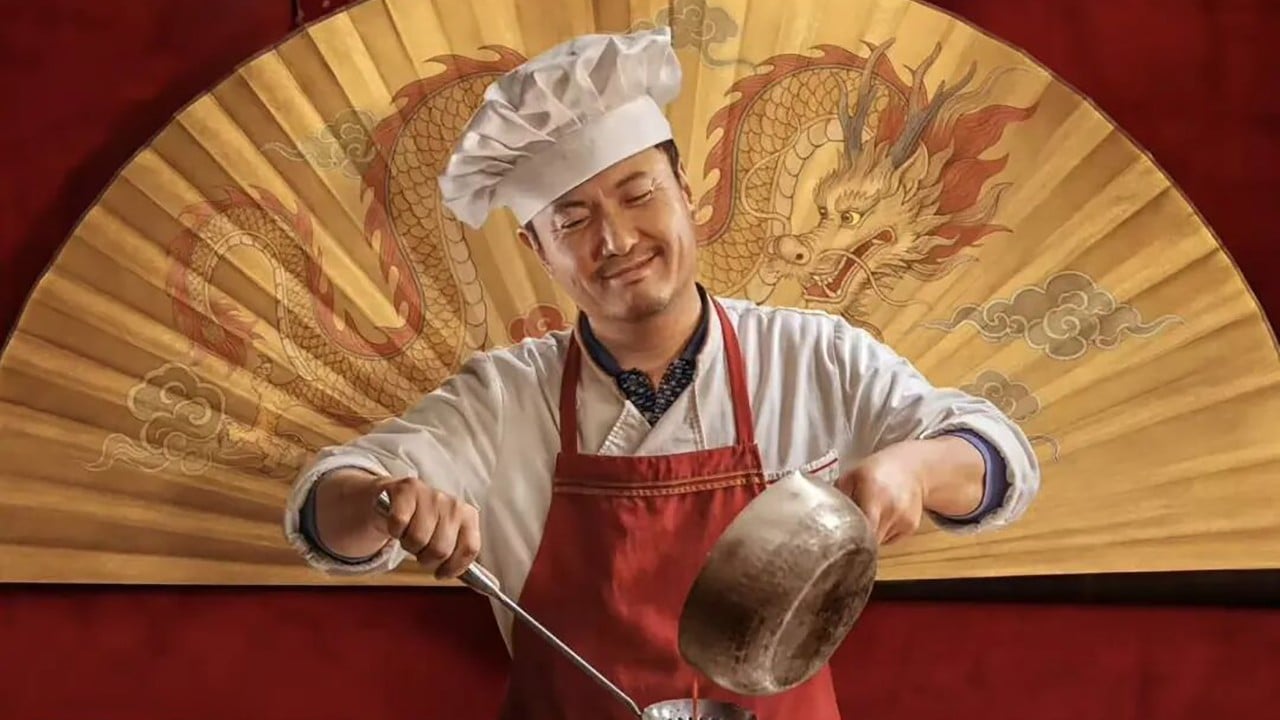
This summer, Chinese anti-war film Once Upon a Time in the Middle East has dominated the mainland box office. The film implicitly answers the question: what happens when a story about international conflict is told, not through the sights of an assault rifle, but through a gentler lens?
It offers a fundamental restructuring of cinematic narrative paradigms, one that challenges decades of Hollywood inertia. For nearly a century, mainstream international anti-war cinema has been heavily anchored in the Western hero’s crucible. From The Hurt Locker to American Sniper, classic Hollywood conventions have framed global conflict through a distinct lens: military intervention, the combatant’s moral angst or the intervention of a solitary “saviour” imposing order on local chaos.
While these films often critique the horrors of war, they inadvertently reinforce a paternalistic dichotomy – reducing local populations to passive victims who form the backdrop to the agency of foreign soldiers.
Once Upon a Time in the Middle East dismantles this formula. Its protagonist, Xu Fu, is neither an elite mercenary nor a geopolitical agent. He is an ordinary Chinese cook earning a living abroad to pay off debt. When war erupts around his small restaurant, he neither picks up a weapon nor delivers lofty ideological speeches. Instead, he simply keeps the cooking stoves lit.
By centring a civilian whose primary act of defiance is feeding people, the film shatters the Western “saviour” archetype. It reframes anti-war drama from a spectacle of military prowess to a quiet testament to human endurance. This shift has ignited a fresh debate about global storytelling: can international cinema move past the binary of conqueror vs victim to build narrative tension around the preservation of daily life?
Trailer Chinese Movie Once Upon A Time in the Middle East 2026 United States Invasion Iraq US August
Once Upon a Time in the Middle East’s narrative is rooted in Chinese history. The protagonist’s name, Xu Fu, brings to mind the alchemist sent overseas by Emperor Qin about 2,200 years ago. Yet while the ancient Xu sailed to seek imperial immortality, the modern Xu travels simply to earn a living. He represents generations of Chinese migrants who built roads, manned kitchens and quietly endured hardships in foreign lands.
KioskNews shows a cleaned-up reading view extracted from the publisher’s page — the original always lives on their site, not ours.