Capt launched it, Channi ‘named’ it, Mann distributes cards: Punjab’s Lal Lakir scheme
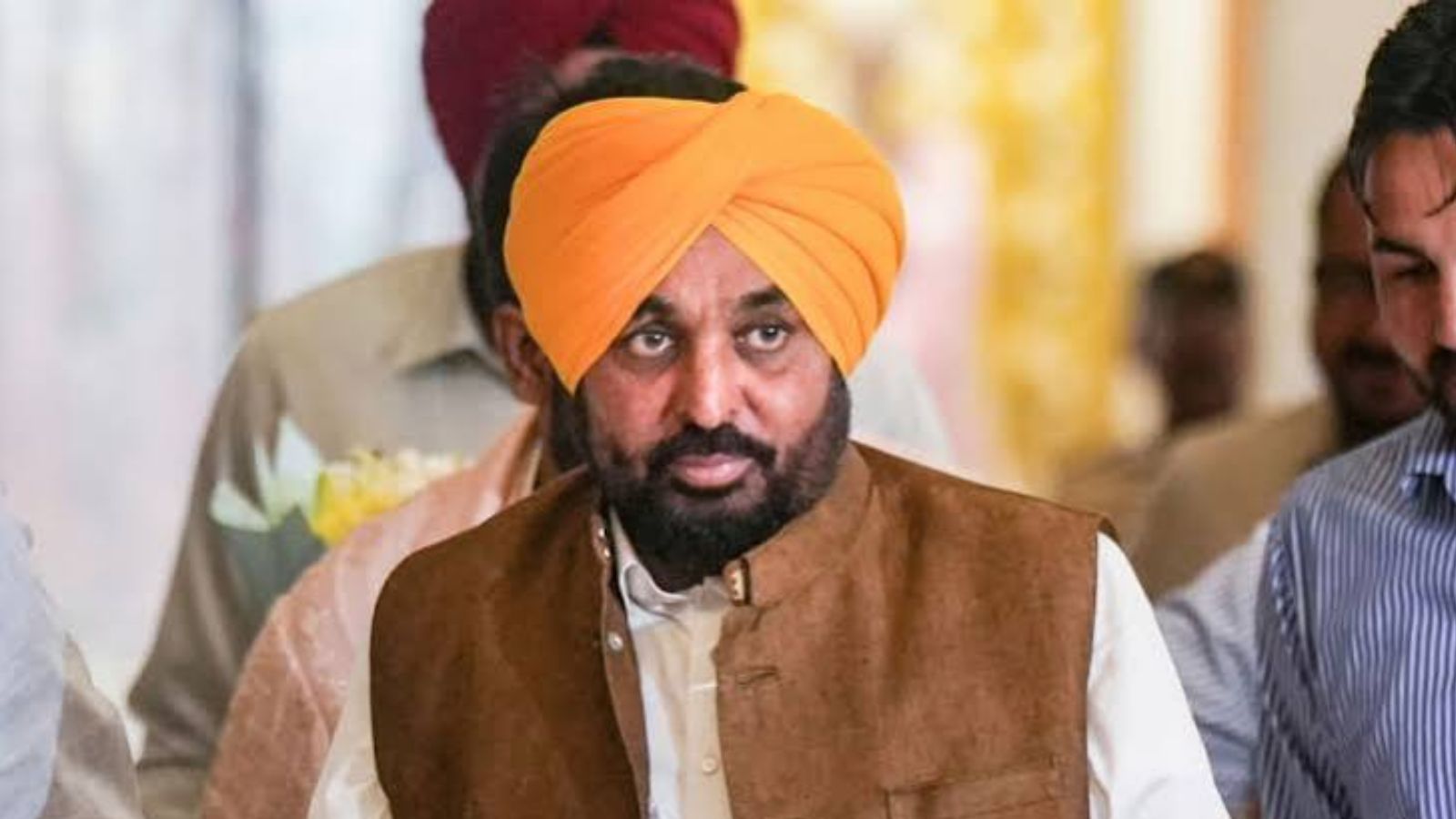
Nearly six years after the process of granting ownership rights to houses in Punjab’s Lal Lakir areas was initiated, the state has finally begun distributing property cards, with three successive governments headed by Capt Amarinder Singh, Charanjit Singh Channi and Bhagwant Mann having been associated with the scheme.
Initiated as Mission Lal Lakir under the Amarinder-led Congress government in February 2021, the scheme was renamed Mera Ghar Mere Naam by the Channi government, which took over after Amarinder’s ouster in September that year. Mann-led Aam Aadmi Party government has now started distributing the cards, with 2.19 lakh issued in 1,377 villages across 23 districts as of November 2.
“This scheme was initiated by my government in 2021. These people (AAP government) are just claiming credit for what all I had done. This is true for many other schemes. They just hog the credit while the work was done by my government,” Amarinder told The Indian Express.
Channi also claimed credit, saying he had initiated it and coined the name Mera Ghar Mere Naam.
“The scheme was started by me when I was the Chief Minister. In fact, I was the one who coined the name Mera Ghar Mere Naam. The Mann government has delayed the scheme. It should have been completed in the first year of its government because we had done all the spadework. I did not have enough time to extend the benefit to all beneficiaries as my government was in power for only 111 days,” he said.
He added that the Mann government could not claim credit for a scheme initiated during his tenure. “The entire world knows it,” he said.
The state has set November 15 as the deadline for completing the first phase, covering 2,284 villages. The exercise will cover 10,689 villages in four phases, with the final phase scheduled for completion by January 2027.
Revenue Minister Hardeep Singh Mundian on Tuesday said that the scheme was being implemented under the Punjab Abadi Deh (Record of Rights) Act, 2021, enacted during the Channi government. The Act provides the legal framework for preparing ownership records of houses and plots in the inhabited areas of villages.
Story continues below this ad
The distribution of property cards began at a state-level function in Sangrur on October 7, 2026, and is now being carried out daily. The second phase, covering 1,680 villages, is targeted for completion by the end of November; the third, involving 1,152 villages, by mid-December; and the remaining 5,579 villages in the fourth phase by January 2027.
The scheme seeks to establish ownership rights over properties within the Lal Lakir, also known as Abadi Deh, through drone-based surveys and preparation of a Record of Rights. These inhabited portions of villages were historically not surveyed or entered in revenue records, leaving families without official documents to establish ownership or property boundaries.
The absence of formal records often led to disputes within families and with neighbours, while making it difficult for residents to use their houses as collateral for bank loans. It also hampered village-level development planning.
Mundian said the scheme would particularly benefit economically weaker sections and Scheduled Caste families, for whom a house in the Abadi Deh was often their only immovable asset. Formal ownership records would provide documentary proof of ownership, facilitate property registration and enable owners to seek bank loans against their properties.
Story continues below this ad
Each property card, issued in Punjabi and English, carries a survey unit number, GPS location, a drone-generated property map and a QR code for online verification. The laminated card is handed over in an envelope along with a letter from the Chief Minister.
The government is organising distribution functions in individual villages. Those unable to attend will receive their cards at home in the presence of a Village Level Committee member. Each handover is recorded by the Patwari and updated on the Jamabandi portal.
The Revenue Department is also working with Village Level Committees and Gram Sabhas to fill gaps in information and resolve objections to village maps. Where technical constraints prevented drone surveys, the remaining work will be completed through ground truthing.
Residents seeking corrections in their property cards can approach their Halqa Patwari or Tehsildar with supporting documents. An online portal for correction requests is also expected to be launched shortly.
Story continues below this ad
Before the Record of Rights is finalised, draft maps and ownership lists are displayed in villages and shared with owners through WhatsApp. Objections are heard by the Assistant Record of Rights Officer, generally the Tehsildar or Naib Tehsildar, with appeals permitted before the SDM and subsequently the Deputy Commissioner.
The Mann government amended the 2021 Act in December 2025, reducing the time for filing and deciding objections and appeals to 30 days from the earlier timelines of 90 and 60 days.
The final records are attested by revenue officials and retained in the District Record Room, with copies available with the Patwari. The QR code on each card is intended to facilitate online verification, including by banks.
THE CHRONOLOGY
Captain Amarinder Singh government (March 2021): The Cabinet approves the Punjab Abadi Deh (Record of Rights) Bill, 2021, to implement Mission Lal Lakir under the Centre’s SVAMITVA scheme. The initiative aimed to confer ownership rights on residents living within the Lal Lakir in villages, where properties traditionally lacked formal ownership records.
Story continues below this ad
Charanjit Singh Channi government (October 2021): The government renamed Mission Lal Lakir as Mera Ghar Mere Naam’ and extended its ambit to residents of old localities in urban areas as well. The Punjab Abadi Deh (Record of Rights) Act, 2021, provided the legislative framework for issuing property cards to eligible residents.
Bhagwant Mann government (December 2025): The government revived the implementation drive under ‘Mera Ghar, Mera Maan’, distributing property cards to beneficiaries. It subsequently amended the Punjab Abadi Deh Act, 2021, to reduce the timelines for filing objections and deciding appeals, speeding up the process of granting ownership rights. The amendment was cleared by the Cabinet on December 20 and passed by the Assembly on December 30, 2025.
KioskNews shows a cleaned-up reading view extracted from the publisher’s page — the original always lives on their site, not ours.