UK special forces may have committed 'serious offences' in Afghanistan, court told
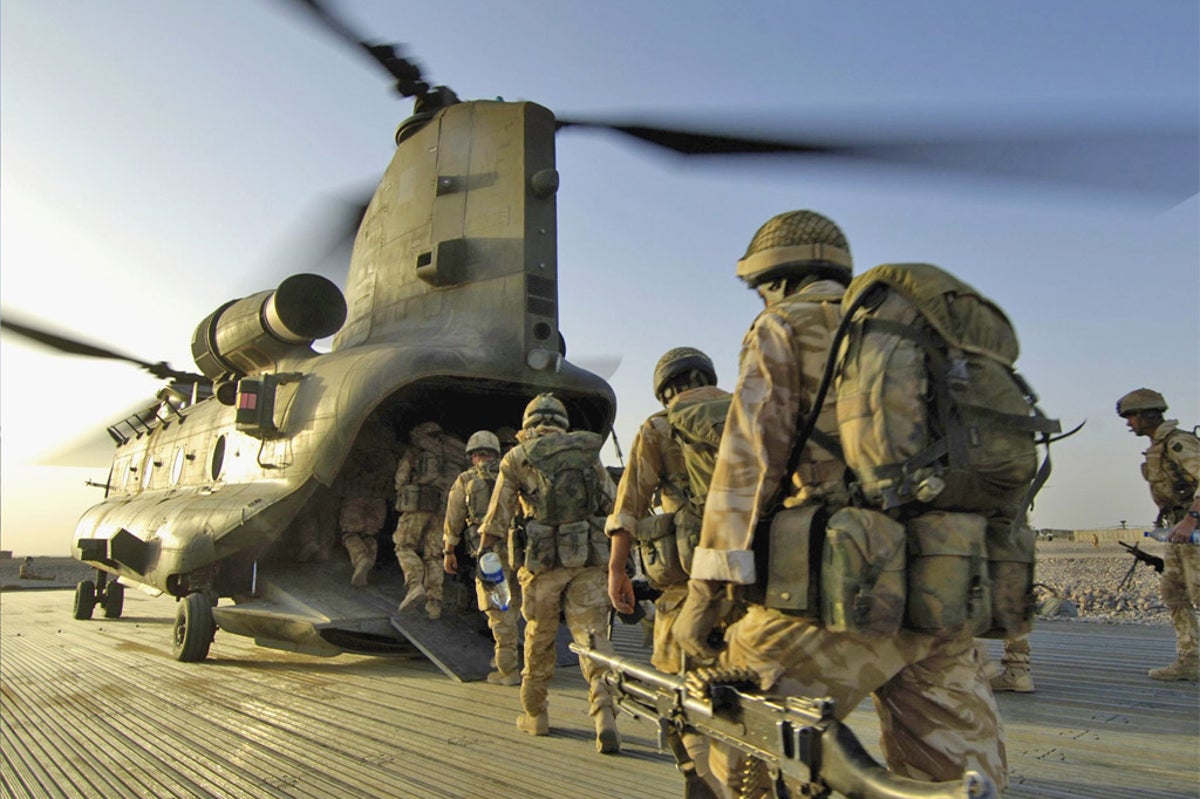
Material identified by the Ministry of Defence suggested that British service personnel may have committed “serious offences” in Afghanistan, the High Court has been told.
Information about the alleged offences, which can include murder, manslaughter and inflicting grievous bodily harm, was passed on by UK Special Forces (UKSF) to the Defence Serious Crime Command.
It was identified by the ministry earlier this year.
An investigation into the alleged offences is believed to have been paused pending the outcome of the Afghanistan Inquiry.
The inquiry, chaired by Lord Justice Haddon-Cave, is examining allegations of unlawful killings by UK special forces during operations in the country between 2010 and 2013, as well as claims of a subsequent cover-up.
It is also examining allegations of a cover-up of illegal activity and inadequate investigation by the Royal Military Police, and will decide whether any further investigations are needed.
A soldier who served in a senior military position during the conflict in Afghanistan, known only as Witness IIA126, is taking legal action against the inquiry for refusing to allow him and his lawyers to see restricted evidence.
In 2023, Lord Justice Haddon-Cave ruled that hearings which heard evidence from certain witnesses, known as “green” witnesses, could only be accessed by some individuals from the Ministry of Defence, but not by other witnesses, including IIA126, and their lawyers.
It followed fears expressed by the witnesses about their identities becoming known by giving evidence to the inquiry, with a “gist” of their evidence provided to others involved in the inquiry.
But IIA126 is now challenging the inquiry’s decisions, claiming they are unlawful.
Kate Grange KC, for the soldier, told the court in London that they had prevented him and his lawyers from seeing evidence related to an allegation that a person was shot in the head while they may have been sleeping during a “deliberate detention operation”.
Ms Grange claimed that not allowing her client to see the evidence meant “basic standards of procedural fairness have not been met”.
The inquiry is opposing the claim, with Jonathan Glasson KC saying in written submissions that the inquiry adopted a procedure “tailored to meet the ‘extremely high’ public interest in retaining the secrecy of the green material”.
Mr Glasson continued that the soldier’s lawyers “overstate the legal significance of the possibility of later criminal investigation”.
He said: “Any person can request that a criminal investigation be conducted into another person.
“In the context of this inquiry, that has already taken place. In early 2026, as a result of inquiries set in train by the inquiry, the Ministry of Defence identified material that indicated that service personnel deployed on operations may have committed serious offences under the Armed Forces Act 2006.
“The matter was referred by UKSF to the Defence Serious Crime Command.
“It is understood that following a scoping exercise, the Service Police have paused any criminal investigation into the matter pending the conclusion of the inquiry.”
The barrister continued it was “far from inevitable that the inquiry will make an adverse finding against any identifiable individual, let alone the claimant himself”, and that the claim should be dismissed.
Ms Grange said in written submissions: “Despite the fact that statutory public inquiries cannot make findings of civil or criminal liability, they nevertheless can have extremely significant consequences for individuals.
“In the context of this inquiry, those potential consequences are grave and include possible criminal prosecution.
“If a chair of such an inquiry does not act fairly, in accordance with his statutory duty, the search for the truth may be hampered, and public confidence in the inquiry’s work will be damaged.
“In the very unusual circumstances of this inquiry, the inquiry’s approach to the green hearings was unfair, both as a matter of substance and process.”
Steven Gray KC, for the Ministry of Defence, said the department “is fully committed to supporting the procedural rights of military witnesses before the inquiry”.
He continued that the department “supports the right of the claimant to bring this challenge” and is paying for IIA126’s legal costs, but “does not intend to make submissions either supporting or disputing the legal merits of this claim”.
But Edward Craven KC, representing the relatives of 16 people killed by UKSF during operations in Afghanistan, said in written submissions that the decisions by Lord Justice Haddon-Cave were “fair”.
He continued that the fears of the green witnesses of “adverse consequences” by those in the UK armed forces and UKSF for giving evidence were “both serious and objectively justified”.
He said the witnesses would have been unwilling to give evidence without the measures put in place, which would have left the inquiry “deprived of evidence which… directly concerns ‘perhaps the most serious allegation that could be made against members of the UKSF’”.
The hearing, before Lord Justice Popplewell and Mrs Justice Farbey, is due to conclude on Tuesday. A judgment is expected in writing at a later date.
KioskNews shows a cleaned-up reading view extracted from the publisher’s page — the original always lives on their site, not ours.