Netanyahu buys time as haredi parties weigh Eisenkot coalition, but lacks alternative - analysis
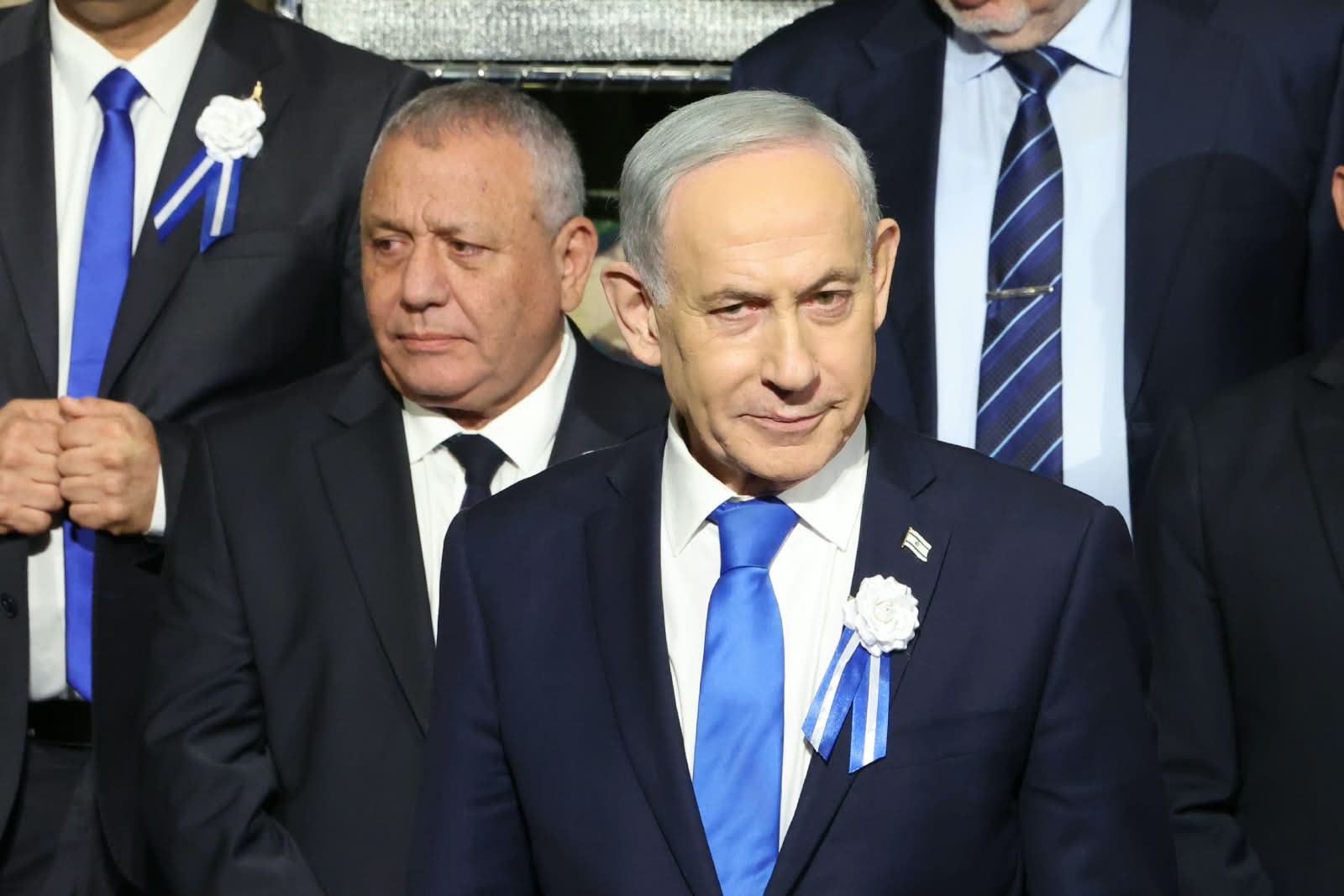
Netanyahu is buying time as haredi parties weigh joining Eisenkot, but the prime minister has yet to offer a viable alternative to a change of government.
Even if Prime Minister Benjamin Netanyahu persuades the haredi (ultra-Orthodox) parties not to join a government led by Gadi Eisenkot, it remains unclear how he could form an alternative coalition. A unity government is Netanyahu's main option, but there is currently no indication that Eisenkot is willing to consider it. Netanyahu's efforts to prevent the formation of an Eisenkot-led government face a fundamental obstacle: keeping the haredi parties out of the rival coalition does not guarantee him a parliamentary majority of his own.
Beyond the principled and publicly stated position of the Yashar party chairman, who has pledged not to serve in a government with Netanyahu, both men want to serve as prime minister. The question of a rotation agreement further complicates the possibility of reaching an understanding, even at a later stage.
According to haredi sources, discussions are taking place within the ultra-Orthodox political establishment about potentially pressuring Netanyahu and Eisenkot to pursue a unity government. From the haredi parties' perspective, such a government could provide a framework for resolving military conscription and budgetary issues while avoiding another election.
The alternative would be another round of elections, a prospect the haredi parties fear would come at a high cost: additional months without a resolution to the legal status of yeshiva students, without a budgetary solution, and amid the continuing crisis over enforcement and arrests. Even the possibility of increasing their representation in the next Knesset would not resolve their immediate difficulties.
The issue of draft enforcement and arrests remains central to the political negotiations. Senior figures in the right-wing bloc claim that the IDF has recently reduced the number of arrests of haredi draft evaders to avoid undermining Eisenkot's efforts to form a government.

The haredi dilemma: Join Eisenkot or wait for Netanyahu?
"The IDF has now lowered the profile of arrests of draft evaders and is carrying out fewer of them so as not to sabotage Eisenkot's effort to establish a government," the sources claimed.
The negotiations within the bloc seeking a change of government also remain far from a breakthrough. United Torah Judaism (UTJ) is reluctant to join an Eisenkot-led government on its own, without Shas, while Shas chairman Arye Deri has yet to decide whether his party will participate in the move.
The delay gives Netanyahu additional time to pursue his efforts to persuade the haredi parties. For their part, the ultra-Orthodox parties must decide whether to wait for an alternative that is far from guaranteed or join a government in which they fear losing their political influence.
Eisenkot and his associates are seeking to move forward initially with UTJ, against the backdrop of a possible abstention by Ra'am in the vote to approve the formation of the government, and bring Shas into the coalition at a later stage. Avigdor Liberman would prefer Shas to be part of the arrangement from the outset.
Within UTJ, there are concerns that even if agreements are reached at the beginning of the coalition's term, its secular and liberal partners could subsequently advance policies that contradict haredi demands.
The central concern is joining an Eisenkot-led coalition without Shas, which would leave UTJ as the government's sole haredi partner. In such a scenario, should disagreements arise over the military conscription law or legislation concerning religion and state, the party's ability to compel its coalition partners to honor their commitments would be limited.
Netanyahu gains time but still lacks a governing majority
For this reason, UTJ places considerable importance on bringing Shas into the government, believing that its participation could help block such initiatives.
For now, the delay in the haredi parties' decision is working in Netanyahu's favor. Every day that UTJ and Shas refrain from committing to Eisenkot makes it harder for him to advance the formation of a government.
Yet the time Netanyahu is gaining in this political struggle does nothing to resolve his own fundamental difficulty: assembling a parliamentary majority amid the coalition disputes and forming an alternative government.
KioskNews shows a cleaned-up reading view extracted from the publisher’s page — the original always lives on their site, not ours.