FIRST READING: B.C. stacking up sub-national debt faster than anywhere else in North America
First Reading is a Canadian politics newsletter curated by the National Post’s own Tristin Hopper. To get an early version sent directly to your inbox, sign up here.
Sign In or Create an Account
New figures show that B.C. is running up debt faster than any other subnational jurisdiction in North America, including famously indebted U.S. states such as California and New York.
The province’s deficit forecast now stands at $13.8 billion for the year, according to an update released this week by the B.C. Ministry of Finance.

Columnist Jesse Kline keeps you up to date with what’s happening in Israel and the effects of antisemitism on life here in Canada. Friday mornings.
By signing up you consent to receive the above newsletter from Postmedia Network Inc.
A welcome email is on its way. If you don't see it, please check your junk folder.
The next issue of Channel Israel will soon be in your inbox.
We encountered an issue signing you up. Please try again
That’s equivalent to $2,400 in new debt for every single resident of the province. Or, about $46 in new debt per resident, per week.
The figure not only dwarfs the relative debt accumulation of any other Canadian province, but of all 50 U.S. states.
The B.C. deficit is so high, in fact, that it will almost exactly match this year’s deficit in Ontario, a province with more than three times the population.
The latest estimates from the government of Ontario Premier Doug Ford also put their deficit at $13.8 billion.
But with more than 16 million Ontarians (as opposed to 5.7 million British Columbians), Ontario’s deficit will work out to a per-capita rate of about $850.
The Quebec government of Christine Fréchette has come in for criticism for its fiscal imprudence. One issue that emerged in the province’s ongoing provincial election was a Santé Québec IT project that ballooned from $98 million to more than $1 billion.
But Quebec’s budget deficit this year is still pegged at roughly half of B.C.’s, despite a larger population and larger GDP. The most recent estimates have Quebec’s deficit at $7.2 billion.
B.C.’s rate of debt accumulation also dwarfs anything seen among U.S. states, even those notorious for their spendthrift finances.
California is on course to run a deficit this fiscal year of $26 billion (US$18.5 billion). It’s roughly double B.C.’s deficit, but in a state with eight times the population and more than 10 times the GDP. Per capita, the California deficit works out to the equivalent of C$660.
The contrast is even more stark in New York State, whose total deficit is expected to come in at about the same amount as in B.C.
New York is planning for a three-year deficit equivalent to about $48 billion. Or, about $16 billion per year.
This means the New York budget deficit will only be about 15 per cent higher than British Columbia’s, despite a GDP of about C$3.4 trillion, as compared to B.C.’s GDP of about $430 billion.
The awesome scale of the B.C. deficit stands in sharp contrast to the fact that, only a few years ago, B.C. was running one of the most fiscally responsible budgets in Canada.
Under NDP premier John Horgan, B.C. ran surpluses in both 2018 and 2019 before finances were sent massively into the red by the COVID-19 pandemic.
However, less than two years after the beginning of COVID lockdowns, Horgan was able to restore the provincial budget to surplus. In 2022/2023, B.C. took in $704 million more than it spent.
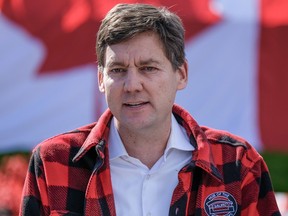
What changed was Horgan’s replacement in November 2022. In his tenure so far, Premier David Eby has presided over the fastest rate of debt accumulation in the province’s history.
Total B.C. debt stood at $89.4 billion on Eby’s first day in office and is now projected to breach $180 billion by 2027.
B.C. is running up these record deficits despite the fact that provincial revenues are now being padded by a sharp increase in royalties from natural gas.
LNG Canada, the country’s first LNG export facility, opened last year on the B.C. coast.
In fact, B.C.’s budget deficit came in about $1.5 billion higher than expected because the province’s Ministry of Energy and Climate Solutions had initially miscalculated the expected amount of natural gas royalties.
The mistake was to apply a U.S. dollar conversion to amounts that were already expressed in Canadian dollars.
This is also a particularly bad time to be taking out record levels of provincial debt, with rising interest rates spiking the cost of debt servicing.
When Eby took office, B.C. paid about $2 billion per year in interest charges. It’s now triple that, with this year’s debt servicing costs expected to top $6.3 billion.
This week, two former B.C. finance ministers told Postmedia that B.C.’s current rate of debt accumulation was unsustainable.
“The engine of growth can’t be the public-sector jobs, because it seems to me that in the last few years, the public sector has grown disproportionately, and of course the deficit has just ballooned after Horgan,” Ujjal Dosanjh, NDP finance minister in the 1990s, told the Vancouver Sun.

There are two potential snap elections in the air, fuelled by no other purpose than the fact it would allow an incumbent government to capitalize on a brief (and potentially fleeting) moment of electability.
According to the National Post’s John Ivison, members of the Carney government (although not Prime Minister Mark Carney himself) are pressing for a snap election that would be likely to devastate the Conservative caucus and enshrine a majority Liberal government to the end of the decade. The impetus? Liberal popularity that is riding high after the failure of trade talks with U.S. President Donald Trump.
And B.C. Premier David Eby appears to be contemplating the same, dropping hints like “we’re election ready” at press conferences. Although Eby’s motive isn’t so much his own popularity, but the chaos that’s overtaken his chief opponent, the B.C. Conservative Party.
Snap elections called for the apparently cynical purpose of consolidating an incumbent government’s power have largely worked out as expected in recent years.
Although there is the occasional phenomenon of Canadian electorates punishing politicians for having summoned them back to the polls too soon. One of the best-known examples dates to 2011, when the opposition to then Prime Minister Stephen Harper triggered an election call, only for said election to give Harper his only majority.

First Reading is a Canadian politics newsletter curated by the National Post’s own Tristin Hopper. To get an early version sent directly to your inbox, sign up here.
Join the Conversation
This website uses cookies to personalize your content (including ads), and allows us to analyze our traffic. Read more about cookies here. By continuing to use our site, you agree to our Terms of Use and Privacy Policy.
KioskNews shows a cleaned-up reading view extracted from the publisher’s page — the original always lives on their site, not ours.