Trump warns Gulf states to prepare for ‘possible short, intense renewal of Iran war’ after US midterms: Report
5 min readOct 29, 2026 07:50 AM IST First published on: Oct 29, 2026 at 07:50 AM IST
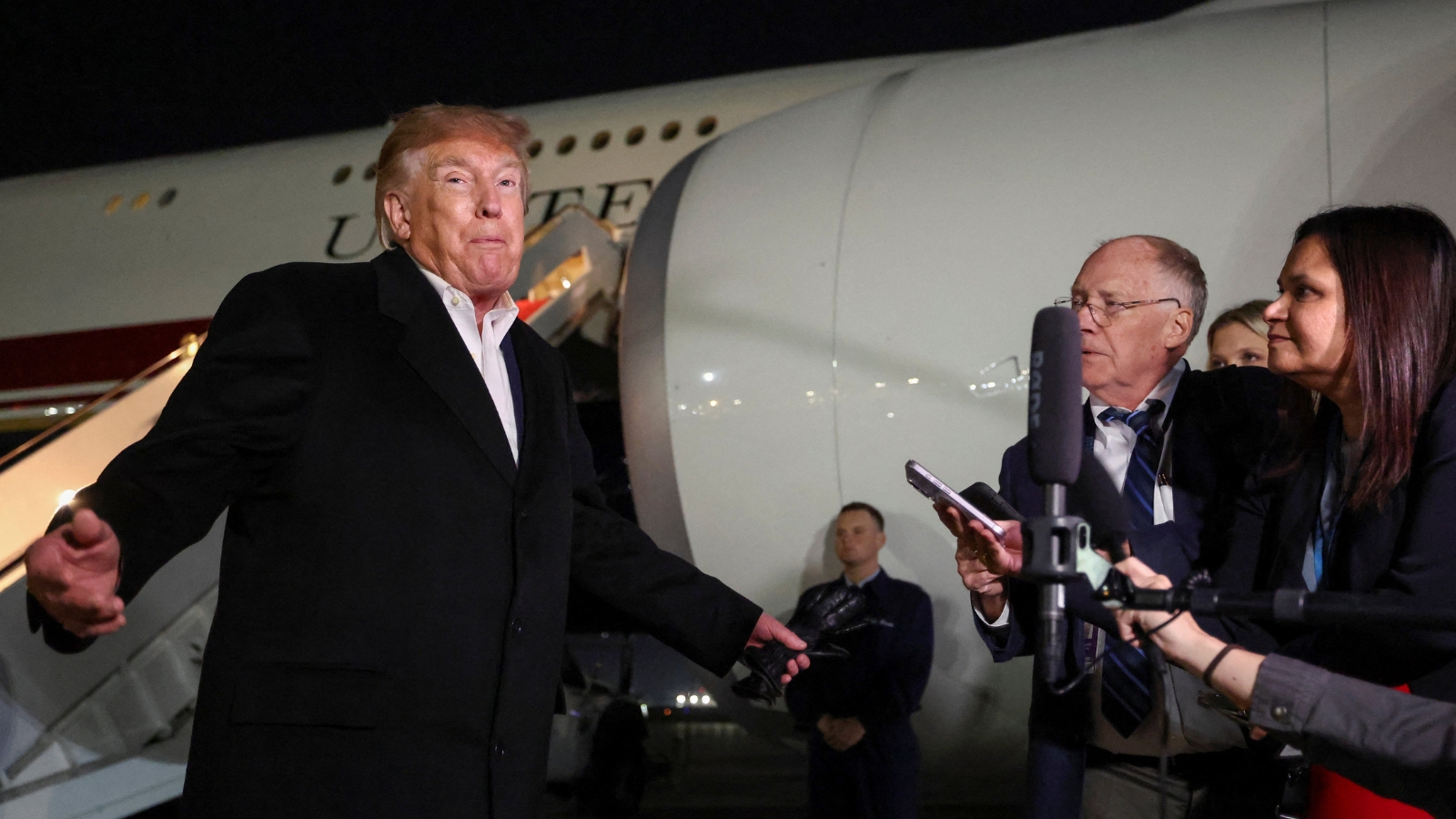
US President Donald Trump speaks to members of the media upon arrival at Joint Base Andrews after his visit to Texas, in Maryland, US, October 28, 2026. (REUTERS)
The United States has reportedly told several Gulf Arab countries to be prepared for a short, intense military campaign after the US midterm elections.
The communications through diplomatic and military channels are among a growing number of indications that the US and Israel are preparing to launch a new round of heavy combat operations against Iran, risking a major escalation in hopes of degrading Tehran’s strength and pushing it towards negotiations, The Wall Street Journal reported, citing people briefed on the conversations.
The US military is bringing in a Patriot system from Texas to strengthen its missile defences and has moved troops away from bases where they were vulnerable in preparation for a possible escalation, officials familiar with those moves told the newspaper.
US forces in the region have been restocking their munitions, while bomber aircraft and fighter jets are preparing for possible strikes, some officials said. An additional aircraft carrier strike group and Marine expeditionary unit are also poised to join roughly 20 other warships operating in the Middle East next month, although some ships could rotate out, the report said.
President Donald Trump has not decided whether to proceed but is leaning towards a large post-election attack that could target Iranian infrastructure and nuclear sites, people familiar with his thinking told the newspaper.
Story continues below this ad

Iran · Nuclear watch
What we know about Iran’s nuclear facilities
What IAEA inspectors have observed, and what they cannot verify without access.
440.9 kgof uranium enriched to 60% (IAEA estimate). Location unverified.
Since Jun 2025no inspector access to the sites hit in the June 2025 strikes.
Observed
Cannot verify
Pickaxe Mountain
What the IAEA says it has actually seen or monitored.
Observed
No repair or reconstruction identified at facilities damaged in the 2025 and 2026 attacks
IAEA chief Rafael Grossi, UN Security Council, Oct 27, 2026: “Since June 2025, we have not identified any activity to repair or reconstruct.”
Observed
Construction activity near the Pickaxe Mountain site
Grossi to Bloomberg, Sept 10, 2026: “some indications that there is movement around this construction site.” Seen through remote imagery, not on the ground.
The limit: Grossi says remote monitoring “cannot replace physical inspections.”
What inspectors cannot confirm, because they lack access.
Iran’s highly enriched uranium
60%: Iran’s stockpile
0%Weapons-grade: about 90%
440.9 kg: whereabouts unverified
440.9 kg is the IAEA’s estimate of uranium enriched up to 60% that Iran held before the June 2025 strikes (IAEA, Sept 2025 report). The agency has not been able to verify its status since.
Cannot verify
Where about 440 kg of highly enriched uranium is
Grossi, Oct 27: the IAEA cannot say where the material is.
Cannot verify
Whether any nuclear material was diverted
Grossi: the agency has not been able to verify that there has been no diversion of safeguarded material.
Access refused
Isfahan Fuel Enrichment Plant
Iran declared it shortly before the June 2025 strikes. Iran has repeatedly refused IAEA requests to visit.
Cannot verify
Iran’s centrifuge capacity and production
Unverified since 2021, according to an IAEA report cited by TIME.
Pickaxe Mountain (Kuh-e Kolang Gaz La): who says what.
Schematic, not to scale ?
IAEA
Inspectors have never entered the underground complex
Grossi (to PBS in March): no access. On Sept 10 he said: “We don’t have any concrete information as to activities that may be taking place there.”
Known
Site is about 2 km from Natanz and about 220 km south of Tehran
Construction began in 2020, after a fire at Natanz that Iran blamed on sabotage (TIME, citing the Institute for Science and International Security and the BBC).
Concern
Could house centrifuge assembly, enrichment or storage
The Institute for Science and International Security says it is not yet operational but is a “potential candidate site” for rebuilding. Carnegie’s James Acton calls the concern “legitimate.”
Israel’s belief
Enrichment equipment is stored in the tunnels
Reported by the Wall Street Journal. Israel’s assessment, not an IAEA finding.
Iran says
No nuclear activity at the site
Foreign ministry spokesperson Esmail Baghaei says all activities are declared to the IAEA.
Not struck
Not targeted in the 2025 or 2026 strikes
Per the Institute for Science and International Security. President Trump has threatened to hit it.
Tap a tab to switch. Remote imagery and satellite analysis are not inspections. Claims attributed to Israel, the US or private analysts are not IAEA findings.
Sources: IAEA chief Rafael Grossi at the UN Security Council, Oct 27, 2026 (Fox News, Samaa); Times of Israel, Sept 10, 2026; TIME, July 24, 2026; IAEA Sept 2025 report as reported by RFE/RL.
Express InfoGenIECreated by Aniruddha Dhar
The alternative would be to try to reach a deal. Regional mediators continued diplomatic efforts, but they had yet to bear fruit, the report said.
“We may do another little Epic Fury,” Trump said at a rally last week, referring to the heavy US and Israeli bombing campaign in the spring. “Or they’ll agree.”
The White House said it would not comment on “sensitive military plans that may or may not exist”.
“President Trump keeps all options on the table to ensure that Iran can never have a nuclear weapon,” the White House said. Trump has said he will not attack Iran before the midterm elections.
Story continues below this ad
The military movements and related planning are intended to give Trump options should he decide to carry out a strike, people familiar with the planning told the newspaper. The Defence Department said its job is to deliver such options.
Israel has also prepared plans and targets for a new attack, The Wall Street Journal reported. Prime Minister Benjamin Netanyahu has continued to push for a resumption of strikes in hopes of degrading Iran’s strength and ultimately toppling the regime.
Vance reaches out to Iranian security chief to revive peace talks
US Vice President JD Vance sent a letter to Iranian Security Council chief Mohsen Rezaei to revive peace negotiations, The WSJ reported Wednesday, citing US officials and people familiar with the matter.
US pressure campaign has squeezed Iran’s economy
A return to airstrikes would mark a shift from the Trump administration’s economic pressure campaign, the report said. Tighter sanctions coupled with a naval blockade have cut off Iran’s oil sales for months, shut down much of its air links and reduced overland trade, tightening pressure on the country’s already struggling economy, the newspaper reported.
Story continues below this ad
“If there is a need to target a growing threat like missile reconstitution, President Trump should make that case publicly and with as much detail as possible,” said Behnam Ben Taleblu, senior director of the Iran programme at the Foundation for Defense of Democracies, a US think tank.
“Otherwise, at the moment, the U.S. has a winning hand through maintaining sanctions and the blockade. It should stay the course,” he said.
Many analysts believe Iran is unlikely to capitulate under further attacks. Iran weathered more than 20,000 strikes by the US and Israel during the most active phase of the war. It has also continued to attack ships in the Persian Gulf, target US troops and warships, and bring tough demands to the negotiating table, the newspaper reported.
“I believe one of the biggest mistakes Israel and the United States continue to make is assuming that another round of strikes against Iran, including attacks on critical infrastructure or the elimination of senior officials, could somehow bring down the regime,” said Danny Citrinowicz, a former Israeli military intelligence official.
Story continues below this ad
Further bombing could cause the regime to dig in and become more committed to its missile and nuclear programmes, he said.
Iran warns of retaliation across the region
Iran has warned through public and private channels that it would respond to any attack with harsh strikes on economic and civilian targets across the region. Iran made similar threats ahead of the previous war, then hit US bases and diplomatic facilities as well as energy facilities and airports across the Gulf.
Despite the damage caused by US and Israeli strikes, Iran retains a stockpile of hundreds to thousands of missiles and has used the lull in fighting to strengthen its defences and prepare new plans for retaliation, the report said.
KioskNews shows a cleaned-up reading view extracted from the publisher’s page — the original always lives on their site, not ours.