US midterms: Our children’s classrooms are on the ballot too - opinion
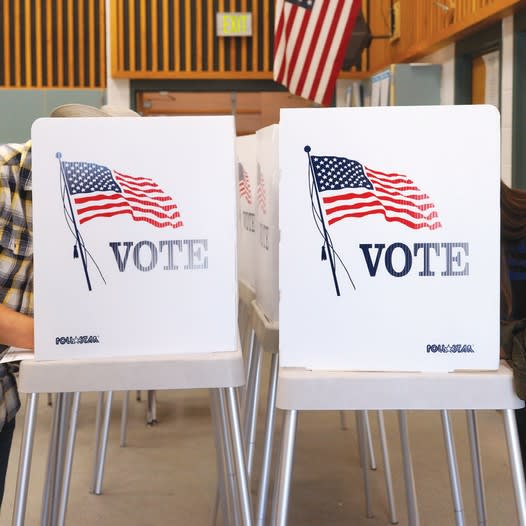
On November 3, Americans will elect a new Congress. But the ballot goes much further down: school board members decide how the Holocaust is taught and what our children learn about Israel, and state legislators decide how our schools and synagogues are protected.
Many Israeli-Americans can debate Israeli politics for hours, yet ask who is running for their local school board and the room usually goes quiet. Elected officials know who votes, and a community that stays home is easy to ignore. Closing that gap takes no party and no particular candidate, only treating the American ballot with the seriousness we bring to Israeli politics.
Conversation between Israeli-Americans will eventually find its way to Israeli politics, from coalition math to who betrayed whom to which minister should resign, and we can argue for hours and know the details cold.
But if you ask them who represents them in Congress, who their state senator is, or who is running for the local school board, there is usually silence. Ask why the midterm elections matter, and that silence is often longer.
I understand where this comes from, because I lived it. I came to New York at 27 to practice law. I had served in the IDF, voted in Israeli elections, and considered myself politically engaged, but my civic instincts were built for a different system.
In Israel, education runs from the top: you vote for a party, the coalition that forms appoints a minister of education, and that ministry sets what is taught in classrooms across the country. Nobody I grew up with ever voted for a school board because there weren’t any to vote for.
Here, authority is spread out. Thousands of local school boards, most of them elected, each make their own decisions about curriculum, policy, and how schools respond when something goes wrong. Coming from Israel, it is easy to miss that the most direct say we have over our children’s education is a line near the bottom of the ballot.
In America, power sits at many levels, and the long list of offices and unfamiliar names can feel like it belongs to someone else. Many of us carry that feeling for years. We become citizens, we build lives here, we raise children here, and on Election Day, we stay home. That is a mistake. Every level of the ballot reaches into our lives.
Congress votes on security assistance to Israel and on how the federal government responds to antisemitism. State legislatures write hate crime laws and fund security for schools, synagogues, and community centers. School boards decide how the Holocaust is taught and what our children learn about Israel.
City councils shape how local police protect our neighborhoods. When we skip an election, we hand all of those decisions to someone else.
Applying the same seriousness
Here is the uncomfortable part. Elected officials respond to voters, and they know who votes. In most states, whether you voted is public record. A community that debates passionately at the dinner table but does not appear in the turnout data is easy to ignore, no matter how well-informed it is.
Nationally, only about half of eligible citizens voted in the last midterm. A community that does better than that gets its calls returned.
None of this requires choosing a party. I am not telling anyone how to vote. I am asking that we treat the American ballot with the same seriousness we bring to Israeli politics.
That means a few simple things before Tuesday: check that you are registered, and whether your state allows registration on Election Day. Look up your sample ballot. Read where the candidates stand, from Congress down to the school board. Then vote, all the way down the ballot, and bring someone with you who has never voted here before.
In my work at the Israeli-American Council, I see how much energy our community has. We show up for Israel at rallies, fundraisers, and vigils without being asked twice. The question is whether we can bring that same energy to the ballot box in the country where our children are growing up.
This is why investing in education about the elections in general and the midterms specifically mattered, and why we did it this year, from coast to coast, with our communities. Being Israeli and American means carrying responsibility in both places, and for many of us, the American half is the one we have left unfinished. Tuesday is a good day to start.
The writer is the chief operating officer of the Israeli-American Council (IAC), the largest Israeli-American community organization in the United States, representing more than 150,000 Israeli-Americans nationwide.
KioskNews shows a cleaned-up reading view extracted from the publisher’s page — the original always lives on their site, not ours.