AI boom faces $3T revenue test as TS Lombard flags crash risks

sankai/E+ via Getty Images
The artificial intelligence investment boom remains vulnerable to a slowdown in capital spending, weaker-than-expected revenues, and tighter credit conditions, according to a report by TS Lombard.
The research firm said it was unclear when or what might trigger a reversal, noting that recent market jitters could mark the start of a reversal or could fade.
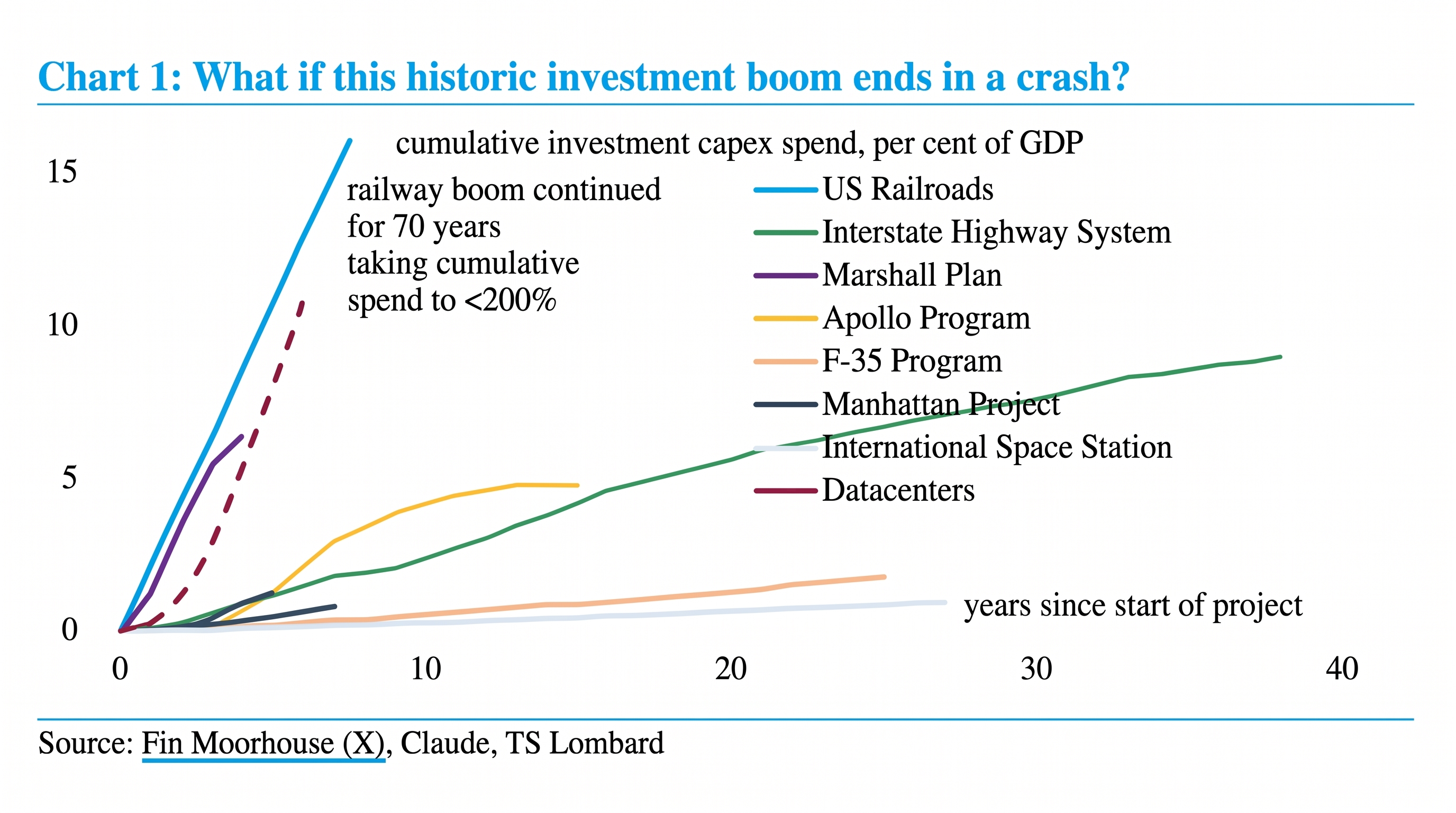
U.S. technology companies were investing around $1T annually in AI infrastructure. Much of the growth in AI-related revenue, however, still comes from spending circulating within the industry rather than payments from consumers and businesses outside the ecosystem, the report said.
Here is the chart:
TS Lombard
AI revenue faces a $3T hurdle
TS Lombard cited estimates that AI companies would need to generate $2.5T to $3T in annual revenue by 2030 to justify their investments, around 14 times today's numbers. The report questioned whether companies could achieve that scale of growth within the timeframe, particularly as consumers have been reluctant to pay for AI services and open-weight Chinese models gain market share.
The report also said about 80% of OpenAI and Anthropic's earnings came from just 1% of their customers, most of them unprofitable AI startups reliant on continued venture capital funding.
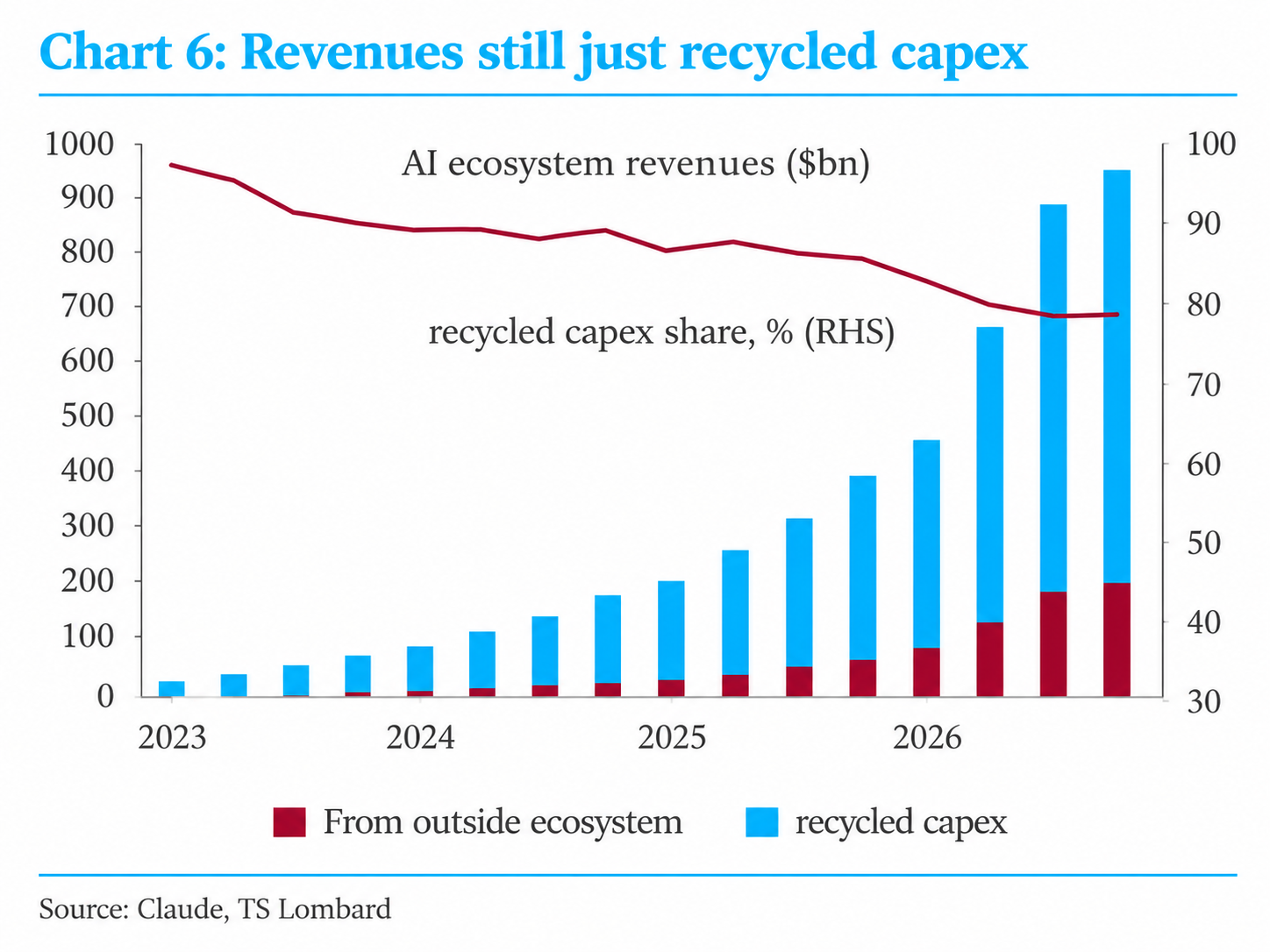
The report said the share of revenue generated outside the AI ecosystem had barely changed since June, despite continued growth in earnings. A slowdown in capital spending could therefore weaken the revenues of companies whose business depends on that investment.
TS Lombard
Debt is becoming a bigger part of the AI buildout
The funding mix has also shifted, with debt becoming a more important source of capital as technology companies expand their infrastructure. AI companies are expected to issue around $700B in new bonds in 2027, including $400B from major cloud companies and the remainder from the wider AI ecosystem, according to estimates cited in the report.
The report cited estimates that hidden liabilities across the ecosystem are already in the $1.5T to $2T range, partly through arrangements involving private credit and investment vehicles. It also flagged rising borrowing costs, noting that some neocloud companies, including CoreWeave, were already paying interest rates of around 15%.
TS Lombard warned that a slowdown in financing could expose weaker companies and projects, particularly those dependent on continued funding to meet contractual payments. The report also raised concerns about accounting pressures as new data centers begin to incur depreciation expenses and about a possible wave of AI company listings giving insiders opportunities to sell their holdings.
Chip demand could turn from shortage to glut
Nvidia has become a barometer for the AI boom, according to TS Lombard, leaving the wider ecosystem vulnerable if the chipmaker disappoints market expectations. The report also raised concerns about vendor financing, in which companies lend money to customers who then use it to buy their products.
Such arrangements can inflate reported demand, while the semiconductor industry's cyclical nature leaves it vulnerable to a sudden change in purchasing patterns. If AI companies have been placing multiple orders to secure scarce hardware, even a slowdown in demand could quickly turn shortages into a glut, the report said.
The report also identified regulatory and safety risks. It cited a survey in which around 55% of Americans said they wanted AI development to slow, compared with 13% who opposed a slowdown. A serious AI-related security incident or a shift toward less technology-friendly policy could intensify pressure on the sector, it said.
KioskNews shows a cleaned-up reading view extracted from the publisher’s page — the original always lives on their site, not ours.