With $0 disbursed, how Nepal disaster reveals problems in the UN’s Loss and Damage Fund
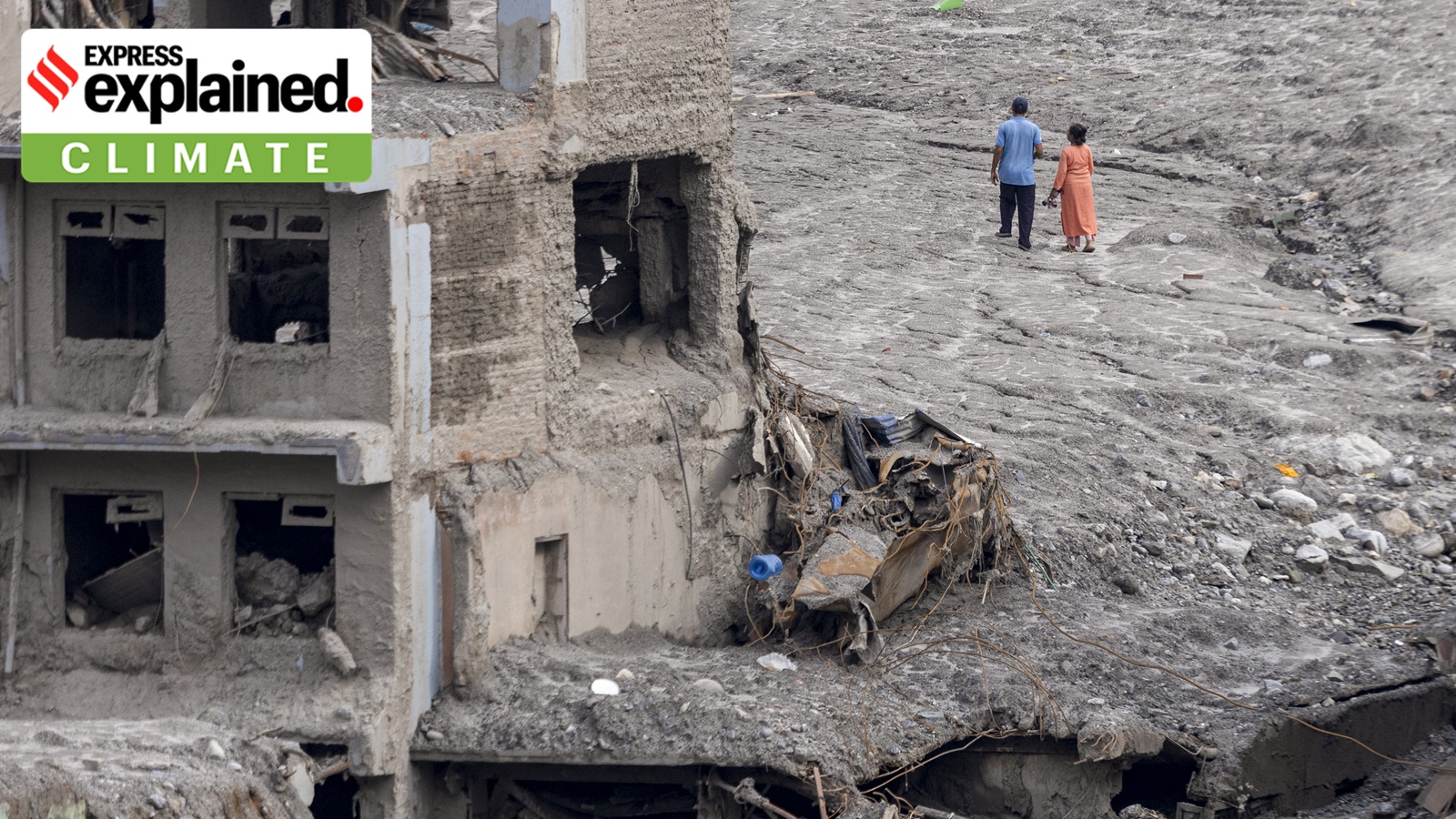
Residents walk behind houses covered in mud and debris on the 16th day after the devastating flash flood and mudslide in Nuwakot, Nepal, on Sept. 10. (PTI Photo/Abhishek Maharjan)
The government of Nepal has approached the United Nations’ Loss and Damage Fund for $20 million (around Rs 191 crore) — not as charity or aid, but as climate compensation.
It has argued that the Himalayan nation confronts a natural calamity that it did not create and is unequipped to address on its own. This is the most high-profile case in the three years of the fund’s existence.
Officially known as the Fund for Responding to Loss and Damage (FRLD), it was created during the 27th UN Climate Change Conference (Conference of Parties or COP27) held at Sharm el-Sheikh, Egypt, in 2022. The fund’s stated objective is to “provide financial assistance to nations most vulnerable and impacted by the effects of climate change”.
Developing countries had to negotiate for nearly 30 years for the fund to be established. The floods in Nepal, triggered by a glacial collapse, are the kind of situation it was made for. But as of August 2026, it had not released any money to any country.
Nepal’s Ministry of Finance sent the letter for funds on September 1. On September 3, the FRLD responded with a statement silent on the core issue. Its letter said that FRLD was “committed to approaching Nepal’s request with the urgency, compassion, and careful consideration that these difficult circumstances require, while respecting the Fund’s Governing Instrument and established decision-making processes”.
Nepal’s request has highlighted the fund’s own crisis and structural limitations. Here is how.
A hole in the budget
Story continues below this ad
Whether it is extreme weather events or slow-onset disasters, the impact of global warming comes with a high financial cost. The FRLD agrees that adequate financial resources are central to assisting vulnerable developing nations respond to economic and non-economic loss and damage.
Developed nations contribute to the fund, having historically been the biggest emitters of heat-trapping gases like carbon dioxide, which have sped up the pace of man-made climate change. However, the fund does not make it binding on a nation to contribute or set an amount. All contributions are voluntary.
Till now, the FRLD has received pledges from 27 partners, of which 25 have begun transferring money. The UAE leads with $100 million in contributions, followed by Germany at $98.40 million. As of March 2026, the FRLD had received pledges for $822.06 million, of which contributions of $630.99 million have been made. This is indicative of some of the difficulties that have been faced in having countries commit to climate action in general.
The United States had pledged $17.5 million, but under President Donald Trump, who has described climate change as a “hoax”, the US has withdrawn itself from the board of the fund. Hence, its financial commitments no longer apply.
Story continues below this ad
Moreover, the amount pledged so far needs to be seen against the demand for compensation. In November 2025, the fund launched its first call for funding requests from countries and received 180 requests totalling $2.8 billion.
The FRLD began to resemble an overstretched shoestring. During a meeting in July 20206, the Board decided to defer the decision on which projects it would support to December 2026. The fund said in a statement, “Efforts are underway to ensure all pledges are converted accordingly.” Meanwhile, Ibrahima Cheikh Diong, the Executive Director of FRLD, has said that the fund might dry out by the end of 2027.
Questions over mechanism
Nepal’s request for funding comes at a time when the Loss and Damage Fund was already grappling with existing applicants and struggling to disburse the first round of allocations. Nepal’s request also arrived when the period to submit funding proposals had closed.
In order to receive funds from the FRLD, an 11-step procedure must be followed. A call is made for countries to submit proposals for projects to be funded. This can be done within six months from the date. Other steps include completeness checks, reviews, the country’s response to reviews, a presentation for board approval and signing of legal documents.
Story continues below this ad
Jawad Khalid, a climate finance specialist, argued in a publication of the Lowy Institute, an Australian think tank, that this mechanism is flawed in itself: “The problem is that the machinery built to deliver that mandate still operates like a conventional development fund rather than an emergency response mechanism… This is not to say technical review and due diligence are unnecessary. Multilateral climate funds and bilateral donors need that kind of scrutiny to run multi-year, multi-billion-dollar projects on emissions cuts and resilience-building.”
But loss and damage finance is different, and it demands a different lens of urgency. Countries facing catastrophic loss of life and destruction of their economies cannot afford to wait years for procedural and technical review,” he said.
Nepal has requested that it be treated as a special case due to the scale of its tragedy. The fund’s Governing Instrument also upholds taking actions “immediately after an extreme weather event”, but the current case is unprecedented in the FRLD’s short history. The Nepal crisis also tests the fund’s preparedness to jump in when a climate disaster is underway rather than support later rehabilitation and reconstruction.
According to the publication Climate Home News, Nepal has found some support as several FRLD board members have called for “an extraordinary meeting to allocate money to help the Himalayan country”.
Story continues below this ad
And yet, even if the full $20 million were approved, it would cover only a small part of the losses left behind by the floodwaters. The flash flood has killed more than 1,350 people, left more than 6,000 people missing, and, according to the letter sent by Nepal’s Ministry of Finance to the FRLD, caused $2.5 billion in damage to infrastructure.
At current estimates, the total financial toll is between $4 and 7 billion. Speedy disbursement of funds could then help contain at least some of the fallout, but even that looks difficult so far.
© The Indian Express Pvt Ltd

Dipanita Nath is a Senior Assistant Editor at The Indian Express, based in Pune. She is a versatile journalist with a deep interest in the intersection of culture, sustainability, and urban life. Professional Background Experience: Before joining The Indian Express, she worked with other major news organizations including Hindustan Times, The Times of India, and Mint. Core Specializations: She is widely recognized for her coverage of the climate crisis, theatre and performing arts, heritage conservation, and the startup ecosystem (often through her "Pune Inc" series). Storytelling Focus: Her work often unearths "hidden stories" of Pune—focusing on historical institutes, local traditions, and the personal journeys of social innovators. Recent Notable Articles (December 2025) Her recent reporting highlights Pune’s cultural pulse and the environmental challenges facing the city during the winter season: 1. Climate & Environment "Pune shivers on coldest morning of the season; minimum temperature plunges to 6.9°C" (Dec 20, 2025): Reporting on the record-breaking cold wave in Pune and the IMD's forecast for the week. "How a heritage tree-mapping event at Ganeshkhind Garden highlights rising interest in Pune’s green legacy" (Dec 20, 2025): Covering a citizen-led initiative where Gen Z and millennials gathered to document and protect ancient trees at a Biodiversity Heritage Site. "Right to breathe: Landmark NGT order directs PMC to frame norms for pollution from construction sites" (Dec 8, 2025): Reporting on a significant legal victory for residents fighting dust and air pollution in urban neighborhoods like Baner. 2. "Hidden Stories" & Heritage "Inside Pune library that’s nourished minds of entrepreneurs for 17 years" (Dec 21, 2025): A feature on the Venture Center Library, detailing how a collection of 3,500 specialized books helps tech startups navigate the product life cycle. "Before he died, Ram Sutar gave Pune a lasting gift" (Dec 18, 2025): A tribute to the legendary sculptor Ram Sutar (creator of the Statue of Unity), focusing on his local works like the Chhatrapati Shivaji statue at Pune airport. "The Pune institute where MA Jinnah was once chief guest" (Dec 6, 2025): An archival exploration of the College of Agriculture, established in 1907, and its historical role in India's freedom struggle. 3. Arts, Theatre & "Pune Inc" "Satyajit Ray, Ritwik Ghatak were not rivals but close friends, says veteran filmmaker" (Dec 17, 2025): A deep-dive interview ahead of the Pune International Film Festival (PIFF) exploring the camaraderie between legends of Indian cinema. "Meet the Pune entrepreneur helping women build and scale businesses" (Dec 16, 2025): Part of her "Pune Inc" series, profiling Nikita Vora’s efforts to empower female-led startups. "How women drone pilots in rural Maharashtra are cultivating a green habit" (Dec 12, 2025): Exploring how technology is being used by women in agriculture to reduce chemical use and labor. Signature Style Dipanita Nath is known for intellectual curiosity and a narrative-driven approach. Whether she is writing about a 110-year-old eatery or the intricacies of the climate crisis, she focuses on the human element and the historical context. Her columns are often a blend of reportage and cultural commentary, making them a staple for readers interested in the "soul" of Pune. X (Twitter): @dipanitanath ... Read More
KioskNews shows a cleaned-up reading view extracted from the publisher’s page — the original always lives on their site, not ours.