‘Never thought I’d eat that’: how vegetable prescriptions are helping Britons with diabetes

The participants admitted that throughout their life, their food choices had been far from ideal: egg and chips, hearty roasts, raw fry – a Cornish one-pan dish of bacon, potatoes and onions, often fried in lard and once beloved of miners and fishers.
But here they were, at a community orchard in the harbourside town of St Ives in south-west Cornwall, massaging Swiss chard (to soften the leaves), dicing carrots, adding lentils into a pot to create a low-GI, high-fibre – and tasty – shepherd’s bake.
The six people who worked together on the bake were taking part in a pioneering “veg on prescription” programme for patients with type 2 diabetes and prediabetes, in which participants are given free weekly veg boxes and access to group cooking and gardening sessions.
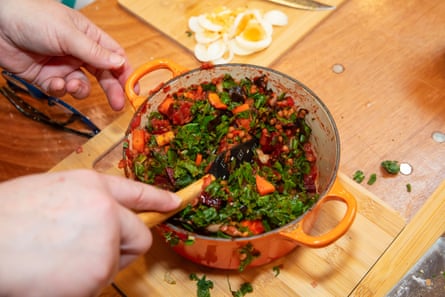
Many of the more than 100 people who have taken part in the WellFed scheme have reported improvements in their blood sugar levels, their weight and their feeling of wellbeing.
Chris Longthorp, 74, one of those in the St Ives “chop and chat” session, said he had been surprised when he had been diagnosed with type 2, saying it had “crept up” on him. He described his usual diet as “standard fodder … meat and two veg, quite a lot of sweet things”.
Since joining WellFed, Longthorp, who used to work in the pharmaceutical industry, said his HbA1c – blood glucose – level had dropped from 50 to 42. Diabetes UK says having a HbA1c over 48 risks complications such as problems in eyes, kidneys and feet. “I feel fitter and coming to these sessions is fun,”’ said Longthorp.
Another of the St Ives cooks was Johanna Evans, 85, a retired shop owner and a lifelong fan of raw fry. She said she had been surprised at how much she had enjoyed some of the meals they had prepared.
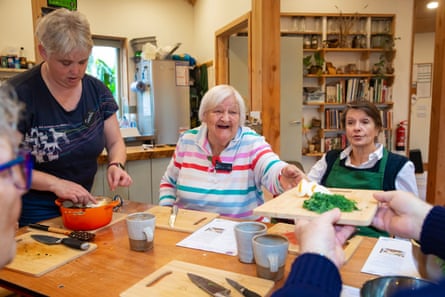
The week before, they had created – with the help of their facilitator – a sprouted bean, edamame, shredded sprout and sesame bento box. “I never thought I’d eat anything like that,” Evans said.
Claire Judd, the WellFed project lead, said the pilot programme was believed to be the first of its kind in England, taking into account the range of support provided and the geographical reach – sessions are run at 20 sites across Cornwall, from the border town of Launceston in the east to the Isles of Scilly about 45km (28 miles) off the mainland. GPs from more than 20 surgeries have put forward patients.
A preliminary impact report carried out by the Centre for Climate Change and Social Transformations is encouraging. It said: “WellFed participants described eating a healthier diet, feeling more confident about their health condition and how to manage it, and how their wellbeing improved.”
The report added: “Notably, most participants reported a reduction in their HbA1c and the average HbA1c level decreased from the diabetic range to the pre-diabetic range over the intervention period.”
WellFed is delivered by Volunteer Cornwall, funded by Cornwall council public health and the NHS in Cornwall and the Isles of Scilly. If the final results are as positive as the preliminary ones, the hope is that it will be rolled out more extensively and health chiefs in other parts of the UK are keeping an eye on the impacts to see if they should replicate it.
Dan Rainbow, a St Ives GP, said he was delighted at the impact so far. “We spend so much of our time treating disease and illness but this is about creating health.”
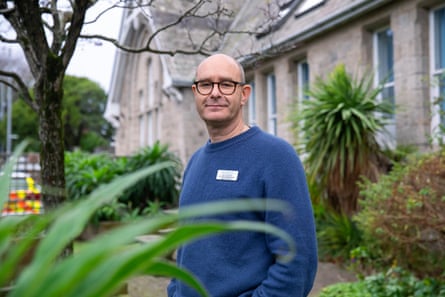
He said that places like St Ives were often perceived as well-to-do, but there were significant pockets of deprivation there and in many other parts of Cornwall. The number of people with pre-diabetes in Cornwall is also particularly high compared to the rest of England, a sign that more trouble is on the way.
“This project is just the sort of thing we should be doing,” said Rainbow. “We haven’t been told to do it by the government, rather it’s come from the community here, which is great.”
A few miles up the road from St Ives, A WellFed cooking and gardening session was taking place at Community Roots, a community garden in Porthtowan.
Mike May, 68, a retired engineer, said his HbA1c level had reached 78 at one point but had dropped to 43, which he put down to a combination of the WellFed project and other medical interventions.
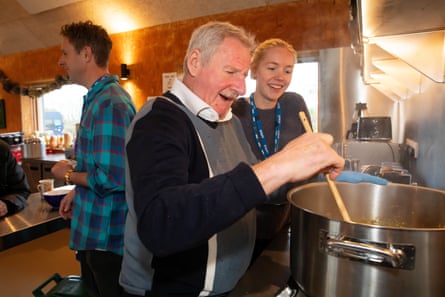
Michael Waller, a 64-year-old former clay worker, who has been attending sessions at CHAOS farm on the Roseland Peninsula, said he had not wanted conventional medication when he was told he had diabetes. His HbA1c level has now dropped from 64 to 47. He said: “I was eating a lot of chocolate, ice cream and flapjack. At the farm it’s all vegetables and salad and peas and beans, pulses.”
Tracey Lyne, 67, a childminder from Truro, who has also been attending the Roseland sessions, said: “It was a combination of wellbeing – to be out getting your hands dirty – and a green gym, where we’re pushing wheelbarrows, stretching, digging.”
Lyne said she had previously fallen into the habit of microwaving “plastic meals”. “You convince yourself that sticking it in the microwave is easy, whereas in 10 minutes you can produce something really lovely with a veg box.”
KioskNews shows a cleaned-up reading view extracted from the publisher’s page — the original always lives on their site, not ours.