‘One part of me rejected being PM outright… another spoke about duty… I longed for Rajiv’s presence’: Sonia Gandhi’s Memoir
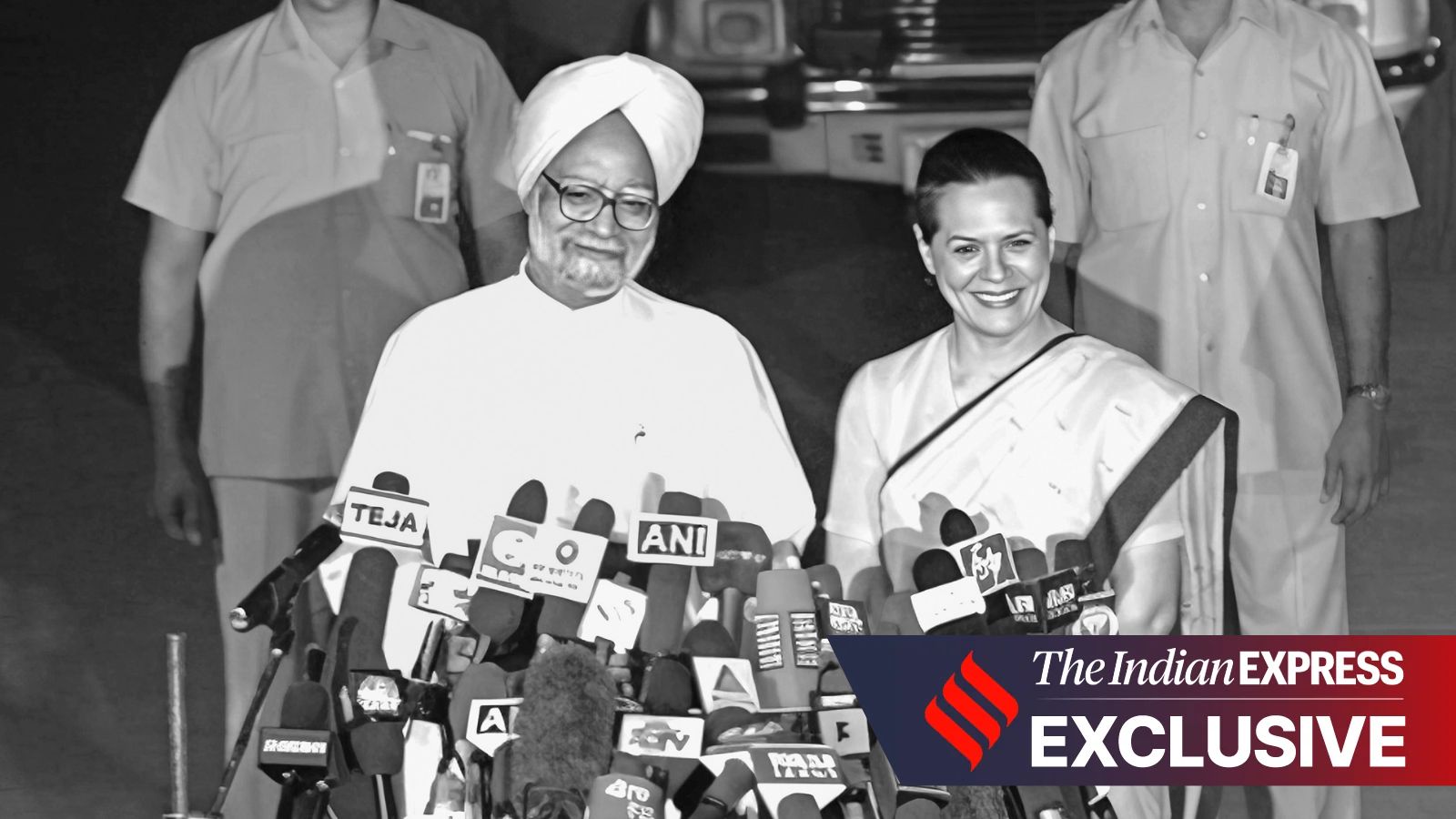
For decades, Sonia Gandhi has remained an intensely private figure at the heart of one of India’s most public families, her life shaped by love, extraordinary privilege, devastating loss and the weight of public expectation. In Belonging: A Journey of Love, published by HarperCollins India, she steps out from behind the many narratives others have constructed around her to tell her own story. It is a journey that begins far from India, in a small Italian town, and culminates in New Delhi, India’s power centre. It is also the story of the tragedies that would irrevocably alter the course of her life and plunge her into an unexpected political life. In this exclusive excerpt to The Indian Express, Gandhi writes of that defining moment when she resisted her party’s call to become the Prime Minister and what shaped her decision:
 The cover of Sonia Gandhi’s upcoming book Belonging.
Some months before the election, my children and I had discussed the issue of my possible prime ministership. One of them asked me straight out whether I would accept the post, just in case our party pulled off a victory. “Absolutely not!” I’d said, almost indignantly. “Are you sure?” they pressed me. “I’m very clear,” I said emphatically. Neither Rahul nor Priyanka felt that I should become prime minister. They’d lived through the trauma of their grandmother’s assassination and the brutal murder of their father. In their minds, holding that office was intrinsically linked with heightened danger. They looked relieved and I, too, felt lighter, having said my views out loud on the question for the first time. And there the matter rested. I never spoke of it to anyone else. Throughout the election, I’d give a noncommittal answer whenever I was asked this question in public. We were in a battle for our survival and I had to keep my party together, to face our foes head-on as a cohesive team. It wasn’t an option to allow a leadership struggle to arise between the contenders in our party. I kept my views firmly to myself, not even confiding in my closest colleagues. I just knew instinctively that the person to carry forward the legacy of past Congress governments would have to be someone with long experience in government and an impeccable record of integrity. …
Years ago, when I took the first step of the journey that had brought me to this point, I knew in my heart what my husband and my mother-in-law would have expected of me. I had felt an inner call of duty towards them and all that they had fought for throughout their lives. But now I was at sea; I had to search within my troubled self for an answer. One part of me rejected the idea completely, the other part was calling on my sense of obligation—towards the party workers who’d be hurt and disappointed by my refusal, but also to the people who’d given us their vote. My emotions were changing, moment to moment. One minute I was clear, the next, I was torn.
A meeting had been fixed with the leaders of the alliance. They were to come to my house the next afternoon. “We’ll convince her,” they’d assured my colleagues. When I look back at those moments, they take on their own pace, as they unspool in time.
Like a movie in slow motion, the scenes I witnessed move through my mind’s eye. A meeting is going on with some of the leaders of the alliance in Rajiv’s conference room at the far end of my house. They’ve been talking in turns for over an hour, urging me to agree to their proposal, while I listen silently. As the discussion comes to an end, they look towards me for a response. I muster up as much courage as I can and I say my piece.
There is an uproar amongst them, they stand up and move towards me. I, too, stand up. They physically surround me. “We will not accept this,” one of them says. “You cannot take this decision, Madam,” says another. Their tone is forceful, almost aggressive. “We will not take no for an answer.” I am shaken. I feel overpowered. “Theek hai,” (“All right,”), I mumble almost inaudibly. The assembled leaders don’t even wait for me to finish my sentence, they begin to congratulate me, one by one.
“She has agreed, she has agreed,” someone says. I just stand there, numb, unable to say anything further. The leaders depart, satisfied.
I hadn’t noticed that the windows of the conference room were open, and Priyanka was standing outside one of them. She told me later that she’d stood there the whole time. As the men in the room surrounded me, it struck her that I was being browbeaten into acceptance. She tore into the house to look for Rahul, tears running down her face. He was in his room when she burst in. “What’s happened?” he asked, disturbed at seeing his sister so distraught. “She’s said yes to them! They’re all around her, she’s said yes!” “What has she done! Where is she?” he said, and both of them came striding towards me with perturbed expressions on their faces: my two children who saw themselves as my protectors after the death of their father. I was already exhausted by the vehemence of the alliance leaders; now I had to face them.
“You said yes?” thundered Rahul. “They wouldn’t listen to me,” I replied, “I don’t want to do it, you know I don’t. I was being pressurised.” “Pressurised? You are being pressurised?” he demanded. “What about us?” He stormed off, his face clouded with anger. “Look, Ma, you’ve always been clear about this,” Priyanka said. “Don’t get forced into it. Do what you’ve decided to do. We’re both here to help you handle it.” Her eyes were red, and I also felt like crying. What had I done? As I stood in the half-light of the corridor at the threshold of my bedroom, the feeling of something dark looming over us overcame me.
An instinct kept warning me that my actions would have far-reaching consequences, not just for my party but for India. What we needed was firm and able governance, to steer India away from divisive politics. More than anything else, we needed development and progress. My entry into politics had been driven by the conviction that the BJP, propelled by the RSS and its many fanatical wings, would encourage strife between communities and subvert the Constitution if they came to power.
I knew very well that the noise being made now by them, and the propaganda they had drummed up through the election campaign, wouldn’t abate if I accepted. The BJP and its allies would for certain use my “foreign origin” as an issue, they would stir up emotions and create havoc that would subsume every other good—of the past, and of the coming years. How could I agree to holding the office of prime minister knowing it could wound my country, the country that I loved? No, never!
Night was drawing to a close. It had been a long night, unburdening myself of the thoughts and feelings that had been agitating me. Priyanka and Robert left for their home. Suman and Manju went to sleep in the guest room. Rahul was in his room.
I retreated into my bedroom and lay quietly as always on my husband’s side of the bed. One voice within me said, “Sonia, this is a ridiculous proposition. You were born and brought up in Italy and here you are, being chosen to lead a nation of more than a billion people at the other end of the world.” Another voice replied, “This is your country; you owe your whole adult life and allegiance to it. When you lost the man you loved, it took you in its arms as one of its own. Its people have comforted you and nurtured you through shattering tragedies. How can you abandon your responsibility to those who have placed their faith in you, in your party?” A flood of emotion overcame me and I longed for Rajiv’s comforting presence. As I was drifting into sleep out of sheer exhaustion, my mind suddenly cleared itself of the last shreds of doubt. “Sonia, be true to yourself,” I could hear myself say. “You’ve always known it. Just leave it!”
I woke up in a few hours, went straight to my son’s room, and knocked on the door. “I’ve made up my mind. I’m going to stick to my stand,” I told him. He stepped up to me and with his arms around me said, “It’s the right decision.” I felt at peace for the first time since the election results had been declared. No one would be able to sway me now from my purpose.
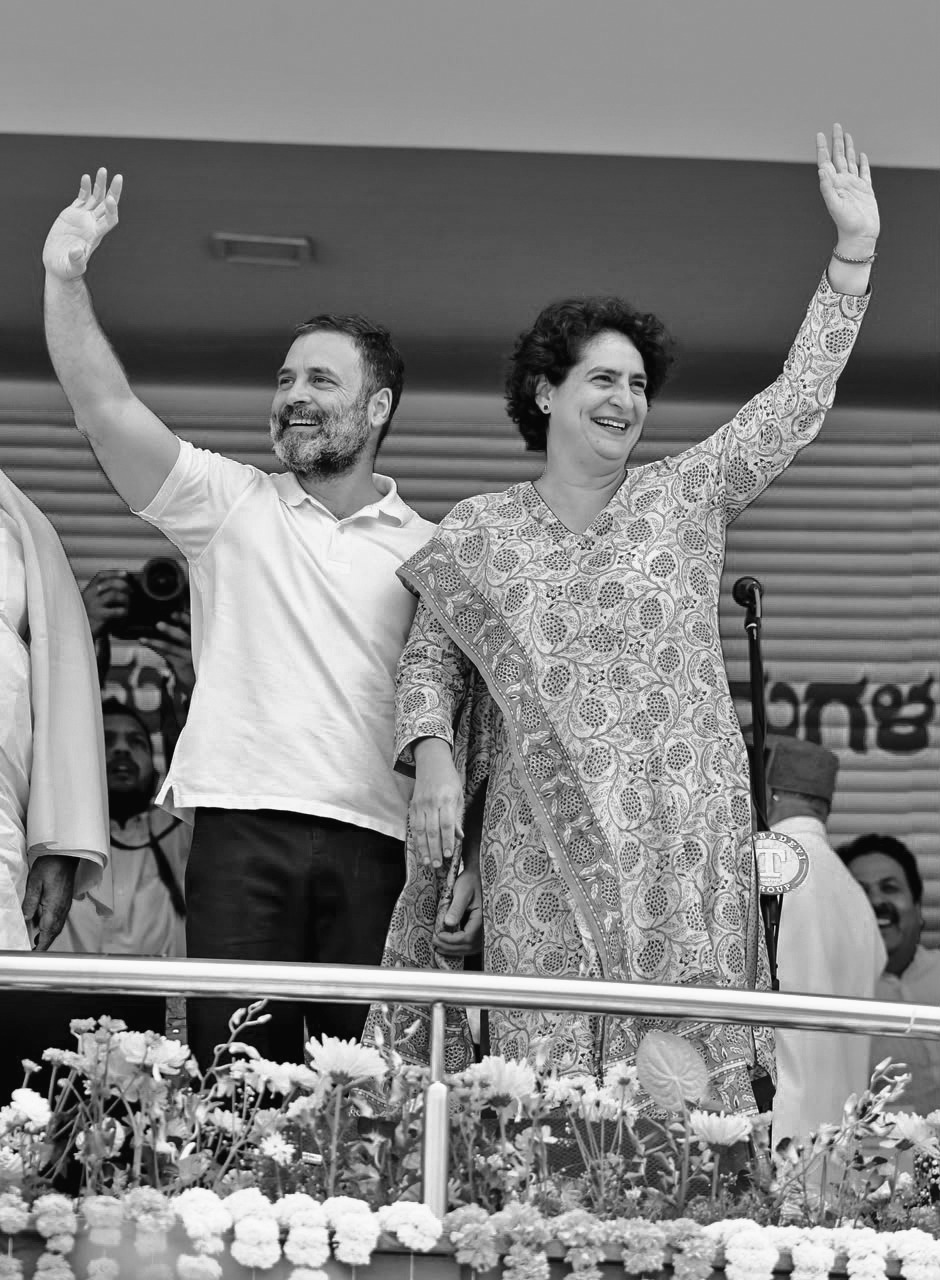 Rahul Gandhi (left) and Priyanka Gandhi Vadra at a public meeting in 2024 (Photo Credit – Indian National Congress)
I enter the hall to thunderous applause. The members of Parliament stand up in their places, thumping their palms on the wooden ledges in front of them. I find my place at the centre of the long table for the leaders of the party and remain standing till someone gestures for them to stop, and we all take our seats.
One of them reads out a speech imploring me once again to accept the post. I feel dismayed, having visualised this meeting differently. I thought I’d simply read out my speech and nominate Dr. Manmohan Singh. But here I am now, looking over the heads of all my parliamentary colleagues as, one by one, more speeches follow, each one outdoing the other in attempting to persuade me to change my resolve. I’m moved by their sentiments, but the last few days of deliberation have given me the clarity I needed. I know that the decision I have taken is one I truly own.
I am called to the lectern and as I rise to walk towards it, applause echoes through the assembly and everyone stands up once more. I pull out my piece of paper and put my glasses on, then an eerie silence falls over us all. I can hear my breath above the whirring of the fans. I look up at my children sitting in the front row, Priyanka catches my eye and smiles at me reassuringly. I begin to read out my speech:
“Throughout these past six years that I have been in politics, one thing has been clear to me. And that is, as I have often stated, that the post of prime minister is not my aim.
“I was always certain that if ever I found myself in the position that I am in today, I would follow my own inner voice. Today that voice tells me I must humbly decline this post.”
As I utter these words, pandemonium erupts. My colleagues leave their seats and surround the lectern. “No, no, no!” they shout, some gesticulating wildly. I notice one of my colleagues has begun to cry, another follows. I stop my speech halfway feeling faint, unable to breathe. I try to retreat from the podium, but there are people all around me, and I begin to feel distraught.
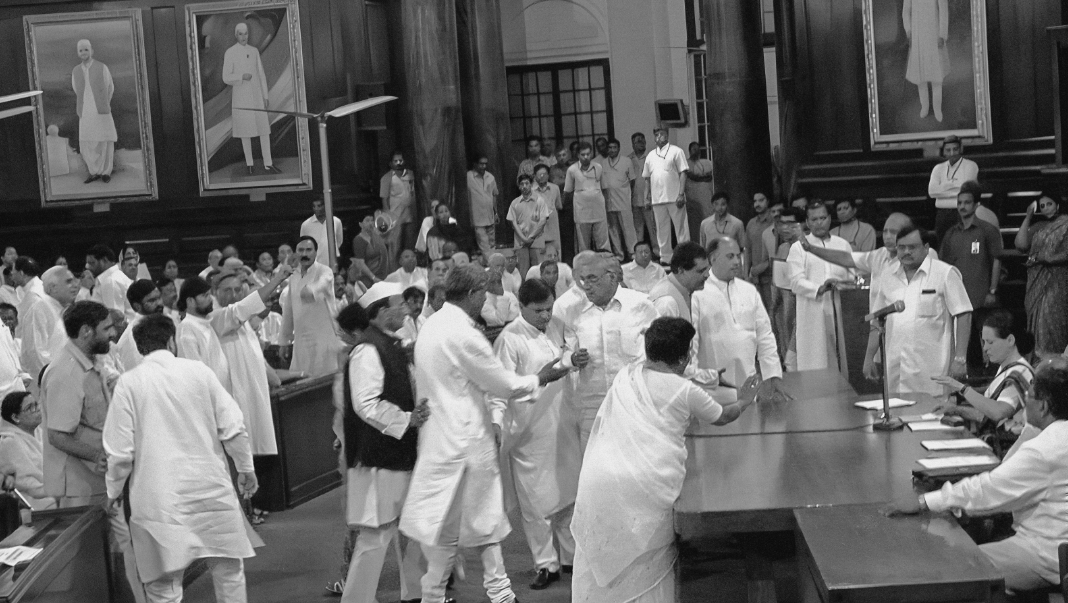 In the Central Hall of Parliament, Congress MPs reacting to my speech renouncing the post of prime minister. (Photo Credit: Prakash Singh / Getty Images)
One of my colleagues holds my arm and escorts me out of the hall for a reprieve. My children follow me out. They stand with me for a few moments, then I re-enter the hall. I step up to the lectern to resume my address to the assembly:
“You have unanimously elected me your leader. In doing so, you have reposed your faith in me. It is this faith that has placed me under tremendous pressure to reconsider my decision.
“Yet I must abide by the principles which have guided me all along.
“Power in itself has never attracted me, nor has position been my goal.
“My aim has always been to defend the secular foundation of our nation and the poor of our country—the creed sacred to Indiraji and Rajivji.
“We have moved forward a significant step towards this goal. We have waged a successful battle. But we have not won the war. That is a long and arduous struggle, and I will continue it with full determination.
“. . . But I appeal to you to understand the force of my conviction. I request you to accept my decision and to recognize that I will not reverse it.
“Our foremost responsibility at this critical time is to provide India with a secular government that is strong and stable.
“Friends, you have given me your generous support, you have struggled against all odds with me. As one of you and as president of the Congress Party, I pledge myself to work with you and for the country. My resolve will in fact be all the more firm, to fight for our principles, for our vision, and for our ideals.”
Now they listen to me somewhat calmly, though some of them still shout out their protests; I ask the assembled MPs to let me designate my successor, and when they agree, I call out the name of Dr. Manmohan Singh. I step down from heading the Congress Parliamentary Party and Dr. Singh is nominated as its leader. Once again applause erupts, all of them stand up, some of them shout slogans, some have tears running down their faces. My children stand up too. I notice that they, too, are clapping. I collect my papers from the lectern and walk away. The ordeal is finally over.
KioskNews shows a cleaned-up reading view extracted from the publisher’s page — the original always lives on their site, not ours.