Nepal floods leave 22,000 children without safe water: UNICEF
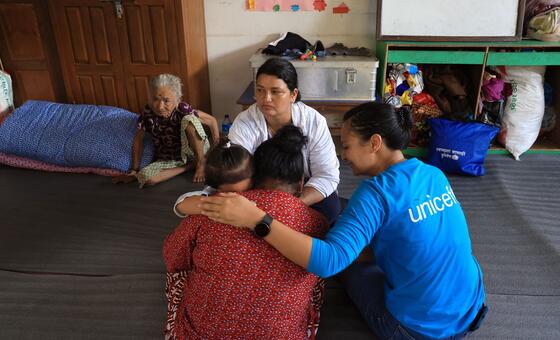
Water systems have been damaged across affected districts, while toilets and other sanitation facilities have been damaged or destroyed, raising the risk of waterborne and infectious diseases.
“Every parent in these districts is now making the same calculation several times a day,” said Alice Akunga, UNICEF Representative in Nepal. “Where can I get water, and is it safe to give to my child?”
Crowded living conditions
Affected families are now living with host communities or in holding centres— crowded spaces that make it difficult to maintain safe hygiene practices.
This week, the World Health Organization (WHO) highlighted how flooding, displacement, overcrowding and stagnant water can increase the risk of communicable diseases such as dengue and scrub typhus.
“The risk of waterborne disease increases rapidly in these conditions, but it is preventable,” Ms. Akunga insisted.
Supplies reach communities
UNICEF has dispatched water, sanitation and hygiene supplies for around 19,000 people in Rasuwa and Nuwakot, among the hardest hit areas.
These items include more than 3,800 hygiene kits, 3,300 collapsible 10-litre jerrycans, 3,500 buckets, 3,500 one-litre mugs, 4,000 bottles of water treatment solution and more than 1,000 tarpaulin sheets.
Staff are also working with government counterparts and partners on disease surveillance, hygiene promotion and outbreak prevention.
Critical infrastructure destroyed
The flooding was triggered by a glacier collapse on the Nepal-China border on 27 August. The death toll has surpassed 1,100, according to international media reports.
Infrastructure such as roads, bridges, telecommunications networks as well as water systems were damaged, complicating access to communities and delivery of aid.
UNICEF estimates that at least 19 schools have been damaged, including eight that were completely and eight partially destroyed, while more than 10,000 school-age children need immediate psychosocial support and access to safe learning spaces.
Young lives upended
“Before all this, I used to spend most of my time in school and hang out with friends when I was free,” Swostik Paudel, a 14-year-old from Nuwakot, recently told the agency. “Mostly we would play football.”
Swostik is now living in a shelter with his parents and sister where he tries to remain connected to his former life.
“Some children have brought a football here,” he said. “Even though it’s punctured, we’ve been passing it around. Some friends have also been playing matches.”
Building back better
As access improves, UNICEF will scale up emergency water supply, household water treatment, water-quality monitoring, temporary sanitation and handwashing facilities, and essential hygiene and menstrual hygiene supplies in communities and holding centres.
Ms. Akunga said restoring safe water and sanitation “is not a one-week job”. She stressed that damaged water systems, pipelines, pumps, toilets and other sanitation infrastructure need to be repaired and rebuilt to withstand future floods.
“We need to make communities safer and more resilient,” she said. “Otherwise, we will be having the same conversation again after the next disaster, and it will be children paying the price yet again.”
KioskNews shows a cleaned-up reading view extracted from the publisher’s page — the original always lives on their site, not ours.