2 Mexico City chefs launched an international ‘Pay What You Can’ model. How did it go?
Food is, in many ways, the greatest of social equalizers. Everyone, after all, must sit down to eat at various points in the day, and there’s no escaping the fact that we must all break bread together.
But too often, there’s an exclusivity around who gets to actually sit at the proverbial table. In a bustling metropolis like Mexico City, in particular, many residents are gatekept and unable to enjoy the city’s most sought-after offerings, largely due to massive socioeconomic barriers.
Wealth disparities shape capital dining
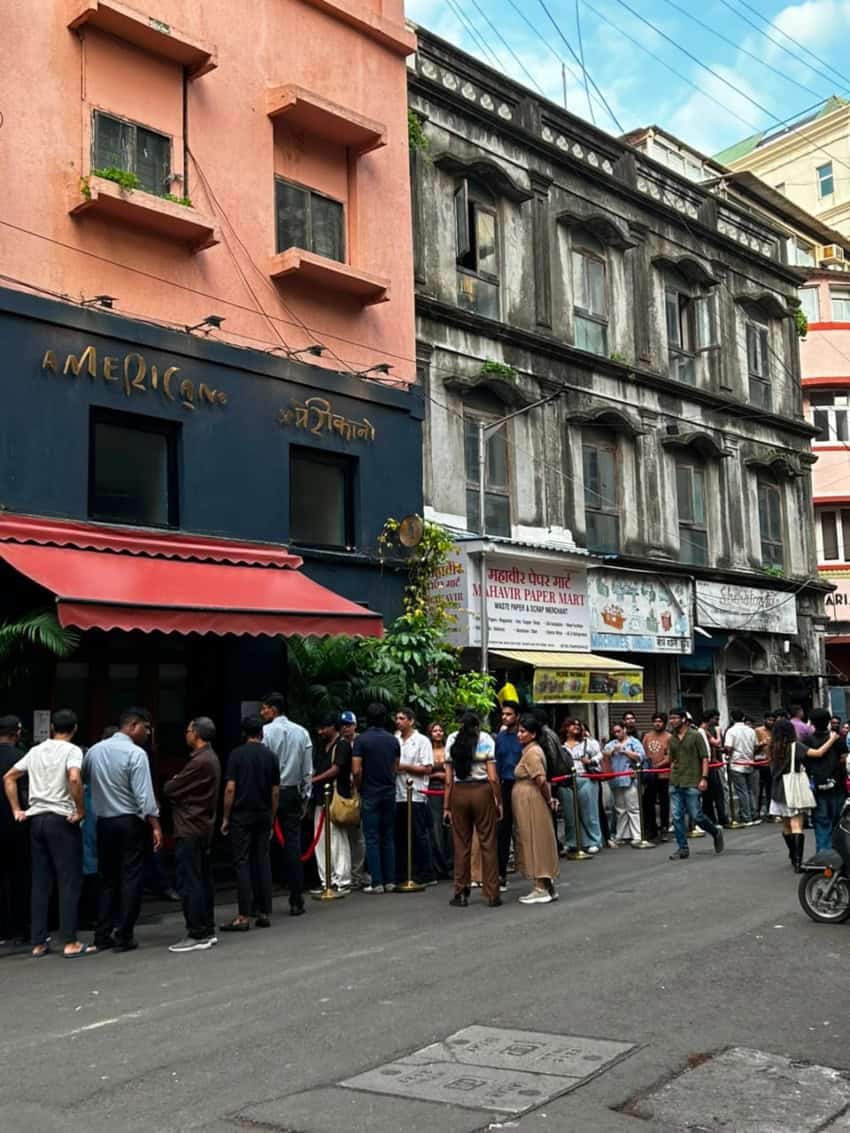
The gap between those who can, or can’t, access Mexico City’s jeweled offerings is wider than ever. A 2026 report from Oxfam Mexico revealed just how disparate Mexico has become as a nation, with 1% of the population hoarding 40% of the country’s wealth.
The divide is glaringly obvious in high-end neighborhoods like Mexico City’s Santa Fe. Oscar Lopez of The Guardian wrote about how “unbelievably unequal” certain areas of Mexico City actually are: “The stark contrast in this little enclave of the capital is a microcosm of a problem that has plagued Mexico for decades: rampant income inequality, with a small slice of the population living in opulence while millions of families languish in poverty.”
The irony, of course, is that the essential workers who sustain the infrastructure for opulent lifestyles in Mexico rarely — if ever — get invited to partake in it. That trickles down to something like booking a table at a popular restaurant in CDMX, which only a select few get to enjoy.
Taking that reality into account, Norma Listman and Saqib Keval — the married chef-owners of Masala y Maíz, a prominent Michelin-starred eatery in Mexico City’s historic center that serves a blend of Mexican, Indian and East African dishes — have made efforts to raise awareness around such issues in the food industry, including workers’ rights and dining accessibility for all.
How Múcara became one of Mexico’s best restaurants

A global movement for humane hospitality
This summer, they initiated a “Paga Lo Que Puedas” or “Pay What You Can” (PWYC) day, effectively opening their doors to every diner, regardless of their tax bracket or bank account. A powerful and unprecedented gesture, it triggered a wave of support among participating restaurants who joined the cause throughout Mexico, and beyond, to galvanize a movement centered on humane hospitality.
“As the city becomes more expensive and more oriented toward tourism and higher-income visitors, there are people who have lived here and built these communities who are increasingly unable to participate in the spaces around them. For us, that contradiction is important,” Listman and Keval told Mexico News Daily. “Restaurants are part of neighborhoods and communities, but they can also become spaces that feel increasingly inaccessible to the people who live there.”
The couple went on to say, “Dining out has become a privilege for many people, and as it becomes more expensive, it can become more segregated by class. That goes against how we understand hospitality and why we entered this industry in the first place. ‘Paga Lo Que Puedas’ was one small way of responding to that reality.”
In Mexico City, more than 20 restaurants — including MUX, Sin Nombre, Baldío, Cicatriz and Fideo Gordo — declared their commitment to “Paga Lo Que Puedas,” which took place Aug. 26. More than 100 dining institutions across 14 countries also joined in.
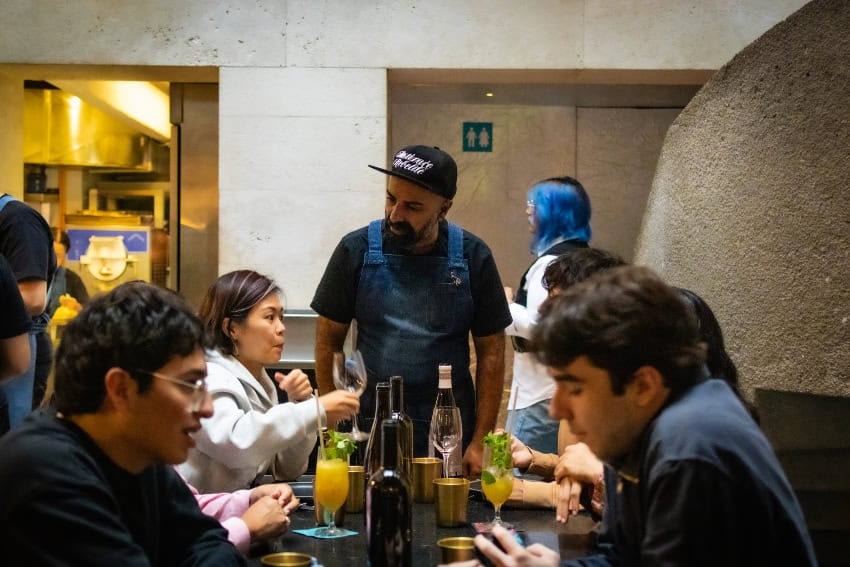
So how did it fare? Masala y Maíz, along with 12 participating restaurants, shared their experiences with us.
The origins, challenges and joys of a novel model
The concept originally emerged years ago, during the height of the COVID-19 pandemic, when Listman and Keval — who initially opened their restaurant as a small brick-and-mortar in San Miguel Chapultepec back in 2017 — were experimenting with ways to attract customers during a challenging time for food businesses to keep their staff employed and to provide the luxury of dining out in their community.
That evolved into a regular practice, in which diners would enjoy a meal and leave whatever they could afford inside an envelope. What began as an in-house tradition ballooned into a bigger idea that would, years later, result in a global effort.
“From the beginning, we were thinking about how we could make the restaurant more accessible while also creating a tangible way to support the people around us and keep our staff working,” they noted. “It started as a small gesture, but it was also an experiment in trust: What happens when we remove the fixed price from the menu and ask people to honestly decide what they are able to pay for their meal? In Mexico City, that question felt particularly relevant because we were already seeing how quickly the cost of living was changing around us.”
Social media deepens urban segregation
In the fall of 2026, those factors had only become more urgent. In analyzing the stratification of diners in Mexico City through the increased use of social media, Guillermo Echauri of the National Autonomous University of Mexico (UNAM) found that the role and perception of food influencers in Mexico City have only exacerbated the problem of inaccessibility.
He writes that “the attributes, perspectives, and personal experiences of the foodies themselves are integrated into an environment of significant socioeconomic disparities, urban segregation, and ethnic discrimination. This shapes their representation of the culinary landscape in the Mexican capital, as digital dynamics intensify existing inequality.”
In other words, the systemic issues around dining accessibility that Listman and Keval were attuned to nearly a decade ago haven’t disappeared — they’ve arguably worsened with the rise of food influencers and rampant social media usage, among other shifts in the community and global economy at large.
By reviving the PWYC initiative in Mexico City, the founders of Masala y Maíz — and the many restaurateurs who chose to join them — are emphasizing the ongoing need for inclusivity and egalitarianism through local and international gastronomy.
Measuring turnout and financial realities
Despite logistical complications that arose through staffing and clarity around how to accept payments in a PWYC framework (in which some diners paid with non-monetary goods, such as original artwork), a survey of 12 participating restaurants unanimously confirmed a “very positive” experience and that the day “opened doors to new audiences,” with 83% of the restaurants declaring they would “definitely” participate again.
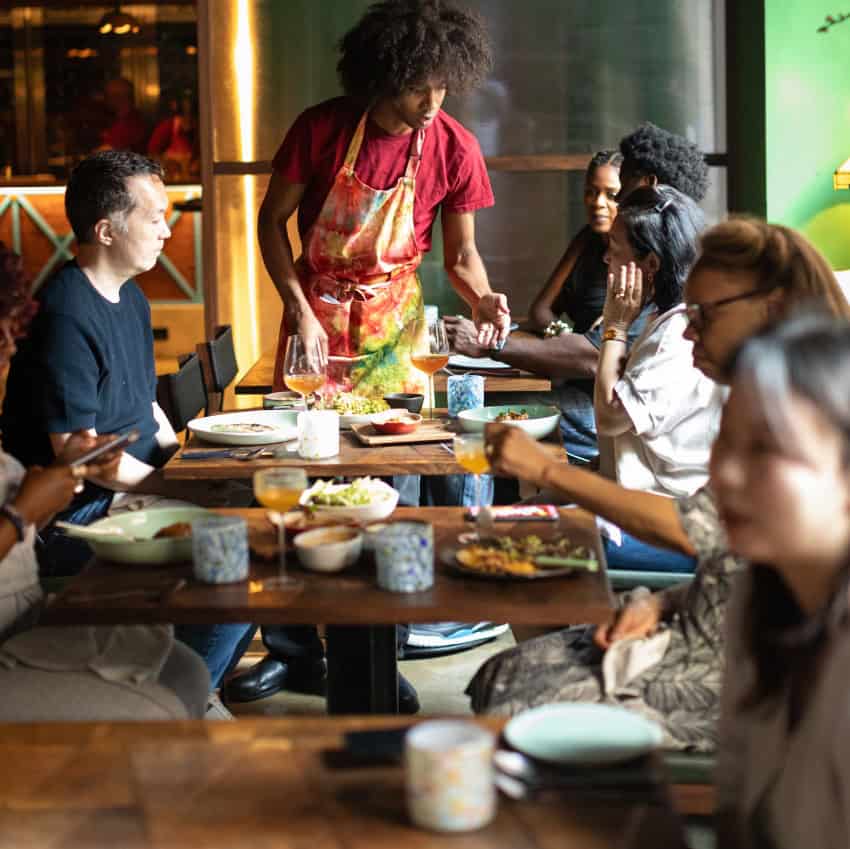
“The response we experienced was largely one of curiosity and solidarity,” Listman and Keval affirmed. “Other chefs and restaurant owners were also thinking about accessibility, rising costs, and what it means to be a restaurant within a community. We did not approach this as a model that every restaurant should adopt. Restaurants have different circumstances and different economic realities, and sustainability for the restaurant and for its workers is important. What we wanted to do was create an invitation to think differently about what hospitality can look like.”
In terms of profitable sales, the results were mixed — although that’s to be expected when the public is invited to pay whatever they wish.
Forty-two percent of the surveyed restaurants reported a “better” day of sales; a combined 33% reported either “much worse” or “about the same.” Conversely, 75% of the food businesses shared that they saw a “much higher” or “higher” turnout than an average day, while 25% believe they saw “about the same” number of diners that they would have during normal hours. In all, it seems that the restaurants saw a boom in diners, but not necessarily in income (in an act of reciprocal care, tips reportedly went up by 42%).
Building connection beyond the dining table
Importantly, 58% of the diners self-identified as first-timers at the surveyed restaurants, indicating demand and engagement from a wider range of customers than usual, and affirming the PWYC blueprint as socially equitable.
“What has stayed with us most is the sense of connection that the initiative created. For us, the success of Paga Lo Que Puedas is not simply measured by how many meals were served or how much money was collected. It is also about what happens when people feel that a restaurant is making room for them,” Listman and Keval said. “We hope that diners experience a sense of belonging and joy, and that they are able to enjoy a meal without the usual anxiety around whether they can afford to be in that space. We also hope the experience encourages people to think about the labor, care and knowledge that goes into a meal, and to recognize the workers who make that experience possible.”
Nourishing a better city
In a city as increasingly divided as Mexico City has become in the past half-decade alone — due to gentrification, mass tourism and other sociopolitical factors — PWYC is a bold, if not necessary, kind of reclamation for the people. However, that responsibility shouldn’t fall solely on small-business owners and their staff to level the playing field (or dining tables, in this case); that work should ultimately be the focus of elected officials and local governments, who should be looking for ways to support not only diners, but those who provide the city’s best dining experiences.
Without them, what would be left to nourish and feed us when we want a transcendent meal or simply a night out? Keeping local culinary arts scenes alive — and attainable for diverse residents — should be every world-class city’s priority. No matter the price.
Alan Chazaro is the author of “These Spaceships Weren’t Built For Us” (Tia Chucha Press, 2026), “Notes from the Eastern Span of the Bay Bridge” (Ghost City Press, 2021), “Piñata Theory” (Black Lawrence Press, 2020), and “This Is Not a Frank Ocean Cover Album” (Black Lawrence Press, 2019). He is a graduate of June Jordan’s Poetry for the People program at UC Berkeley and was selected as a Lawrence Ferlinghetti Poetry Fellow at the University of San Francisco. His work can be found in NPR, The Guardian, SLAM, GQ, L.A. Times, and more. He is currently based in Veracruz.
KioskNews shows a cleaned-up reading view extracted from the publisher’s page — the original always lives on their site, not ours.