China says only joint action, not exchange rates alone, can address global imbalances
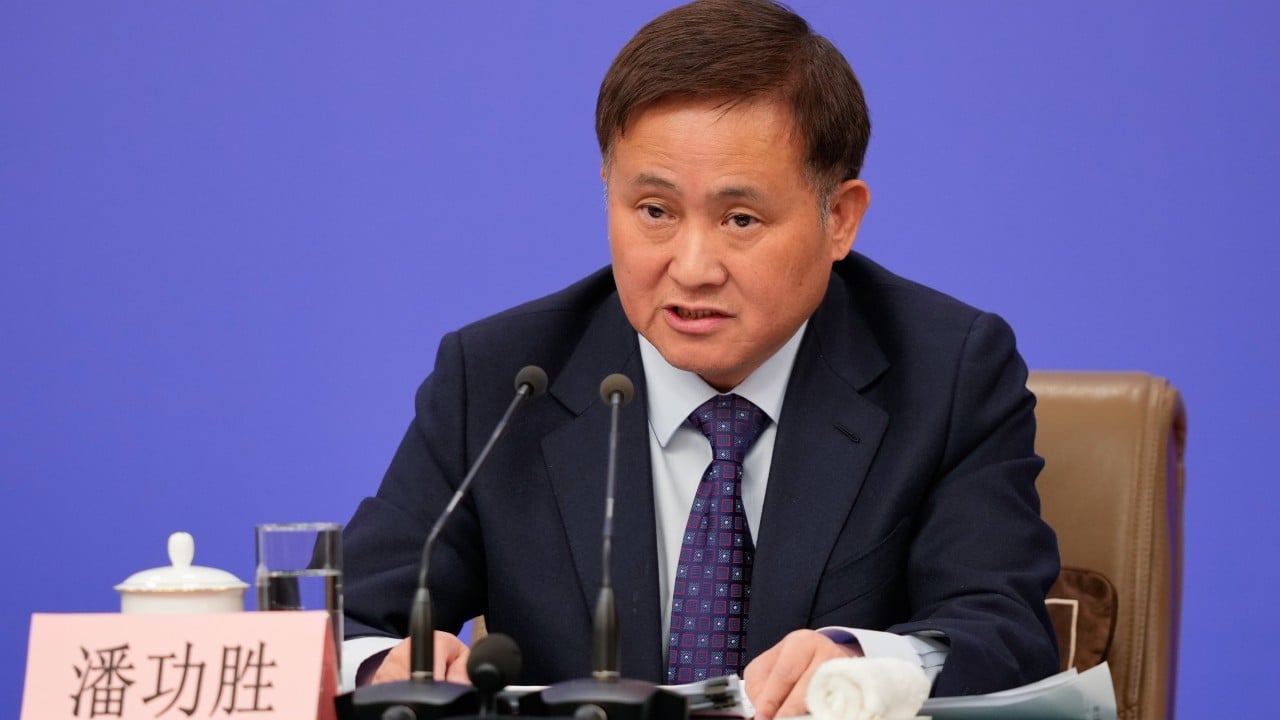
China’s central bank chief has said exchange-rate adjustments alone cannot resolve global economic imbalances, calling on surplus and deficit economies to share responsibility for addressing them.
Speaking at the third G20 finance ministers and central bank governors’ meeting in Bangkok on Thursday, Pan Gongsheng, governor of the People’s Bank of China (PBOC), called for a “more comprehensive analytical perspective” on global imbalances.
“We should look beyond the current account to financial channels, paying greater attention to how financial factors such as capital flows affect imbalances, particularly as global financial integration deepens,” he said, according to a PBOC readout.
“Deficit and surplus economies should work together to achieve a dynamic balance in the global economy.”
Pan noted that exchange rates were influenced by a range of factors including economic growth, monetary policy, financial markets, geopolitics and unexpected events, and did not have a simple, linear relationship with a country’s current-account balance.
His remarks came after the PBOC published a position paper on the yuan exchange rate last week, which argued China did not need to devalue its currency to gain a competitive edge and had never deliberately done so.
China operates a managed floating exchange-rate system and has long faced accusations, particularly from the United States and the European Union, of keeping the yuan artificially weak to boost exports – a charge Beijing has repeatedly rejected.
At Thursday’s meeting, Pan also warned that sharp swings in some countries’ sovereign bond markets and growing risks of a correction in AI-related asset valuations had increased financial vulnerabilities. Escalating geopolitical conflicts remained the biggest source of uncertainty for the global economy, he added.
Pan also stressed that modernising financial regulation should not be equated with deregulation or come at the expense of financial stability and resilience.
At the same meeting, Finance Minister Lan Foan said the “immediate priority” was to address geopolitical conflicts, rising protectionism and deepening fragmentation to create a favourable environment for global growth, according to a readout by the Ministry of Finance.
Lan also urged the G20 to ensure that discussions of major global economic and financial issues remained “comprehensive, objective and balanced”.
China would pursue a more proactive fiscal policy to sustain growth and “inject confidence and certainty into the global economy,” he added.
At a Friday media briefing, Erin Browne, the US Treasury under secretary for international affairs, said Washington’s G20 presidency had drawn greater attention to the role of “non-market policies and practices” in driving global imbalances, particularly those associated with China and other economies.
“For too long, non-market practices have distorted international trade and capital flows, undermined fair competition and created negative spillovers for the global economy,” Browne said, calling on the International Monetary Fund to take a more assertive role in identifying these distortions and addressing “beggar-thy-neighbour” policies that contribute to them.
Separately, PBOC deputy governor Tao Ling said at a forum in Shanghai on Friday that Beijing would take further steps to meet offshore demand for yuan liquidity. The measures would include supporting cross-border yuan lending and trade financing, encouraging more overseas institutions to issue and trade panda bonds and supporting Hong Kong’s dim sum bond market, where yuan-denominated bonds are issued offshore.
The central bank would also promote innovation in offshore yuan repurchase agreements and derivatives markets, support clearing banks in providing offshore yuan liquidity and expand regular currency-swap arrangements with more eligible countries and regions, Tao said.
KioskNews shows a cleaned-up reading view extracted from the publisher’s page — the original always lives on their site, not ours.