Please state the nature of the medical emergency: Google is building a robot medic for NASA
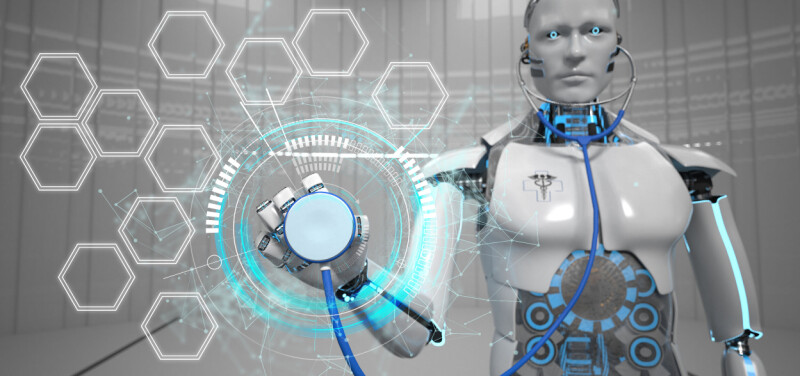
The AI medical assistant is still being tested. Now the space boffins want to give it hands
Google is working with NASA to develop a robotic medical assistant that could help astronauts on future deep-space missions.
Chocolate Factory's public sector VP Jim Kelly said in a Tuesday blog post that the company's latest moonshot could take its technology far beyond the lunar surface, with Google's public sector arm partnering with NASA's Human Research Program, Johnson Space Center's robotics team, and the Jet Propulsion Laboratory to develop a robot that could assist astronauts with medical tasks, cargo handling, and routine maintenance.
The robotics project builds on the Crew Medical Officer Digital Assistant (CMO-DA), an AI-powered medical decision-support system Google has been working on with NASA since last year. CMO-DA, which is powered by the Red Hat-supported open source local AI tool RamaLama, is already being evaluated on Earth-bound copies of computers used aboard the ISS. It’s designed to run AI models locally for evaluation of medical issues, which will be a key part of future space missions due to the communications lag between Earth and astronauts in deep space.
REG AD
“An astronaut on a future deep space mission to Mars could face severe operational challenges—including round-trip communication latencies of up to 44 minutes, making real-time medical guidance for crew nearly impossible,” Kelly said in this week’s blog post.
REG AD
Google and NASA envision the robot as an assistant to a human crew medical officer, helping with medical tasks and doing other work when bedside assistance isn't required.
“To maximize its utility for a lean crew, the robotic system is designed as a versatile 'payload' handler capable of managing cargo, logistics, and equipment,” Kelly explained. “When not needed for routine maintenance like organizing tools or securing compartments, it can pivot to medical support.”
As one example of its potential use, the Google public sector VP explained that, were someone to experience severe back pain potentially caused by kidney stones, the robot could fetch and prep an ultrasound machine, leaving the crew medical officer to interpret the scan and decide on treatment.
“The ultimate goal is to build a robotic system that can execute a variety of tasks via simple voice instructions, under the astronauts’ direct supervision and command,” Kelly said. “For instance, the robot might be directed to assist with routine health monitoring—such as capturing basic vitals or simple ultrasounds—under the strict guidance of a human crew medical officer.”
So, not a full-fledged digital medical officer as much as an extra set of hands for an overworked human doc.
As for the status of the project, it doesn't appear to have advanced too far yet. Google outlines several technologies being explored, including JPL's work adapting satellite situational-awareness tools originally used to track objects in orbit to help the robot navigate 3D spaces. The project remains at the proof-of-concept stage, with early laboratory demonstrations conducted, but Google hasn't confirmed whether a fully integrated, space-ready robot exists.
Kelly explained that Google used DeepMind's MuJoCo physics simulator to test the robot's movements, and that the system scored an initial 85 percent success rate in early lab tests involving locating and moving a medical bag – not exactly proof that it's ready to assist with medical procedures, but it's a start.
Google referred us to NASA for questions, but the space agency declined to get into specifics. The agency only told us it's working on a variety of "super intelligence" (eye roll - that's AI to those of us operating in reality) projects for its many missions, and that it's working with partners to assess them for future applications. ®
KioskNews shows a cleaned-up reading view extracted from the publisher’s page — the original always lives on their site, not ours.