Chain of failures: 5 key takeaways from report on Tai Po blaze
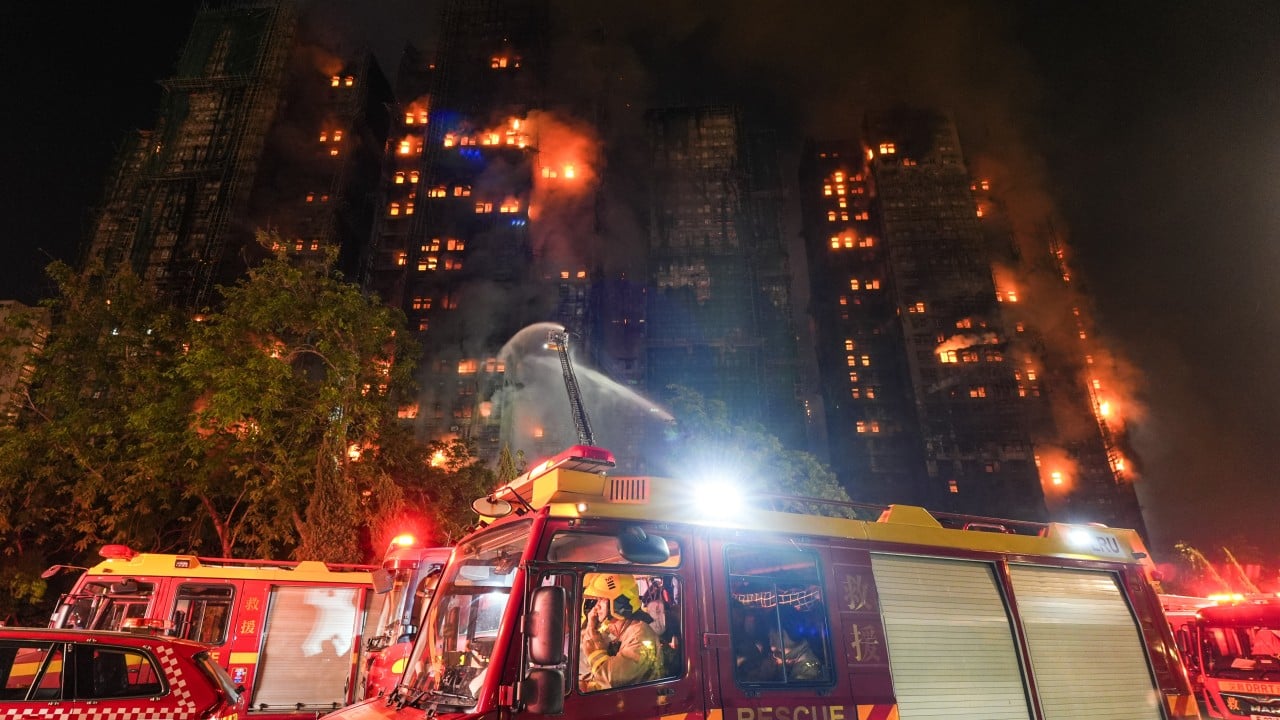
A long-awaited report on the Wang Fuk Court fire released by Hong Kong authorities on Thursday set out how a chain of systemic failures across the government and the construction sector led to the deaths of 168 people.
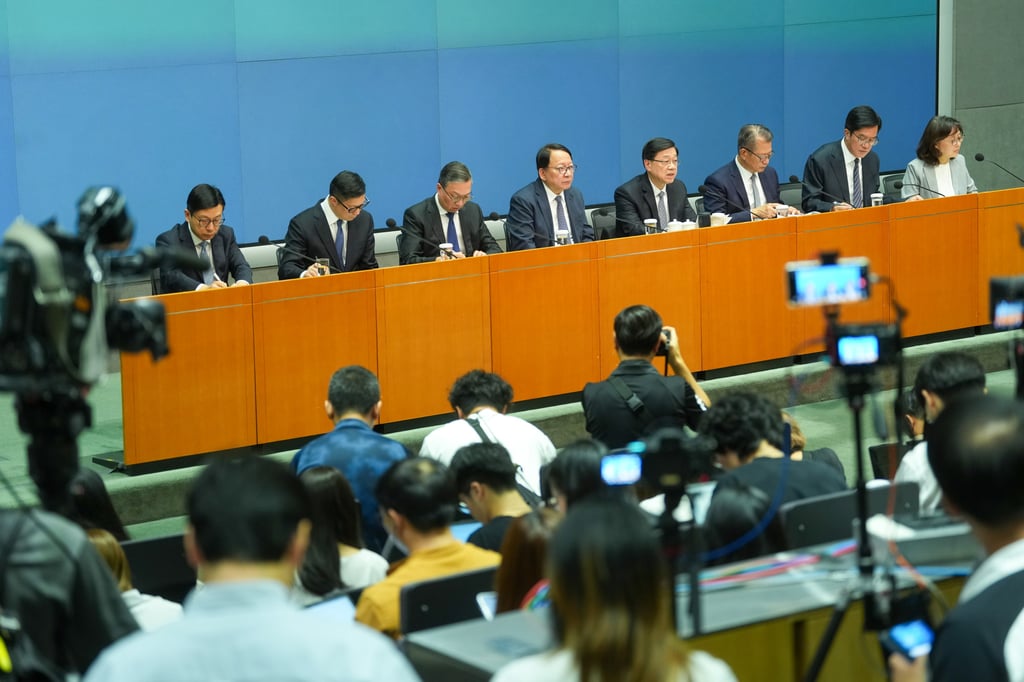
Chief Executive John Lee Ka-chiu alongside top officials announced an array of decisions, ranging from the resignation of the housing chief and setting up a new body to assist homeowners in renovation projects to criminalising bid-rigging that was regarded by officials as “the source of the problem”.
Here are the key takeaways from the report by a judge-led independent committee and a government press conference on the findings.
1. Who will be held accountable for the tragedy?
The report by the committee led by Judge David Lok Kai-hong found that unscrupulous contractors, consultants and professionals from the private sector were “the main culprits” of the tragedy.
While city leader Lee led principal officials in bowing and apologising as authorities released the report, he announced that secretary for housing Winnie Ho Wing-yin had resigned to be “held politically accountable” for the fire, although no personal wrongdoing was found on her part.
When asked about his own responsibility over the tragedy, Lee said: “In my capacity as chief executive, I apologise to all victims and members of the public ... I will not let the same thing happen again.”
The committee’s report stated that the Independent Checking Unit (ICU) of the Housing Bureau – which Ho oversaw – bore “a greater share of responsibility” as its failings covered both policy and operational levels, when compared with the Buildings Department.
Ho is the first government official to step down over her role in the blaze that erupted November. Her post has been filled by Deputy Financial Secretary Michael Wong Wai-lun, who announced on Thursday that the ICU would be replaced by a public housing control unit as part of the reforms.
2. What about the responsibilities of other government departments and officials?
City leader Lee stressed that authorities must ensure “criminal, political and administrative accountability”.
Two other government departments – the Fire Services Department and Labour Department – should also “bear part of the responsibility”, according to the report.
The four bodies will be investigated under the second tier of the Heads of Department Accountability System and the probe will be finished in three months, according to the government.
The committee’s report said that if those departments had “had a sense of crisis regarding the risks of fire”, “plugged the loopholes in the regulatory regimes”, “properly prioritised their work having regard to the high and obvious risks” and “paid sufficient heed to the real possibilities of the professionals not properly discharging their duties”, there was a possibility the misconduct of the private-sector parties and the fire hazards could have been rectified before the tragedy.
3. What led to the fire and high death toll?
The committee found that the fire was most likely caused by a “glowing source,” likely a cigarette, which ignited paper materials outside flats 104 and 105 of Wang Cheong House and caused them to smoulder.
“Though there is no direct evidence showing that a lighted cigarette was the cause of the fire, there is ample circumstantial evidence supporting that it was the cause,” the report said.
The low humidity level at the time, which was between 40 and 50 per cent, also contributed to the combustion and smouldering of flames due to the reduced moisture, the report found.
It said other human errors also led to the high death toll, including the use of non-fire-retardant scaffolding nets, foam boards and the adoption of unsafe building procedures, such as creating openings in escape staircases.

4. What will be done to combat bid-rigging?
In the press conference, Lee and other officials repeatedly singled out bid-rigging as “the source of the problem”, while the report concluded that many features during the tendering process for the renovation work at Wang Fuk Court “indicated the presence of bid-rigging” and some stakeholders had “triad affiliations”.
The government announced an array of measures to tackle the problem including:
-
Criminalising bid-rigging through a dual-track system under the Competition Ordinance
-
Reform the Organised and Serious Crimes Ordinance and the Independent Commission Against Corruption Ordinance with an aim to enhance penalties and investigative powers against bid-rigging
-
Launch a joint police task force to combat bid-rigging and step up intelligence sharing
More details will be announced on Friday in government press conferences.
5. What are the other reforms announced by the government?
A new steering committee, chaired by Chief Secretary Eric Chan Kwok-ki, will be responsible for monitoring the progress of implementation of the reforms.
Here are some of the structural reforms:
-
Set up an independent body by the end of this year to assist homeowners with building renovation projects, with HK$300 million (US$38.24 million) earmarked as a start-up fund that includes subsidies for homeowners
-
Overhaul the Buildings Department by launching two divisions to strengthen oversight of renovation projects
-
Establish a cross-departmental data system to share data including inspection results and violation records
Regarding the inspection and force enforcement efforts, these are some of the measures:
-
Revolutionise the complaint handling mechanism, including setting up a centralised system and using artificial intelligence (AI) to help analyse repeated complaints
-
Explore developing an app to send alerts to homeowners’ mobile phones when a fire breaks out.
-
Use AI to help frontline officers identify those who are smoking.
-
Tighten regulation of professionals involved in building renovation works
-
Increase fixed penalty for falsified fire safety certificates.
KioskNews shows a cleaned-up reading view extracted from the publisher’s page — the original always lives on their site, not ours.