Opinion: Opinion | China's Quiet Power Grab Is Hiding In Plain Sight
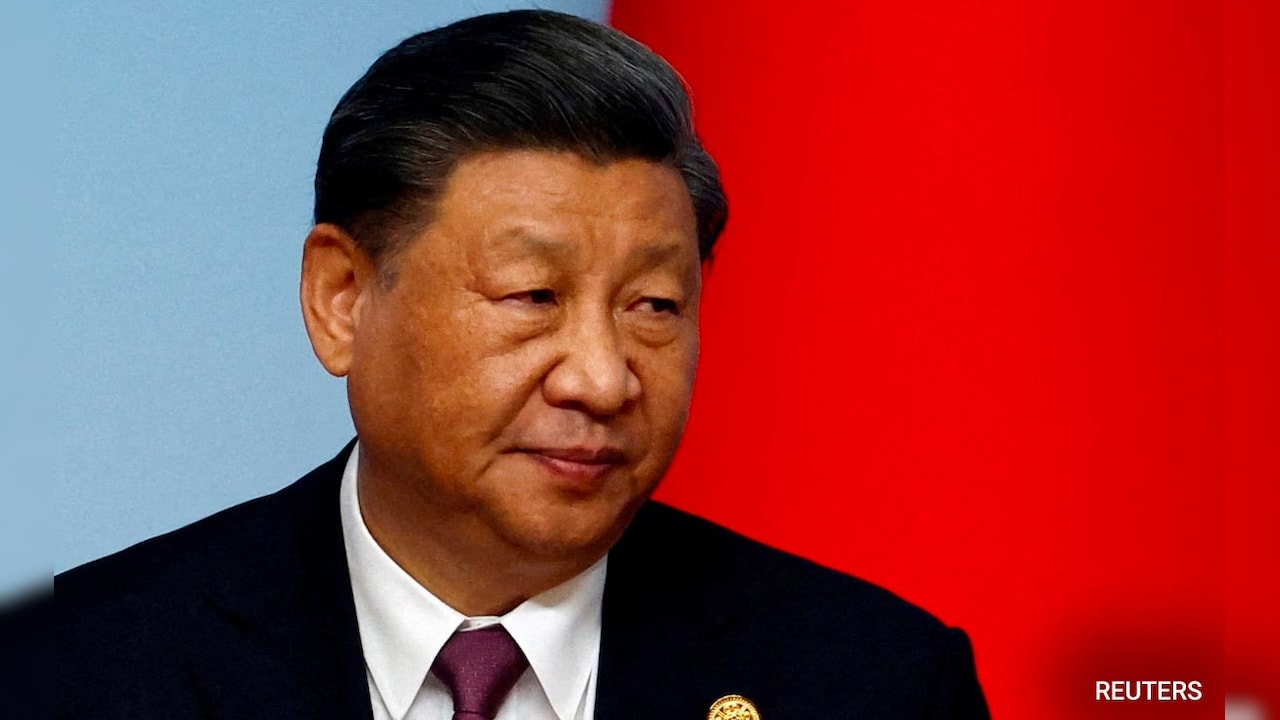
This time around, the meeting of the Shanghai Cooperation Organisation (SCO) is going to be viewed rather differently. Earlier, hardly anyone noticed its somewhat lengthy and verbose statements. This time, however, every foreign correspondent worth his salt is going to be glued to its every move, every handshake, and body language. And that is not just because of the Iran war, or the Ukrainian escalation, though those things are important. It is that Chinese President Xi Jinping is to arrive in Washington at the end of this month, after his visit to India. The equations built before that, in India, Egypt, and the massive SCO meeting, will matter in how the meeting with US President Donald Trump turns out. And that, in turn, will feed back into how everyone else weighs their options. It is like a series of jigsaw puzzle pieces falling into place, in unpredictable ways.
An Economic Maze, With One Anchor
First, the SCO itself. It is all very impressive upfront. Some 20-plus countries are meeting at the summit, which includes not just the member states - Russia, China, Belarus, India, Iran, Pakistan, and four Central Asian states of Kazakhstan, Kyrgyzstan, Tajikistan, and Uzbekistan - but also some 15 dialogue partners or observers; after last year's Tianjin summit, all have been converted to 'Partners'. That list includes Saudi Arabia, Turkey, and the UAE, among others. Three aspects are common among all members, and, increasingly, the 'Partners'. All are neighbours of China, and for all, it is their biggest trading partner. That means this is a huge Chinese-dominated economic maze. The third is that almost all are also operating Chinese equipment - with Uzbekistan recently opting to buy J-10 CE fighter jets - adding to an existing roster of Chinese-made weaponry. Notably, this buy replaces ageing Soviet-era weaponry. Russian equipment is nowhere to be seen, as it struggles with replacing its own inventory. In short, China is the top dog in this grouping, and everyone knows it.
Advertisement - Scroll to continue
'And So What?'
The question is what it does about it. For that, a disaggregation of the Bishkek Declaration, which oddly, is available so far only in Russian, is indicative, even if the text itself meanders on about multiple issues - this being a consensus document. The text stresses the desirability of strengthening the UN, condoles with Iran, swears to help Afghanistan stabilise, and, rather surprisingly, comes down heavily on cross-border terrorism and drug trafficking. But if the existing cooperation on terrorism through the SCO centre for the purpose - the Regional Anti Terrorism Structure (RATS) - is any guide, it won't deliver much.
Even so, Beijing seems serious. It faces a massive drug misuse problem among its teens and has cracked some 12,000 cases so far in 2026. And - surprise! - it also cooperates closely with the US for interdiction. That means it is serious. It has also extended the list of precursors. Indian pharma companies had better watch out. A lot of those vital chemicals, deliberately or otherwise, are going from here.
Advertisement - Scroll to continue
But look at not just the Declaration but also 28 other documents signed, and a pattern emerges. The main document stresses connectivity, thus enhancing the movement of Chinese goods well beyond its borders. Then consider President Xi's speech. A key sentence is that it welcomes all "to take an active part in the 'Big Market for All: Export to China' event series to seize the opportunities on China's super-sized market". That's the exact opposite of what the US is doing. But dig a little deeper, and you'll find that it's not that easy to export to China. In fact, an advisory from the Indian embassy warns of fraud and cheats, quite apart from high tariff barriers. No, China has no intention of doing the SCO members any favours. Quite the reverse.
Look also among the welter of mundane documents at an 'Action Plan (Roadmap) for the Development of Ports and Logistics Centers 2026-2030', and a 'Concept for the Establishment of Regional Data Processing Centers, Computing Capacities and the Development of the Artificial Intelligence Industry within the SCO'. Guess where those ports are going to be and whom they are likely to benefit. Pakistan will certainly see a boost in its already rapidly rising port capacities following the complete breakdown of Chabahar and other Iranian ports. And yes, the race for hugely environmentally damaging and power-hungry data centres has begun in the SCO as well, with the poorest countries likely to be targeted to expend their resources. In short, China is not very different from the exploitative US companies that look for foreign shores, including India, when they feel hemmed in by environmental laws of their own countries.
What The SCO Has And Hasn't Done
Now consider the SCO for what it has actually done to deal with the multiple crises that it outlines. On the face of it, it seems China has done nothing to help Iran in its corrosive war with the US. But then, a US force battering itself against the Iranians suits Beijing very well. Not only does it leave it free to exercise its 'rights' in Taiwan, but it also gives it an image of being the less destructive power. In fact, that's the central message in Bishkek. In addition, it has managed to play Washington so well that its own oil shipments were earlier exempt from sanctions, while India was arm-twisted. There is also the mystery of how a battered Iran continues to produce drones, missiles, and all its sub-components. That help is detailed in a US report that notes not just continued oil exports, but also the supply of dual-use components by Beijing, even when it stops short of providing a formal defence commitment.
Simply put, China has the cake and eats it too. Chinese ships are now regularly docking at the one, dormant Gwadar port, and in Karachi, where goods are shipped via Gabd - part of six routes opened ostentatiously by Pakistan - to bypass sanctions on Iran. Other SCO members/partners are apparently involved in 'mediation' with Iran, which doesn't seem to be going anywhere. That includes not just Pakistan, but Turkey, Qatar, and the UAE. As for the Ukraine war, China has sworn a strong partnership with Russia, and buys its weapons. American 'sanctions' on Russia didn't prevent Turkey from getting a Russian nuclear plant, its very first. So no, SCO has done nothing to stop the wars, but, in fact, has encouraged them in a way.
That Spotlight Visit
Meanwhile, after a year of not stepping outside his country, barring a visit to North Korea, the Chinese president is on a roll, with a visit due to Egypt - his first in a decade - and then presumably to Delhi, before he lands in Washington in late September. China has also increased its presence along the Suez, and after years of doling out a few million to Afghanistan, has suddenly announced $100,000 in aid to that beleaguered country. In terms of ground effect, multiply that by ten. Kabul will now have its own priorities, and expect that Chinese companies will move in soon.
While Chinese prowess still outstrips the US' - for instance, the ASPI Critical Technology Tracker found China leading in 69 of 74 tracked technologies against just five for the US - expect that Beijing will now be even more aggressive in its economic policy to address overcapacity, which will include attempts to strangle the Indian economy rather than encourage it.
India has to take that one lesson away from the SCO. Sure, we are the only democracy in the grouping, but that has less coinage in a world where dictators like Munir are feted. However, the reason India is at the high table, at the SCO or elsewhere, is because of that impressive 7.6% growth. That is also precisely what may be a problem going forward, with severe climate change impacting our vital agriculture sector, and poor power, logistics capabilities, and, let's face it, bureaucratic inertia and corruption. All of this has to be tackled literally on a war footing. The Ministry of External Affairs will have its ducks in a row before BRICS, which will also be focused on the economy.
The second takeaway stems from all this and is indicated in PM Modi's impassioned plea to Russia to end the war in Ukraine. That's not going to be easy, given that there are specific countries making sure the war goes on by supplying Ukraine with all manner of weaponry and encouraging it to retain a maximalist position.
But Russia has to come back into business, at least in Asia. There's no other pushback to Beijing. The biggest problem is getting Trump to see that. A quiet little reach-out to all concerned before that is strongly indicated.
(Tara Kartha is a former Director, National Security Council Secretariat)
KioskNews shows a cleaned-up reading view extracted from the publisher’s page — the original always lives on their site, not ours.