Cases of children being denied aid in war zones are soaring, analysis finds
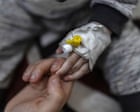
The “weaponisation” of aid is becoming normalised, with new analysis revealing that deliberate holding back of humanitarian help to children in conflict zones has increased 16-fold in the past decade.
The assessment of UN-verified incidents corroborates concerns that denying vital aid is becoming a common tactic of modern warfare.
Cases where children were denied access to humanitarian aid was proven to have increased from 509 in 2015 to 8,322 last year, according to an analysis by Save the Children.
On Sunday the UK, Australia, Canada and Italy urged Israel to allow critical aid into Gaza to help displaced people trapped in flimsy shelters as the first heavy rains of the winter hit.
An infant drowned and three children and a mother were killed last week when storms lashed the besieged territory, as Israel refuse to allow 150,000 tents and other vital supplies past its border controls.
The data analysis estimates that more than a fifth of all violations against children in conflict recorded by the UN now involve the denial of aid – up from 2% a decade ago.
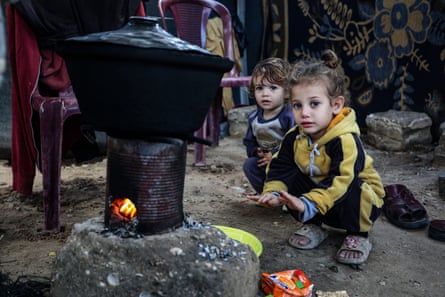
Orlaith Minogue, head of humanitarian advocacy at Save the Children UK, said: “We are witnessing an unprecedented surge in the weaponisation of aid alongside a wider collapse in international cooperation and escalating climate crises.
“Children are uniquely vulnerable in conflict and climate disasters. Children are paying the highest price for wars they had no say in and are impacted by climate disasters they had no involvement in creating.”
Most cases where humanitarian help was denied to children last year were recorded in the occupied Palestinian territory with almost 6,000 incidents, followed by Libya with more than 1,000 verified incidents and Ukraine with 473.
State forces were responsible for a significant proportion of verified incidents. In Gaza, for instance, almost nine in 10 incidents were attributed to Israeli authorities.
In Ukraine, increasing attacks on civilian areas include the targeting of critical infrastructure and humanitarian warehouses. Save the Children alone suffered three attacks on its facilities over the summer with bombs and drones striking a kindergarten in the Kharkiv region and, weeks earlier, damaging a warehouse storing supplies for children.
Sieges have returned as a defining tactic of modern conflict, with blockades repeatedly deployed in Sudan, site of the world’s worst humanitarian crisis. Last year in the western region of Darfur, a 15-truck UN convoy was attacked, preventing the first aid in more than a year reaching the famine-hit city of El Fasher.
Meanwhile in Yemen, the Houthis are accused of sending the city of Taiz “back to the stone age” with a month-long siege, trapping 800,000 people with dwindling food and water supplies.
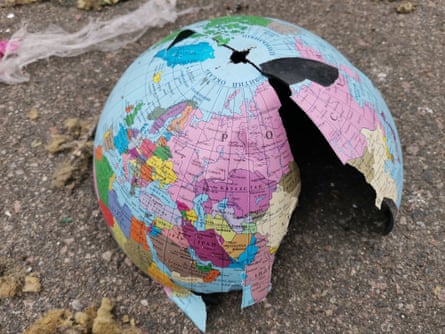
A record 589 million children – almost one in four worldwide – are living in conflict zones, the highest number since 1990 when data was first collated.
Humanitarian organisations are navigating a collapse of international cooperation, evolving tactics of warfare and an intensifying climate crisis.
Other factors restricting aid include bureaucratic and administrative impediments. In Gaza, 55% of requests to bring in critical humanitarian items were approved between April 2024 and last December.
Many essential items – even children’s medicines – are delayed or blocked by the Israeli government as “dual-use” items while the Israeli military authority, which controls the Gaza crossings, says it is working with the US-led Board of Peace and the UN on a winter plan.
Minogue also called on the UK government to “use its influence” to ensure humanitarian access wherever children were caught up in conflict.
KioskNews shows a cleaned-up reading view extracted from the publisher’s page — the original always lives on their site, not ours.