Ministry updates pension waivers and NHI coverage
By Hou Chia-yu / Staff reporter


The Ministry of Health and Welfare yesterday announced a series of new policy measures taking effect today, including raising the threshold for waiving interest charges on overdue National Pension Insurance payables and expanding National Health Insurance (NHI) coverage for several medications.
Interest charges would be waived if the total interest payable for the month is less than NT$100 (US$3.14), up from NT$30, which is expected to benefit more than 100,000 citizens each year, the ministry said.
Meanwhile, the National Health Insurance (NHI) is this month expanding coverage for several major medications for rare diseases, cardiovascular conditions, blood disorders and cancers.
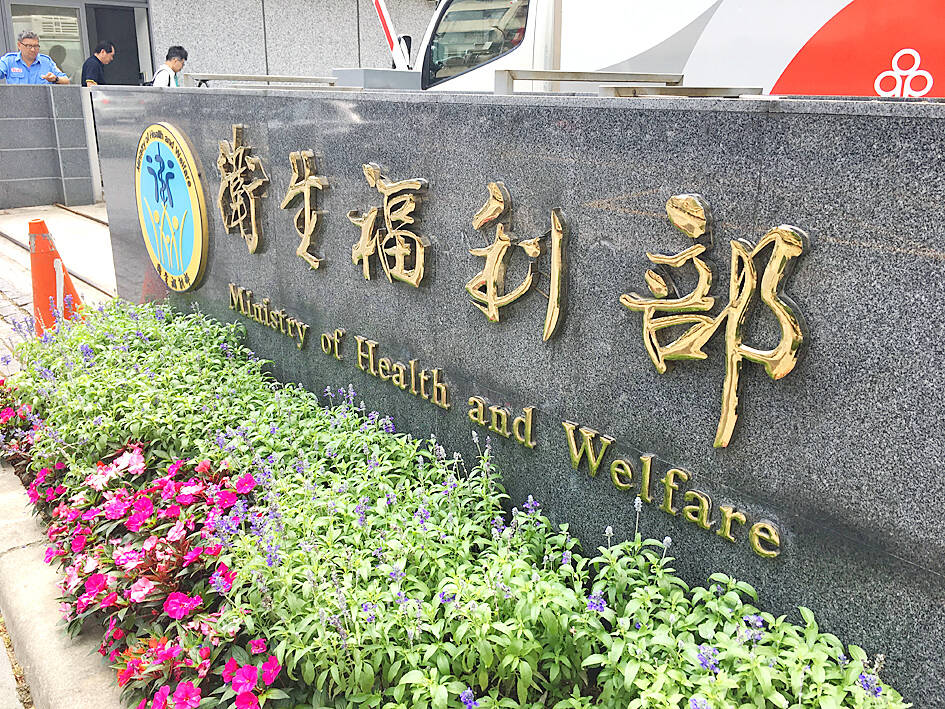
The logo of the Ministry of Health and Welfare is pictured in this undated photograph.
Photo: Taipei Times file
Aspaveli/Empaveli would be covered for people with paroxysmal nocturnal hemoglobinuria who respond poorly to C5 complement inhibitors.
Clinical trials showed the medicine improved hemoglobin levels and reduced reliance on blood transfusions, the NHI Administration said (NHIA), adding that about 12 to 16 people would benefit annually from the policy change.
The anticoagulant rivaroxaban (such as Xarelto) would also be covered for people with symptomatic peripheral artery disease or coronary artery disease who face a high risk of ischemic events.
There would be significant additions to cancer care medication coverage, such as Pembrolizumab (Keytruda) for metastatic or recurrent unresectable head and neck squamous cell carcinoma, as well as Yescarta — a CAR-T cell therapy — for people with diffuse large B-cell lymphoma or high-grade B-cell lymphoma.
A clinical evaluation is needed to verify qualification for Yescarta coverage, the single-treatment cost of which is about NT$8.19 million, the NHIA said.
The medication is used by about 36 to 88 people per year, it added.
Poteligeo (mogamulizumab 4 mg/mL) would be covered for people with rare conditions such as mycosis fungoides or Sezary syndrome and have undergone at least one systemic therapy, regardless of their CD30 expression levels.
The eligibility threshold for Galafold (migalastat hydrochloride) for people with Fabry disease would also be lowered from 16 years old to 12 for those with amenable mutations, offering them with an oral treatment option, the NHIA said.
People battling lung and esophageal cancers would gain expanded access to Tevimbra (tislelizumab).
The therapy covers late-stage or metastatic esophageal squamous cell carcinoma, as well as first, second and third-line non-small cell lung cancer, benefiting 726 to 1,108 people annually, it added.
KioskNews shows a cleaned-up reading view extracted from the publisher’s page — the original always lives on their site, not ours.