Pierre review – David Harewood’s twisty noir is an instant crime classic

Some of us are too young to have seen David Harewood play Othello at the National Theatre in London back in ’97. It was the first time, on that stage, that Shakespeare’s Black lead was played by a Black actor – as opposed to a white one in blackface makeup. Even if you missed that groundbreaking performance, on the basis of Harewood’s star power in the London-set crime drama Pierre, you can be assured he blew the roof off.
Pierre’s co-writer Roy Williams may not be the Bard, but he is another highly acclaimed playwright with an interest in how Black men fare in this country. Pierre on Channel 4 isn’t exactly Othello at the National, either, but it is another cultural milestone in the story of Black British crime drama.
Williams’s show, written with John Donnelly, establishes itself with confident concision, which is largely down to Harewood’s performance. The way he enters a room and unbuttons his suit jacket, before delivering a threat or assurance. The soft Birmingham burr (Harewood’s own) that has been filed to a sharper edge by years of gritty London living.
But it’s also the noirish locations, frequented by Pierre while on night shifts as a duty solicitor for a police station. And it’s the striking title graphic, comprising building-height yellow letters for the silhouetted solicitor to stride past. The plot, too, is noir with a twist: a young Black man is found dead after telling Pierre he was building a case of police harassment against an officer.
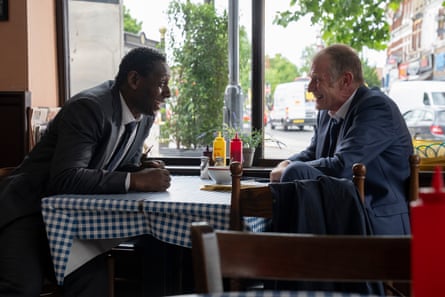
Sure, TV with vaunted cinematic ambitions is great, but have you ever been firmly taken in hand by a genre show that knows what it means to do, then does just that? “This ain’t the Premier League, my friend,” Pierre tells a potential client over the cold laminate of a custody suite table. “We’re in the lower leagues here. We don’t need the haircuts, the turns, the stepovers. We want a guaranteed 20 goals a season and someone prepared to dig their elbows in where it hurts, week in, week out.” Pierre’s shtick, like this football analogy, is clearly well rehearsed, but no less persuasive for it.
It’s a cop show, then – but, crucially, this guy is no cop. Back when Idris Elba’s Luther was donning his detective tweeds, “positive representation” meant bucking racist stereotypes by casting Black actors as police heroes, yet otherwise steering clear of any engagement with what it might actually be like to be Black in an “institutionally racist” organisation such as the Metropolitan police: the daily indignities and trade-offs; how it all reverberates in your personal life and your mental health.
That changed in 2020 with Red, White and Blue, Steve McQueen’s one-off, feature-length BBC drama starring John Boyega as the real-life former Met police superintendent Leroy Logan. It changed again in 2024 with Get Millie Black, another Channel 4 series, written by the Booker prize-winning author Marlon James, which traced British racism to its roots in the transatlantic slave trade via Kingston, Jamaica.
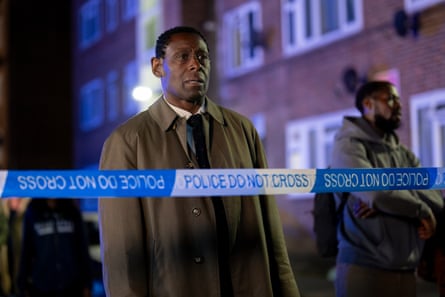
But as entertaining as these shows were, Pierre’s specific identity as a duty solicitor – a securely middle-class Black professional who remains rooted in his community – allows him a wider jurisdiction. He can banter over a full English with his bestie, DS Ronnie Miller (Jason Flemyng) just as naturally as he comforts bereaved relatives at a vigil for a murdered teenager. He can be received at a private member’s club, the Turningham, and wryly reply, when told that the first Lord Turningham made his money “in sugar”: “There’s a surprise.”
As for Pierre’s personal collection of indignities and trade-offs, these are not only explored by the drama, but also robustly challenged by his many Black peers. These include his law firm partner Charlotte (the frequent Mike Leigh collaborator Michele Austin, excellent as ever) and his wife, Celeste (Sara Powell, struggling to overcome “Skyler from Breaking Bad syndrome” – being the underwritten, nagging wife of a dynamic antihero.)
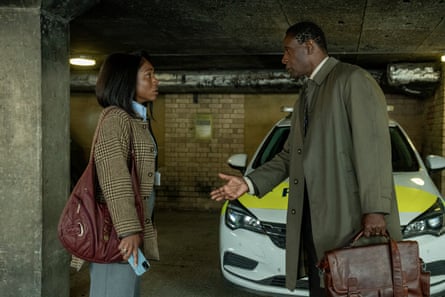
Pierre’s world is generously populated with colourful characters besides (bonus casting points for the inclusion of Christopher Fairbank’s delightfully Dickensian visage), which means there’s a lot of ground to cover. Pierre the show – like Pierre the man – sometimes buckles under this burden by, for instance, attempting to condense modern race and policing politics into a few lines of chatty dialogue, which lands with all the subtlety of an anvil on a pavement.
But, still, his friends in places high and low agree: nobody does it quite like Pierre. So if he has been overburdened with responsibility, the only agreeable solution is to allow more time for him to work things out for everyone who depends on him. That sounds like a season two commission to me.
KioskNews shows a cleaned-up reading view extracted from the publisher’s page — the original always lives on their site, not ours.