‘It’s bad’: In a polarized Israel, the likeliest election result is more uncertainty
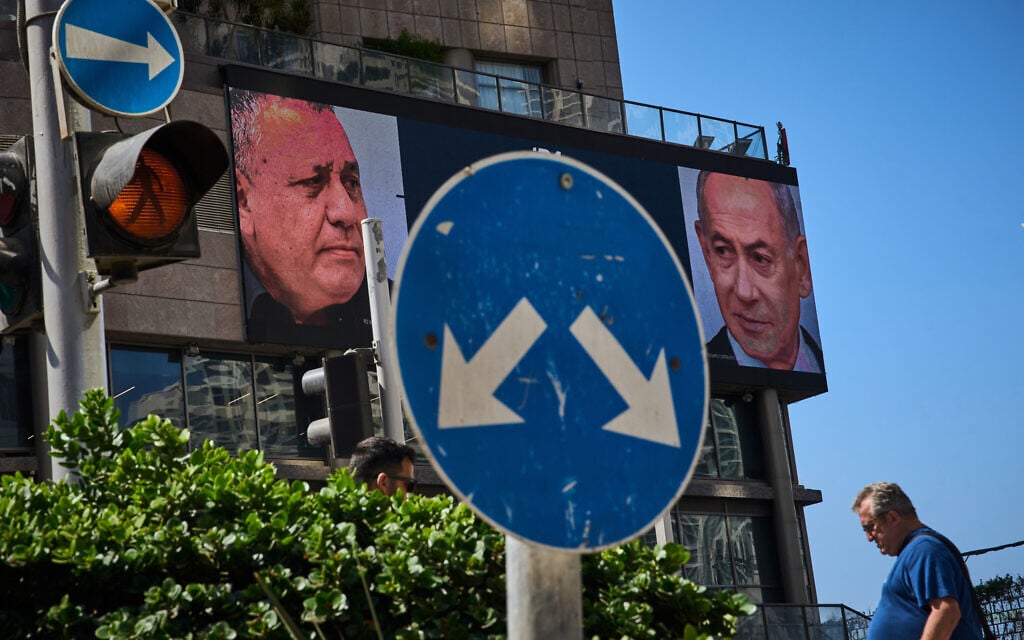
It’s an irony of Israeli politics that, in perhaps the most hotly contested, most vicious and most consequential election in the country’s history, everyone agrees on one basic thing: that they don’t really know what’s going to happen on October 27 or afterward.
There are daily polls. There are campaign promises and alliances and rivalries. But three years after Israel’s worst catastrophe ever, and seven years since the country leapt headfirst into an abyss of polarization, a reckoning does not appear imminent. Instead, the overwhelming feeling is uncertainty.
Polls in this country, historically, are not to be trusted — which is no wonder, given the impossible situation presented by Israel’s Byzantine political landscape. In the US, pollsters were tarred and feathered after both of Donald Trump’s victories, and all they had to do was predict how two parties would perform. Imagine having to contend with 13 parties, some of which may not even win enough votes to enter the Knesset, with a small fraction of a percent massively skewing the eventual outcome.
0:00 / 0:00
Promoted: Theatron Hotel and Residences

In recent decades, the man repeatedly underestimated by polls is the one currently sitting in the Prime Minister’s Office. Time and again, Benjamin Netanyahu has defied the surveys, coming out on top when everyone expected him to stumble. When he first won office in 1996, Israelis quipped that they went to sleep with Shimon Peres (who, according to exit polls, had won the election) and woke up with Bibi (the actual victor). Needless to say, it hasn’t been a one-night stand.
On the other hand, what if the polls are right? That provides small comfort to either side. It isn’t just that we don’t know who will win the election. Increasingly, it seems like the election will have no winner at all, with both Netanyahu and the main bloc of his opponents falling far short of a 61-seat majority. Most of the balance, surveys show, will be held by Arab parties that have almost never joined a coalition.
Get The Times of Israel's Daily Edition by email and never miss our top stories
By signing up, you agree to the terms
There’s also uncertainty within the blocs. Netanyahu’s opponents agree that he shouldn’t be prime minister, but they disagree on who should. When it comes to actual questions of policy, they run the gamut from right to left. And while Netanyahu’s supporters are all lining up under his leadership, they disagree on one of the election’s core questions: whether to conscript ultra-Orthodox men.
It’s like a mix-and-match menu at a chain restaurant, except what’s at stake is the future of the country
All of that has inspired a running parlor game among politicians and pundits as to how the parties will sort following the vote, who will align with whom, and who will get the top job. At this point it’s like a mix-and-match menu at a chain restaurant, except what’s at stake is the future of the country.
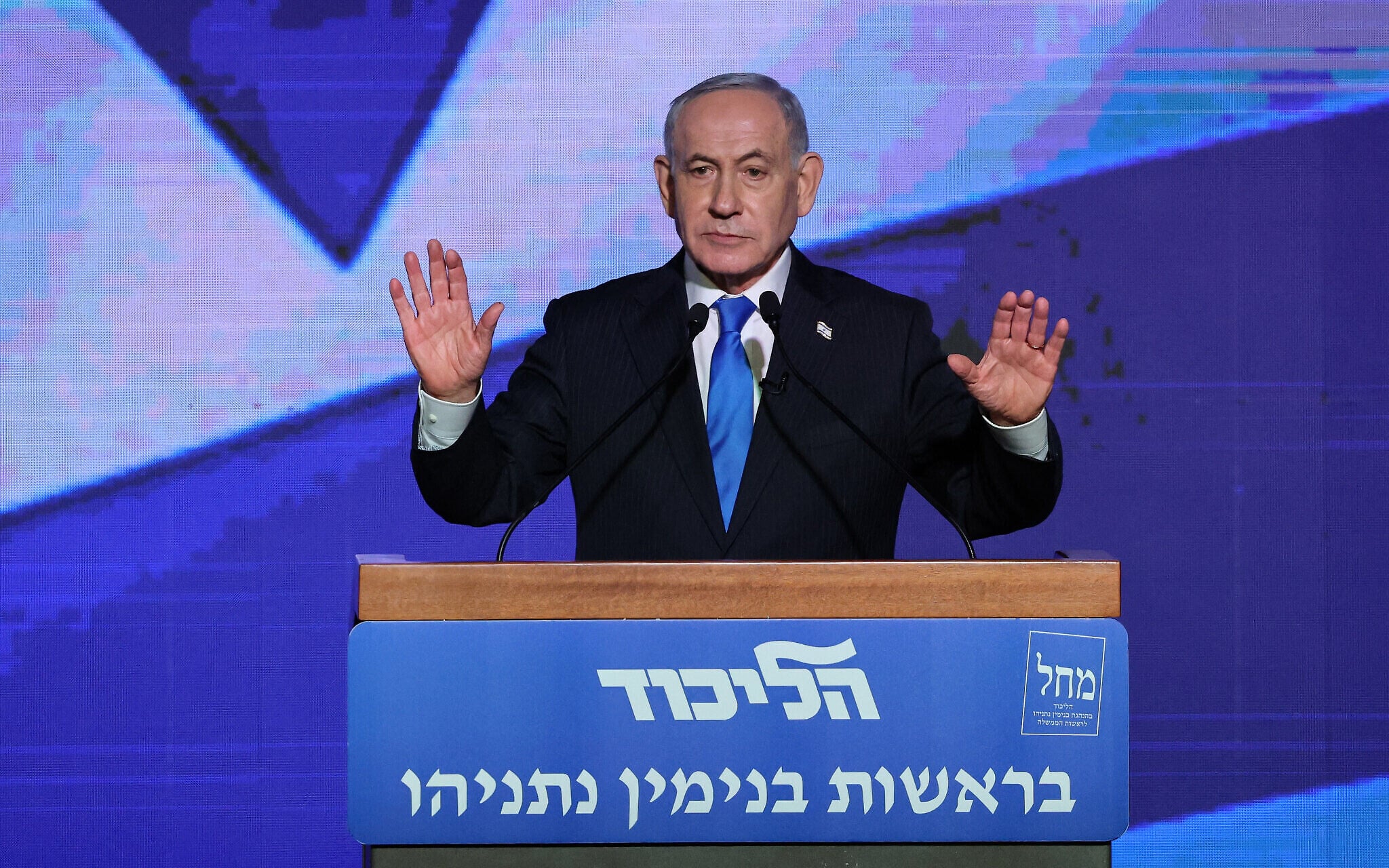
Often lost in the conversation is what all of this means for Israeli society, and how the government — let alone its citizens — is expected to muddle through untold months of political purgatory, with the very real possibility that this no-holds-barred campaign will end with another election being scheduled in early 2027. That’s an ordeal Israelis already went through from 2019 to 2022 — a span of time that saw five separate votes. They aren’t keen to repeat it.
“Election day is merely the day on which the playground is laid out for the politicians to play on,” Shmuel Rosner, a political analyst and editor of the Madad, an Israeli data and polling firm, told The Times of Israel. “And then the real process begins.”
Rosner pointed out that, if the uncertainty persists, two candidates could in turn receive 42-day mandates to form a government. Back-to-back, they would add up to almost three months, about as long as the official election campaign itself.
Can Eisenkot get it done? And how?
One lesson the opposition seems to have learned from the past seven years of political turmoil is that it must stop at nothing to defeat, or at least unseat, the prime minister.
In 1984, after another close election fought amid crisis, the two largest parties, each holding more than 40 seats in the 120-member Knesset, agreed to form a large unity government that proved remarkably stable. But those days are over. Instead, polls this year are putting the frontrunner, Gadi Eisenkot’s centrist opposition Yashar party, in the low 20s. Netanyahu’s Likud, coming in second, has gone as low as 18 recently.
More dire for the four Jewish-led opposition parties is that few polls show their bloc collectively attaining the magic number of 61. The most realistic scenario is for Eisenkot’s camp to outpace Netanyahu’s — leading, say, by a count of 55 to 53 — and to form a government with less than a majority. That’s a rarity in Israel, but the Knesset’s rules allow it. If the Arab-led parties abstain from the vote, and Eisenkot’s bloc has more members than Netanyahu’s, it can crown him prime minister.
“What happens if we get these results and a day later Iran bombs Tel Aviv? It’s not as if we have an ideal situation now, and you say, ‘Well, it’s going to get much worse.’ No, it’s bad now.”
Such a government would be a far cry from the 64-seat coalition Netanyahu assembled in 2022, and it would be even weaker than the 61-seat government that briefly unseated Netanyahu the previous year, which was ideologically incoherent and plagued by infighting, and quickly fell apart.
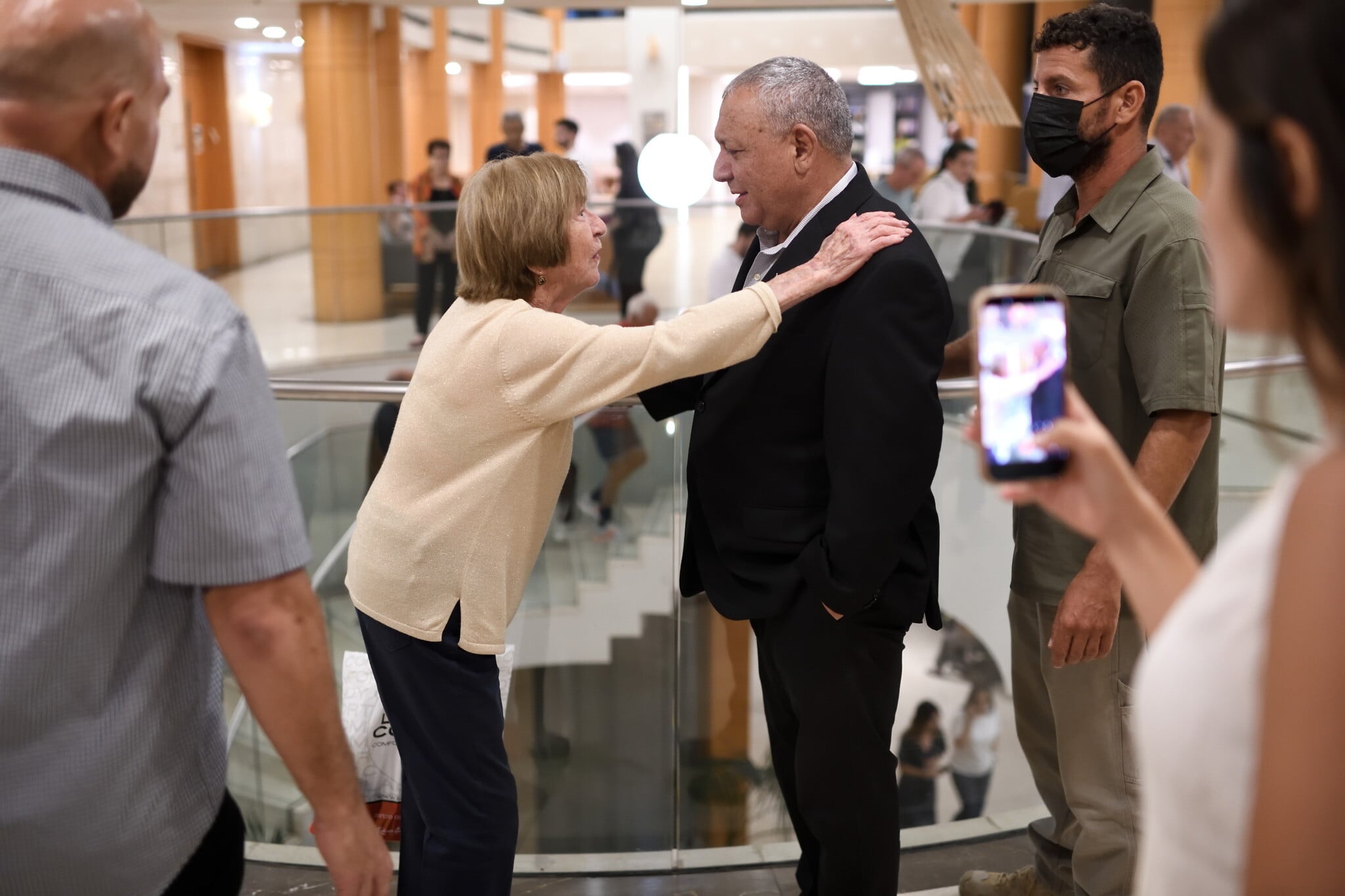
But Gideon Rahat, chair of the political science department at Jerusalem’s Hebrew University, said a minority government — which would need to reach across the aisle in order to get anything done — might be the very thing that can inaugurate a new era in Israel’s polarized politics.
“A minority government will face difficulties attaining a majority in the Knesset for all kinds of things,” he told The Times of Israel. “But if you ask me, this is one of the most democratic things possible because you’ll have checks and balances on the government. It will need to form a [new] coalition every time in order to pass anything.”
That also reads like a recipe for perpetual instability. But the anti-Netanyahu bloc is actually larger than most polls tend to let on. While surveys present the opposition, or “change bloc,” as a group of four Jewish-led parties — Yashar, Naftali Bennett’s B’Yachad, the hawkish Yisrael Beytenu and the left-wing Democrats — the actual number of Netanyahu opponents also includes the Arab parties, and commands a majority of the Knesset in nearly all surveys.
Scholars say there are things that this majority, working together, can get done quickly, even while a government is still forming.
First, said Rosner and Gayil Talshir, a political scientist at the Hebrew University, the anti-Netanyahu parties can vote out Knesset Speaker Amir Ohana, an ally of the prime minister. That would allow them to start acting on campaign promises, like establishing a state commission of inquiry into the October 7, 2023, Hamas-led onslaught. Talshir floated the idea that the Knesset could even enact term limits for prime ministers. It could also bar people under indictment — like Netanyahu — from serving in the role.
Would Arab parties cooperate with these votes if they’re shut out of Eisenkot’s coalition? Talshir says yes. She points to how poorly Arab Israelis have fared under the outgoing government, with sky-high murder rates in their communities and a national security minister, the far-right Itamar Ben Gvir, who antagonizes them.
“It’s clear they’ll do what is needed to make sure that those making decisions on these processes are not Netanyahu and his partners,” she told The Times of Israel.

Given their infighting, Eisenkot and his partners will struggle to govern even if they cobble together a majority. But if they do win office, they’ll be able to say they fulfilled their main campaign promise on day one: unseating Netanyahu, for now at least.
“That’s the immediate aspiration of that government, to just begin a process of healing from a highly polarized era, and try to make Israel a more politically civilized place,” Rosner said. “Whether that would be a successful enterprise, I don’t know.”
Bibi, king of TikTok?
Netanyahu, however, isn’t giving up, and if precedent is any guide, he has reason for optimism.
In 1996, just months after prime minister Yitzhak Rabin was assassinated, an act critics accused Netanyahu of helping incite, he was widely expected to lose — but he won. In 2015, he trailed in the polls for much of the campaign — and won decisively. In 2019 and 2020, he contested three inconclusive elections — until his main rival, Benny Gantz, caved, keeping Netanyahu in office for a while longer.
He may outperform polls again. First of all, the pro-government Channel 14 has consistently run surveys showing him winning reelection. If they’re right, and the rest of the surveys are wrong, he’ll sail to yet another term.
He may also garner strong support among one hard-to-predict demographic: young voters. Israel’s youth have long been more right-wing than their elders, a trend that predates October 7. Channel 12 conducted a study showing that the 76-year-old Netanyahu boasts a commanding presence in the Israeli political scene on TikTok, the video app favored by Gen Z.
But Netanyahu also has reasons to fear. Another study by the network found that Netanyahu and his rivals had similar social media engagement, when considering only Israeli accounts. And Talshir predicted that some Likud voters, and Haredi voters whose parties support Netanyahu, may not turn out after the disappointments, tragedies, wars and internecine conflicts of the past four years.
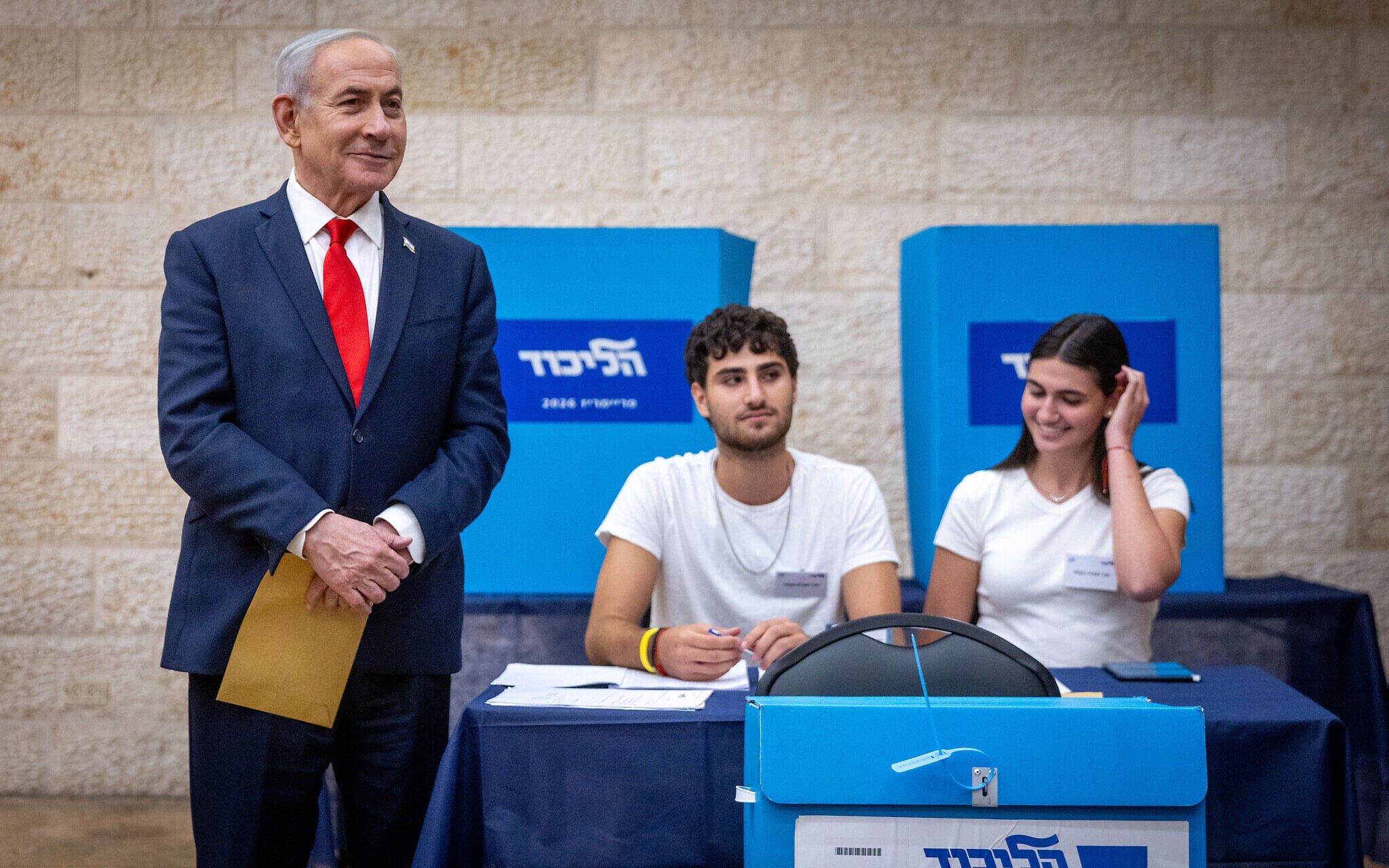
But she also noted that, unlike Eisenkot, Netanyahu doesn’t need to win a majority. Because he’s already prime minister, all he needs to do to stay in office is not lose.
If his bloc doesn’t get to 61 seats, Netanyahu’s challenge would be to ensure Eisenkot cannot swear in a minority government — by persuading, say, one of Eisenkot’s partners not to back the establishment of a coalition reliant on Arab parties’ support. That, in turn, could open the possibility of new alliances and a potential Netanyahu victory, or trigger repeat elections, in a rerun of the 2019-2022 scenario.
Netanyahu isn’t so much trying to achieve victory, Talshir said, as he is “trying to ensure that the other side doesn’t win.” And if he cannot ultimately muster a majority of his own, she added, “Netanyahu will do everything he can to make sure that there will be another election, so that he’ll have another chance of coming to power.”
How would the Israeli public react to that chain of events? Rahat noted that Israelis have been down this road before, making it less shocking this time around.
“We’ve already crossed the Rubicon when it comes to the possibility of going to elections over and over,” he said. “It’s a lot easier, after you’ve already had one election after another, to do it again.”
Netanyahu is trailing in the polls after a term marked by massacre, unending war and chaos in Israel’s streets. But he’s built a reputation as a political wizard, and this feels like his last stand — plus, he faces possible jail time if he’s convicted in his corruption trial, making reelection feel even more urgent.
“Netanyahu has more strength, more power, more determination than anyone else competing in the political arena, so this scenario does have a chance of happening,” Talshir said.
Netanyahu isn’t so much trying to achieve victory, one scholar says, as he is “trying to ensure that the other side doesn’t win.”
Israel is like everywhere else, only more so
Some post-election scenarios go even farther afield — but still might be possible: Will Yisrael Beytenu’s hawkish Avigdor Liberman insist on becoming prime minister, form an alliance with the hard-right Ofer Winter, and force Eisenkot into giving him the job? Will Eisenkot try to peel lawmakers away from Likud or even Shas, the Sephardi Haredi party, which is portraying itself as somewhat moderate on the question of military service? Will Netanyahu make a play for an opposition party, bribing it with cabinet posts?
It all points to a chaotic aftermath to the election, and a polarized Knesset. Of course, if an Israeli were to complain to an American, Brit or Frenchman that the Jewish state has become so polarized as to be rendered dysfunctional, the foreigner’s response would probably be: Join the club.
Multiple studies show that in the United States, Europe and elsewhere, as in Israel, polarization is rising due to a range of factors. But here, the stakes are higher.
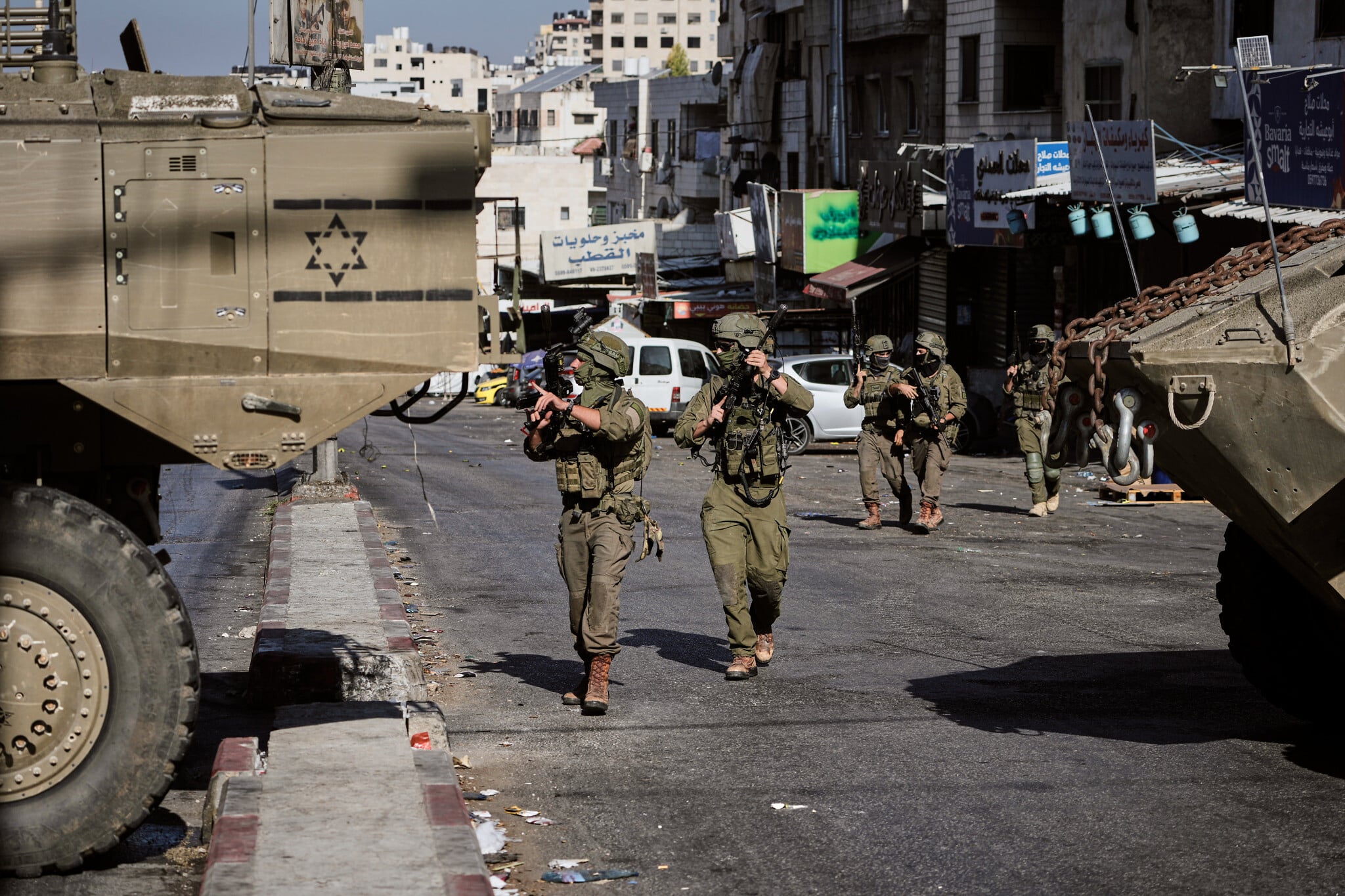
Israel has soldiers fighting on four fronts — in Gaza, Lebanon, Syria and the West Bank. It has fought two rounds of war with Iran in as many years, and Tehran is still fighting Washington, with a volatile president in the White House. A new US Congress, likely with more Democrats and thus less sympathy for Israel, is due to be elected a week after Israel’s vote.
That’s in addition to a flailing Israeli education system and sky-high cost of living, the issue that voters have said is top-of-mind as they go to the polls.
“I don’t think Israeli society is in a state of collapse,” Rosner said. “I don’t think the country doesn’t function. But I do think that by and large, Israel is a country with grave challenges, and societal coherence and cohesiveness is essential to our security.”
So if a government fails to form, Israelis will head into the late fall and winter without organized leadership. Even if Eisenkot does form a coalition, the chances that Netanyahu will go quietly, as opposed to trying to collapse the government and force yet another vote as he did in 2021 and 2022, seem slim.
“I think there’s a good chance he’ll stay and wage a fierce battle,” Rahat said. “He’ll try to draw people out [of Eisenkot’s orbit]. He’ll try to do a lot of things because he’s fighting for his future.”
While that battle is being fought, Israel will remain mired in political limbo, at a time of war and multiplying challenges, both foreign and domestic.
“What happens if we get these results and a day later Iran bombs Tel Aviv?” Rosner said. “It’s not as if we have an ideal situation now, and you say, ‘Well, it’s going to get much worse.’ No, it’s bad now, and another round of elections means that we are going to extend this period of bad things into 2027.”
KioskNews shows a cleaned-up reading view extracted from the publisher’s page — the original always lives on their site, not ours.