The Netherlands is just a symptom of a widening global boycott against Israel
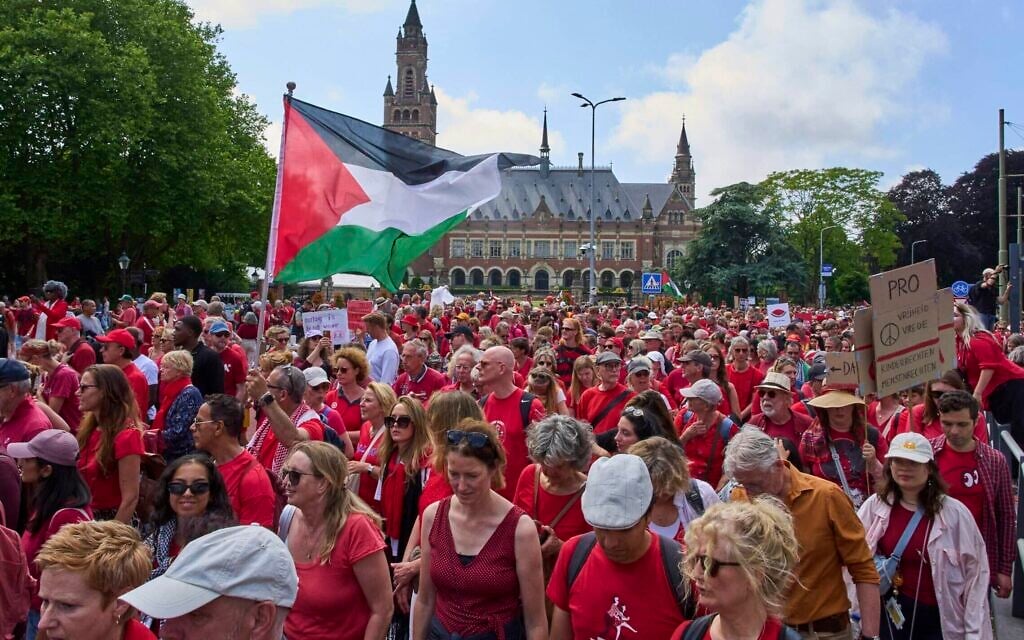
A year has passed since US President Donald Trump, having returned to the White House a few months before, forced Prime Minister Benjamin Netanyahu’s hand and compelled him to agree to a ceasefire in Gaza.
It was a year in which Israel could have capitalized on the relative quiet to rehabilitate its battered standing in the world. Instead, its relations with Western and Arab countries have continued to rapidly deteriorate, and the price is becoming more tangible by the day.
Almost every morning, Israelis wake up to news of yet another barrier to tourism, trade, or diplomatic relations.
0:00 / 0:00
Promoted: Nefesh B'Nefesh - Aliyah is Now

Turkish President Recep Tayyip Erdogan has long since choked off bilateral trade; in France, the Macron government has barred Israeli defense companies from participating in major security exhibitions; and the chargé d’affaires at the Spanish Embassy in Israel was formally reprimanded by the Foreign Ministry over inflammatory anti-Israel remarks made by a minister in her government.
In addition, it was reported on Monday that 15 Israeli tourists arriving in the Netherlands were subjected to a humiliating search of their belongings. The customs inspection may have been a targeted attempt to locate products from West Bank settlements and the Golan Heights, whose entry has been banned under a severe new Dutch government order that escalates Europe’s past product-labeling policies into an outright boycott.
Get The Times of Israel's Daily Edition by email and never miss our top stories
By signing up, you agree to the terms
How deep is the diplomatic disconnect? Dutch Foreign Ministry Secretary-General Christiaan Rebergen is currently in Israel, but he is deliberately not meeting with any of his Israeli counterparts. The Foreign Ministry is presumably aware of his visit, yet officials are not holding talks with him.
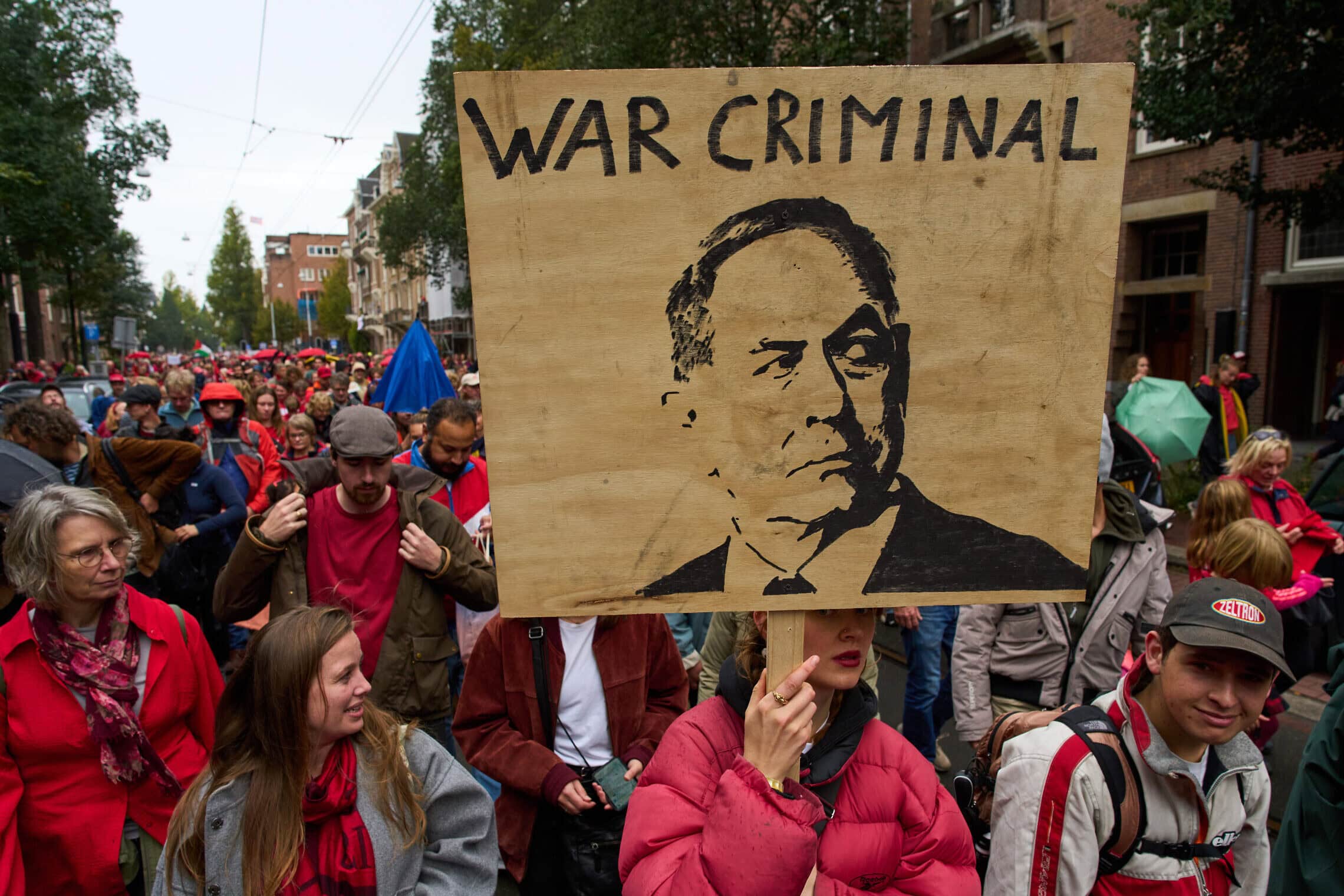
Rebergen, the most senior civil servant in the Dutch Foreign Ministry after the minister, arrived to inaugurate a new embassy building and found himself in the middle of a diplomatic crisis.
The new Dutch ambassador, Stella Ronner-Grubacic, arrived in Israel three weeks ago but has yet to present her official credentials to President Isaac Herzog — the formal protocol required for her to fully assume her post. Because she is not yet officially accredited, the Foreign Ministry cannot even summon her for the “usual” diplomatic dressing-down.
Instead, the Foreign Ministry chose a harsh asymmetrical response to the Dutch trade order: deliberately downgrading the status of Dutch diplomats responsible for managing ties with the Palestinian Authority.
The move is reminiscent of the retaliatory decision taken two years ago against Norwegian diplomatic representatives, after Oslo officially recognized a Palestinian state. At the time, Israel formally revoked the diplomatic accreditations of eight representatives who lived in Israel and worked at the Norwegian mission to the Palestinian Authority in A-Ram, near the Qalandiya crossing in the West Bank.
The Norwegian government’s solution was to relocate those diplomats to Amman, Jordan, from where they continue to manage relations with the PA. Their work has undoubtedly become more cumbersome, and when they visit Ramallah, they can no longer enter with diplomatic immunity. Ultimately, however, the diplomatic ties themselves were never severed.
What the Dutch order covers
What exactly does the Dutch order prohibit? According to government officials in The Hague, it is not actually intended to apply to the personal belongings of tourists or businesspeople, but rather to commercial goods intended for sale within the Netherlands. They insist that the search of 15 people out of an entire flight was merely a routine, random customs inspection, rather than a targeted political move.
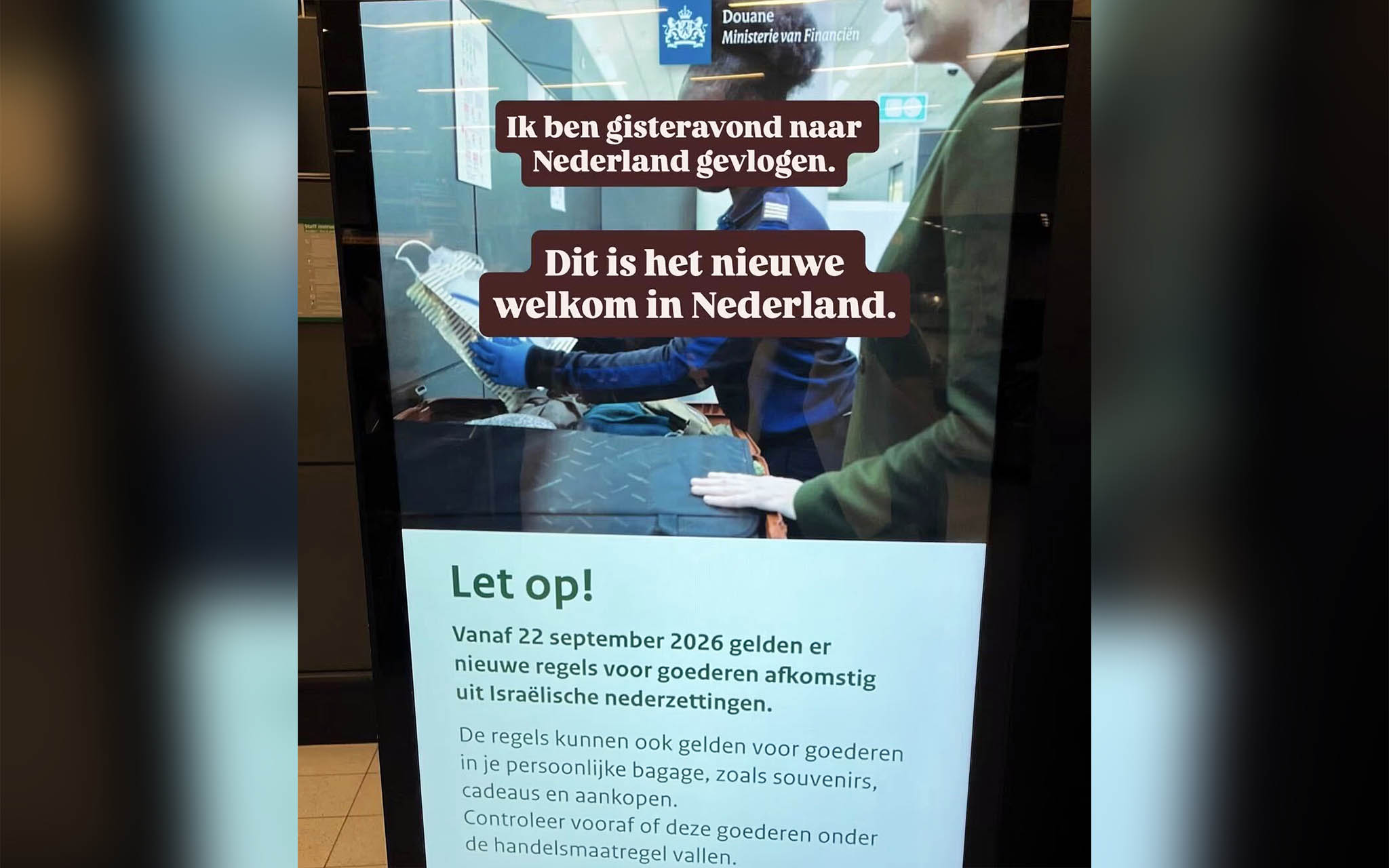
There is another important distinction. According to the explanations emanating from The Hague, an Israeli exporter seeking to sell wine, flowers, or fruit from the West Bank or the Golan Heights through a Dutch seaport or airport en route to another market in Europe or the United States is not supposed to be blocked. If those exact same products are intended for domestic sale in the Netherlands itself, however, the new prohibition strictly applies to them.
Yet there remains an unclear gap between those official explanations and the reports detailing the searches of Israeli tourists’ belongings. If the order explicitly does not apply to personal possessions, why were the searches carried out in the first place, and what exactly were the customs officers hoping to find?
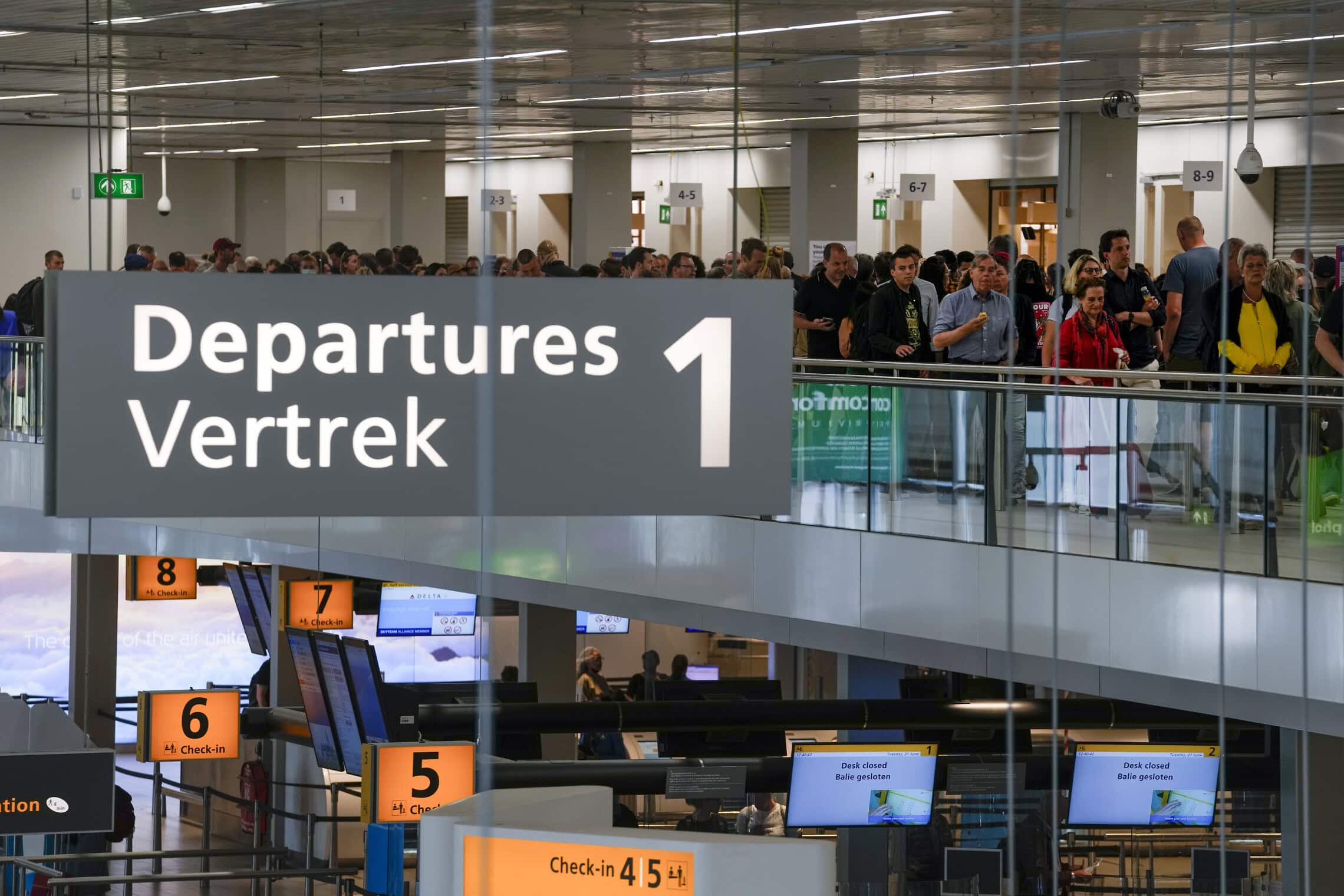
The risk to Israel extends far beyond an isolated, unpleasant incident at an airport terminal. It is not always easy to determine where a specific product was manufactured or where its individual components originated. A ban ostensibly limited to certain disputed areas could, in practice, quickly metastasize into a broad avoidance of all Israeli products.
Even manufacturers and exporters who do not use products from the targeted areas are likely to be required to provide detailed written declarations regarding the exact origin of their raw materials and components.
Faced with this exhausting bureaucracy and the potential legal exposure to sanctions, Dutch companies may simply prefer to rely on a supplier from another country. This means a de facto commercial boycott could easily emerge, even without an official government decision to boycott Israel as a whole.
The risk of broader European isolation
The Netherlands alone represents a lucrative market of millions of consumers. The more worrying question, however, is what will happen as other European countries move to follow suit.
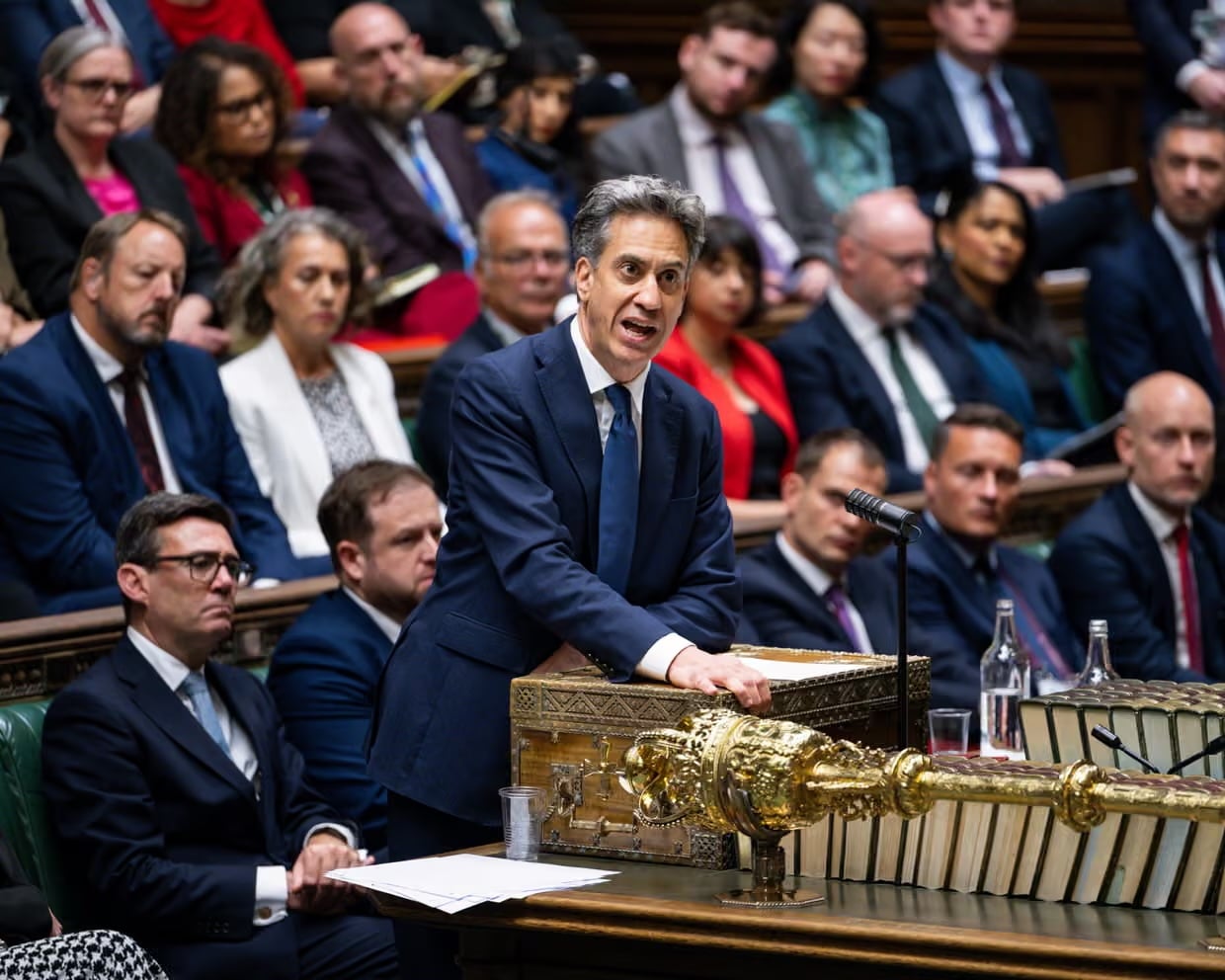
On Monday, Britain’s Foreign Secretary boasted that the UK’s ban on dealings with settlements, announced three weeks ago, has “mobilized the international community, country after country.” About a dozen countries did indeed immediately declare that they were following the British lead or considering doing so.
The “British government agrees that there is ethnic cleansing of Palestinians in areas of the West Bank – perpetrated by settler terrorists,” Miliband told parliament on September 8, charging that “the Israeli government has turned a blind eye to this and, worse, members of it have made statements and taken actions to support the forced displacement of Palestinians.”
The Ynet news site reported on Monday that Avi Pazner, a former Israeli ambassador to France and Italy and a former senior Foreign Ministry official, is warning that Israel is marching toward a state of international isolation similar to that imposed on South Africa during the apartheid era.

International pressure and crippling sanctions on South Africa steadily expanded from the 1960s through the 1990s, ultimately contributing to the collapse of the apartheid regime. That process took decades to unfold.
There is also a glaring imbalance in the Israeli response.
Measures against Dutch diplomats may indeed make their daily work with the Palestinian Authority more difficult, but as the Norwegian case clearly demonstrates, they do not mean that their diplomatic ties with the Palestinians will end.
By contrast, the creeping Dutch trade restrictions could mark another milestone as a growing portion of the international community imposes a heavy, lasting economic and diplomatic price on Israel.
Help us report truthfully on social media

As a multimedia journalist, my job is to take the quality, fact-based journalism produced by The Times of Israel newsroom and make it accessible across every platform — from Instagram posts to podcasts to short-form videos.
This is how many, especially young people, consume news these days. But misinformation is rampant on social media. Our team at ToI produces accurate, responsible short-form reporting on Israel and the Jewish world.
If you believe in the importance of factual social media journalism, please consider joining our reader support group, The Times of Israel Community. Your financial support is essential to sustain responsible multimedia reporting.
— Gabriella Jacobs, multimedia journalist
Support our work Support our work Already a member? Sign in to stop seeing this
KioskNews shows a cleaned-up reading view extracted from the publisher’s page — the original always lives on their site, not ours.