Justice Nagarathna first judge to start writing Sabarimala reference verdict
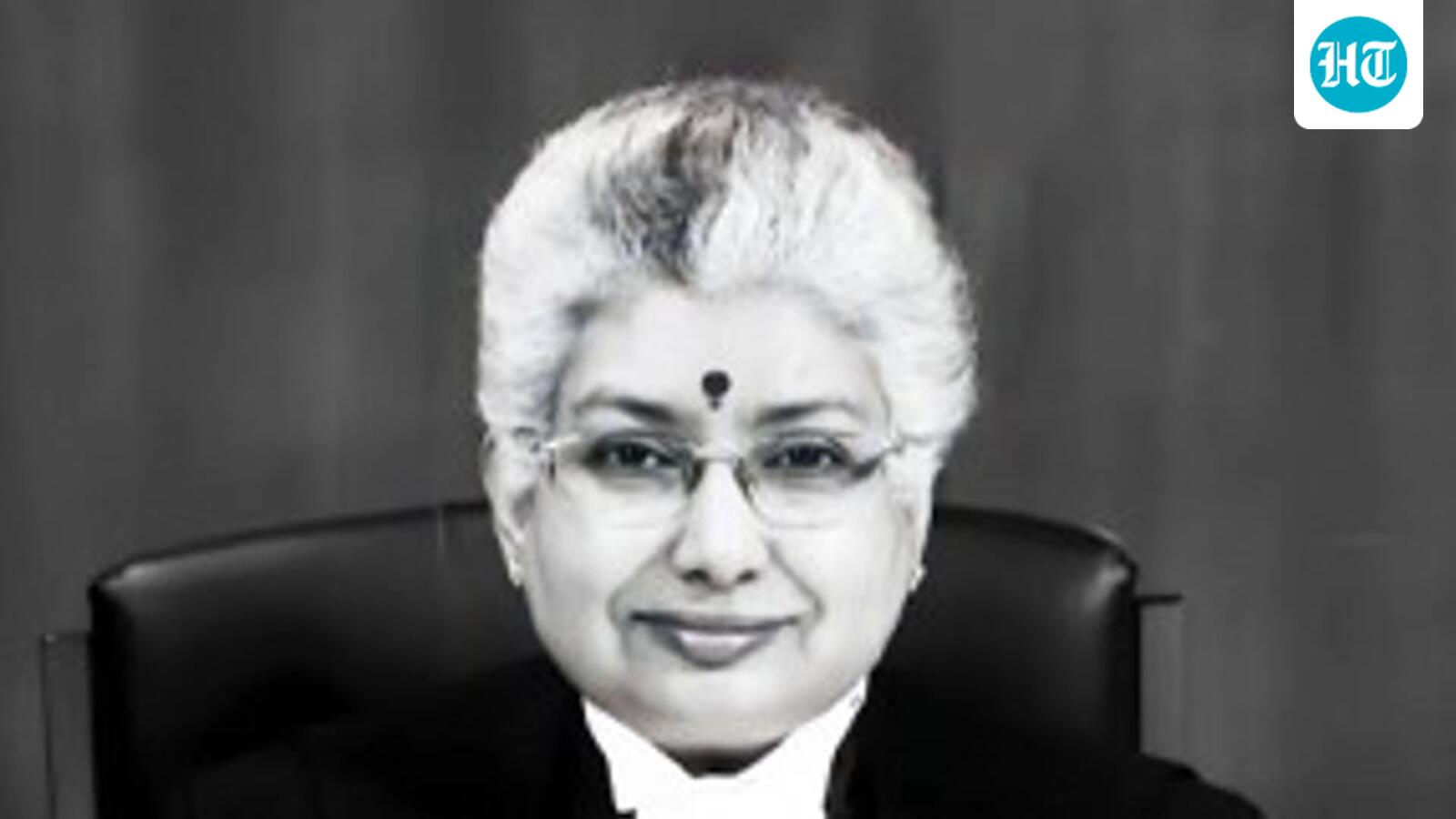
Justice BV Nagarathna has become the first judge on the nine-member constitution bench to start writing the judgment in the long-pending Sabarimala reference, setting the stage for a verdict that could redefine the Supreme Court’s approach to religious freedom, judicial review and the “essential religious practices” doctrine.
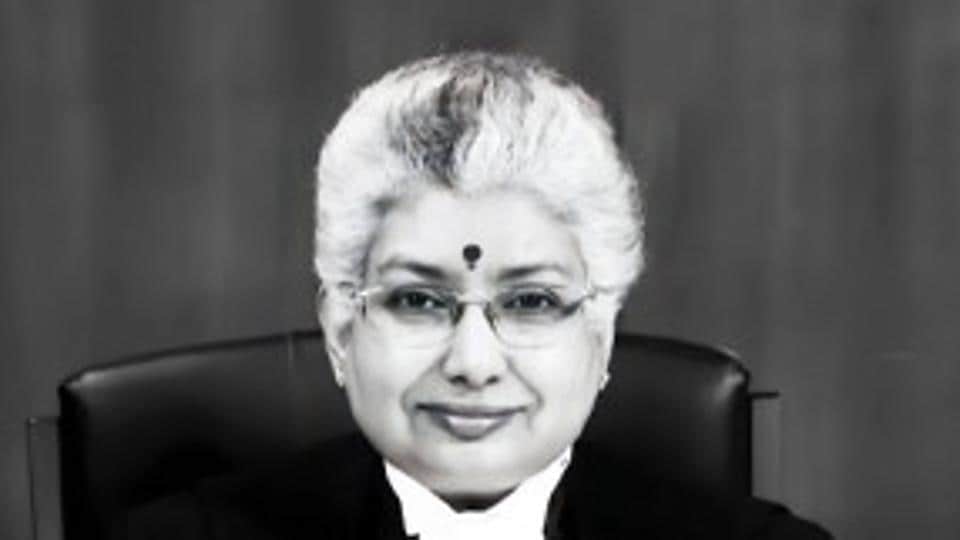
The development assumes significance as Justice Nagarathna was the only woman judge on the bench that heard the 16-day marathon proceedings and had, during the hearings, expressed views on several of the core constitutional questions arising from the dispute, including the role of the essential religious practices test.
The nine-judge bench headed by Chief Justice of India Surya Kant had reserved its judgment on May 14 after hearing arguments on the constitutional questions referred to it following the 2018 Sabarimala verdict. Besides the CJI and Justice Nagarathna, the bench comprises justices MM Sundresh, Ahsanuddin Amanullah, Aravind Kumar, Augustine George Masih, Prasanna B Varale, R Mahadevan and Joymalya Bagchi.
To be sure, other members of the nine-judge bench are also free to write separate opinions.
The reference originates from the Supreme Court’s September 2018 judgment, by a 4:1 majority, allowing women of all ages to enter the Sabarimala temple in Kerala. The verdict had held that the exclusion of women between the ages of 10 and 50 could not withstand constitutional scrutiny.
The subsequent review proceedings led to the larger constitutional reference, with the court deciding to examine broader questions concerning the relationship between Articles 14, 25 and 26 of the Constitution, the scope of judicial review of religious practices, the meaning of religious denomination and the extent to which courts can employ the essential religious practices doctrine.
Justice Nagarathna’s authorship is particularly noteworthy given her own record of speaking independently in Constitution Bench matters. She was the lone dissenter in the Supreme Court’s 2023 demonetisation verdict, holding that the Centre could not invalidate the entire series of ₹500 and ₹1,000 notes merely through a notification and that the exercise ought to have been undertaken through legislation.
She was also the sole dissenting judge in the nine-judge Constitution Bench verdict on the Centre and states’ legislative powers over industrial alcohol, differing with the majority on important aspects of the scope of the states’ power under Entry 8 of List II of the Seventh Schedule.
Her dissenting voice was also significant in the 2024 nine-judge constitution bench judgment on mineral taxation, which examined whether royalty payable under the Mines and Minerals (Development and Regulation) Act, 1957, was a tax. The majority held that royalty was not a tax but a payment made by a mining lessee to the state for the right to extract minerals, and consequently held that states could impose taxes on mineral rights. It also held that mineral-bearing land could be treated as “land” under Entry 49 of the State List, permitting states to levy tax on such land.
But Justice Nagarathna disagreed, holding that royalty under the MMDR Act was itself a statutory tax on mineral rights and that mineral-bearing land could not be subjected to another layer of state taxation. She held that the constitutional taxation entries were mutually exclusive and that allowing both the parliamentary levy under Entry 50 and a state levy under Entry 49 would result in double taxation. She also cautioned that overlapping state taxes could fragment the country’s fiscal policy and encourage unhealthy competition among states. The position taken in her dissent has acquired fresh relevance with the Mines and Minerals (Development and Regulation) Amendment Act, 2026, which clarifies that royalty under the 1957 law is itself a tax on mineral rights, leaving no scope for states to impose additional levies under Entry 49 or Entry 50.
The Sabarimala proceedings themselves saw Justice Nagarathna engage closely with the competing claims over religious autonomy and constitutional scrutiny. During the hearings, she suggested that the essential religious practices doctrine could have a limited role as an aid to determine whether a practice was genuinely religious, rather than operate as a test for denying constitutional protection to a religious practice.
She also questioned whether the original petition challenging the Sabarimala custom was maintainable at the instance of persons who were not themselves devotees, while examining the constitutional basis for judicial intervention in matters of faith.
The judgment she has now begun writing will therefore be closely watched for the manner in which the bench resolves the difficult questions that have surrounded the reference for nearly seven years.
The 2018 Sabarimala verdict itself had an important dissent from another woman judge, Justice Indu Malhotra. While then CJI Dipak Misra and justices RF Nariman, AM Khanwilkar and DY Chandrachud formed the majority that struck down the exclusion of women between the ages of 10 and 50, Justice Malhotra differed. She held that the challenge should not have been entertained and that the exclusionary practice was protected by the devotees’ right to freely practise religion under Article 25. She also cautioned against courts determining matters of religious belief through notions of rationality or constitutional morality.
Thus, nearly eight years after Justice Malhotra stood alone in dissent against the judgment opening Sabarimala to women of all ages, another woman judge on the Supreme Court is now writing the judgment arising from the larger constitutional examination of the very questions that emerged from that verdict.
Justice Nagarathna was elevated to the Supreme Court in August 2021 after serving as a judge of the Karnataka high court. Born on October 30, 1962, she began practising law in 1987 and became a permanent judge of the Karnataka high court in 2010. She is due to retire on October 29, 2027.
Under the established seniority convention and the present line of succession, Justice Nagarathna is in line to become the first woman Chief Justice of India. Her elevation to the top judicial office would come in 2027, before her retirement later that year.
KioskNews shows a cleaned-up reading view extracted from the publisher’s page — the original always lives on their site, not ours.