‘Not a single prescription’: How pharma firms are ‘moving’ codeine cough syrup to Bengal border districts
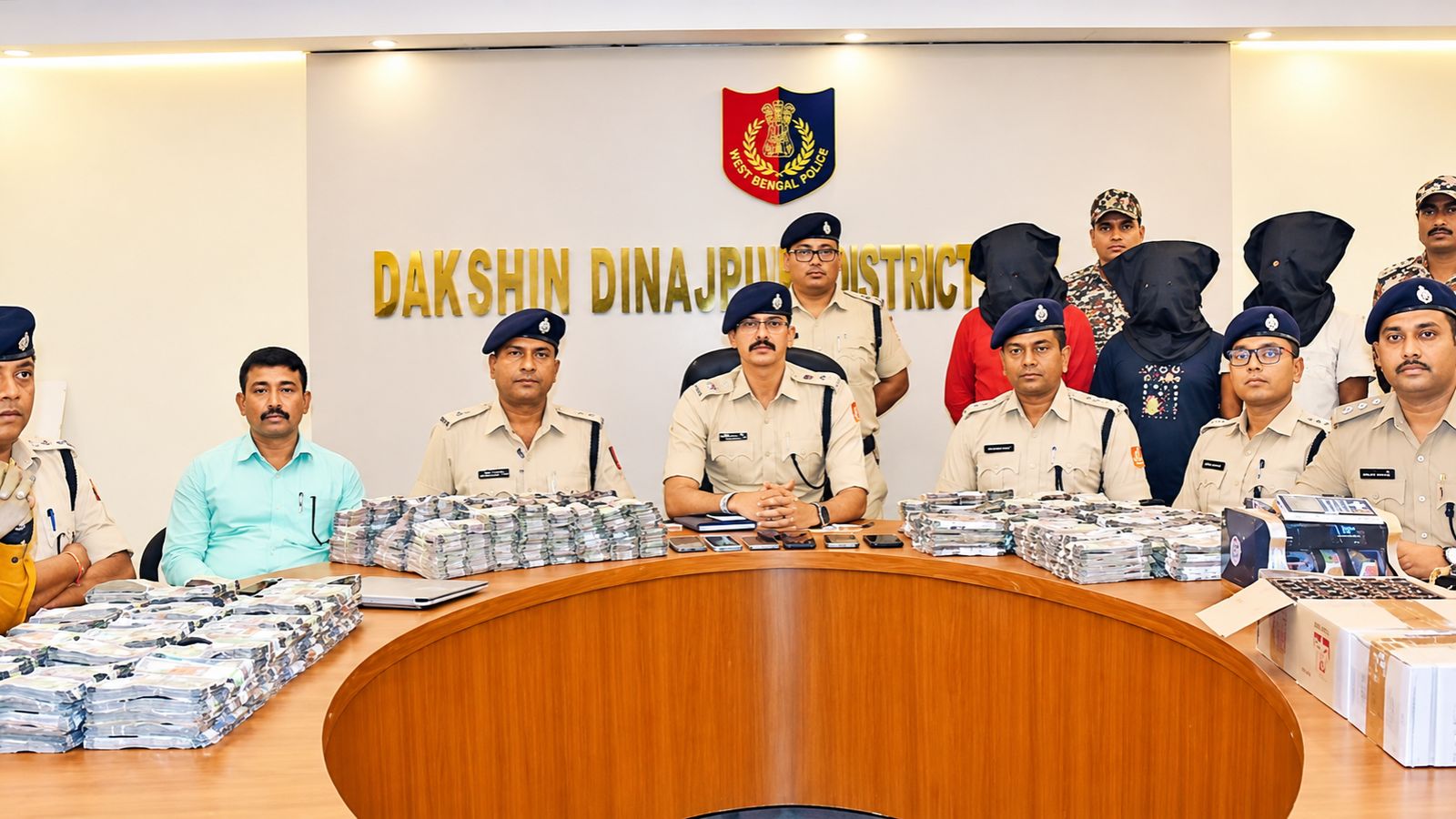
A pharmaceutical company based in Panipat, Haryana, supplied medicines worth Rs 64 crore to West Bengal between April 1 and September 18 this year. Of this, Rs 44 crore came allegedly from the sale of codeine-based cough syrups, with investigators saying they have not found a single prescription to support the volume of these sales.
The findings have brought three pharmaceutical companies under the scanner of West Bengal Police following the unearthing of an alleged narcotics trafficking network in Dakshin Dinajpur district. Investigators suspect that codeine-based cough syrups manufactured in Himachal Pradesh are being diverted through licensed distributors and stockists before reaching border districts and, allegedly, Bangladesh.
Nearly two lakh bottles of codeine-based cough syrup seized in Balurghat have been destroyed, 65 people arrested and 44 cases registered in Dakshin Dinajpur since June.
South Dinajpur Superintendent of Police Abhishek Gupta said the scale of sales raised serious questions about the intended use of the medicines.
“Out of the total Rs 64 crore generated by the pharmaceutical company, Rs 44 crore, approximately 65 per cent of the company’s revenue, came exclusively from codeine-based syrup sales,” he said.
The police suspect that the medicines, instead of reaching patients, through legitimate medical channels, were being diverted for recreational use and cross-border smuggling. The investigation is examining the role of manufacturers, carrying and forwarding (C&F) agents, licensed wholesalers and other intermediaries.
From licensed channels to illegal markets
According to police, the alleged diversion takes advantage of the way codeine-based cough syrups move through the pharmaceutical distribution network.
Story continues below this ad
A company supplies the product to a nodal C&F agent, who receives a commission of around 4 per cent, the official said. The agent then transfers the stock to licensed drug dealers across different districts.
The official said that while the initial transactions take place through authorised channels, some licensed dealers allegedly store the stock in unauthorised premises or sell it to people who do not hold drug licences.
Under the Drugs and Cosmetics Act, the dealers involved in the distribution chain hold licences, including those under provisions 20B and 21B, the official said. However, investigators suspect that the stock is subsequently diverted outside the regulated supply chain.
“For codeine-based syrup, if you have one licence, there is no cap on whether you purchase one lakh bottles or 10,000 bottles. Once the stock reaches licensed godowns, it is sold to other drug licence holders in different districts. Some then store it in unauthorised places and sell it to people who are not licensed. That is where it moves from an official channel to an illegal narcotics liability,” the official said.
Story continues below this ad
Gupta said investigators had not found prescriptions to justify the volume of sales.
The SP also estimated that the annual turnover of pharmaceutical companies from such sales in Bengal was between Rs 5,000 crore and Rs 6,000 crore. The estimate could not be independently verified.
Cash deposits and suspected hawala links
Investigators are also examining the financial transactions behind the alleged diversion. According to police, the network uses cash collected in border districts, including money converted from Bangladeshi taka into Indian rupee, before transferring the funds electronically to pharmaceutical companies.
The official alleged that cash was deposited in bank accounts in amounts just below Rs 10 lakh to avoid automatic scrutiny by banks.
Story continues below this ad
“They deposit Rs 9.5 lakh or Rs 9.9 lakh every day because cash deposits of Rs 10 lakh are automatically flagged by banks. The money is then transferred electronically to the company. The manufacturers can claim that they received bank transfers, that the transactions were covered by GST and e-way bills, and that they supplied the stock to licensed dealers,” a police official said.
The police are also examining the role of C&F agents, who allegedly earn commissions on the movement of consignments. Investigators suspect that the use of formal banking channels and valid documentation helps conceal the alleged diversion of the products.
Gupta alleged that most of the stock was being smuggled across the Bangladesh border.
“The company knows that this is being used for diversion and drug addiction, largely for recreational purposes. Around 99 per cent is going to Bangladesh, while one per cent is being used by those involved in the supply chain,” he said.
Story continues below this ad
Two lakh bottles destroyed; 65 arrested
The investigation gained momentum after a major operation in Balurghat, where police seized and subsequently destroyed nearly two lakh bottles of illegally procured codeine-based cough syrup.
Following the operation, Laborate Pharmaceuticals India Ltd submitted a formal representation to the state government, pledging cooperation with the authorities. The company also undertook to stop selling its product, Eskuf Cough Syrup, directly or through its local sales depot to dealers in Bengal and recalled the existing stock from its depot.
West Bengal Chief Minister Suvendu Adhikari, in a post on X, said the government had a zero-tolerance policy towards drug trafficking and praised the police for the seizure. He said the company had undertaken to stop sales of the product in the state and recall its existing inventory.
Police data from Dakshin Dinajpur show that 44 cases related to the illegal supply of codeine-based syrup were registered between June 1 and October 31, leading to the arrest of 65 people.
Story continues below this ad
Earlier, on June 24, 2025, Border Security Force personnel in the North Bengal Frontier seized 614 bottles of codeine-based syrup and 990 buprenorphine injections worth Rs 1.59 lakh from villages along the India-Bangladesh border in Uttar Dinajpur district.
Police said the investigation into the latest racket is continuing, with three pharmaceutical companies under scrutiny for alleged regulatory violations and possible involvement in the diversion of controlled medicines.
KioskNews shows a cleaned-up reading view extracted from the publisher’s page — the original always lives on their site, not ours.