The Greens want to catch the Mamdani wave. But can the minor party really become ‘unashamedly populist’?
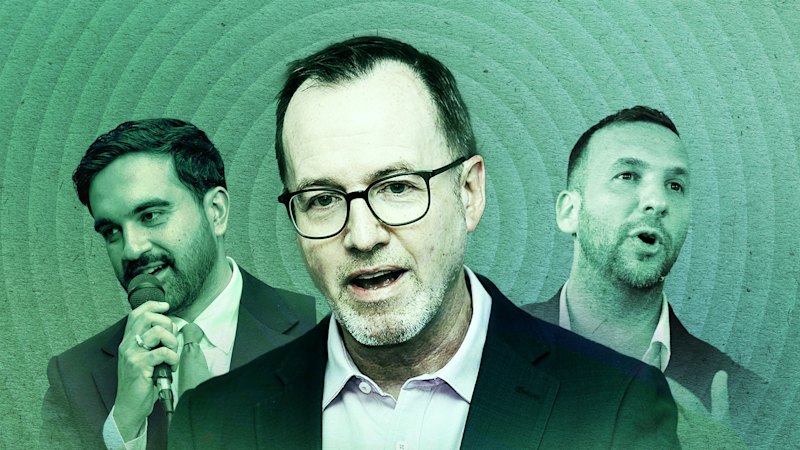
On the first day of this year, at New York’s City Hall, socialist senator Bernie Sanders declared it was time for wealthy corporations to pay their fair share of tax as left-wing mayor Zohran Mamdani was sworn in to raucous applause.
Mamdani, the charismatic 34-year-old, had come out of nowhere to excite a million New Yorkers into voting for his platform of free childcare, free transport and higher taxes for the rich to foot the bill.
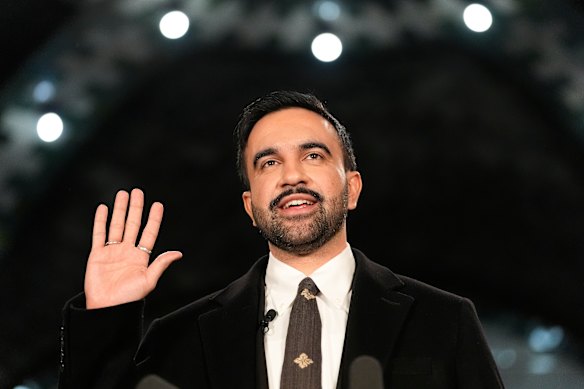
A month later, in the United Kingdom, Greens leader Zack Polanski said UK Labour could no longer take progressive voters for granted as his party for the first time seized a seat from the government in a byelection, promising to tax the super rich.
The Australian Greens have been saying much the same thing, for most of this year. But in the polls, they’ve gone nowhere.
“There’s eternal frustration that we haven’t cracked through more,” says one Greens insider. It’s been a source of head-scratching outside the party, too, as Labor’s vote sinks in the polls while the Greens fail to take a slice.
How come the Greens have stalled while One Nation surges? Why, by contrast, have Mamdani and Polanski succeeded? Will the Greens ever crack the ceiling of a 12 per cent share of the federal vote?
These questions were ventilated in the mainstream this week, when Larissa Waters, a well-liked consensus-builder, tendered a shock resignation over her health issues. The party room of 11 MPs elected hard-left senator David Shoebridge in a rare contested ballot.
Greens supporters hope that new leadership holds at least some of the answers. The political mood has shifted since last year’s election returned a lousy result for the Greens, who lost three lower house MPs, including party leader Adam Bandt. Inflation and interest rates are again on the rise, Labor is on the nose, and voters are ditching the establishment across the Anglosphere.
Waters has kept the party’s vote intact despite turbulence elsewhere, and most people in the Greens emphasise their respect and affection for her. But they believe her leadership has been lacking bite and energy.
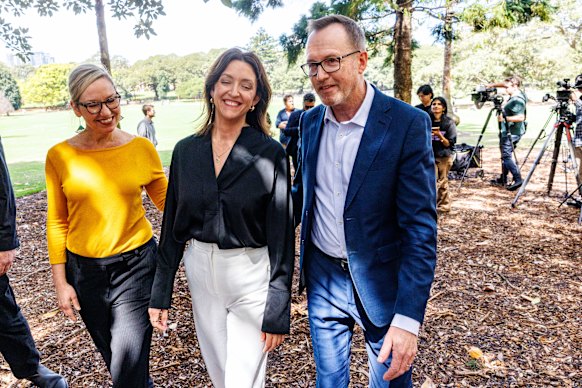
“Larissa was great in trying to get the best out of others, but that doesn’t lend itself to being a firebrand in the public eyes. She was good internal leader, but I’m not sure she cut across,” a member close to the NSW Greens says.
The party is spying opportunity in this week’s change. Leadership contender senator Sarah Hanson-Young said as much in her pitch to colleagues this week, according to people in the room.
“The Greens have to be able to work with the government to get things done that our voters and supporters want,” says another source in the federal party. “But you have to be able to do that while calling bullshit when you see it. The challenge for David is whether he can do both.”
Shoebridge clearly thinks a breakthrough is possible. He wants the Greens vote to be higher, and its influence in parliament to multiply – although he’s not yet set targets. “This is an extraordinary moment in politics, not just in Australia, but across the world,” he says in an interview.
“The challenge for the Greens has been connecting with that anger, letting people understand that we see it and we feel it. And directing the political focus, not on migrants or your neighbour from the Philippines is working in the local emergency department, but on the 1 per cent who are driving [inequality].”
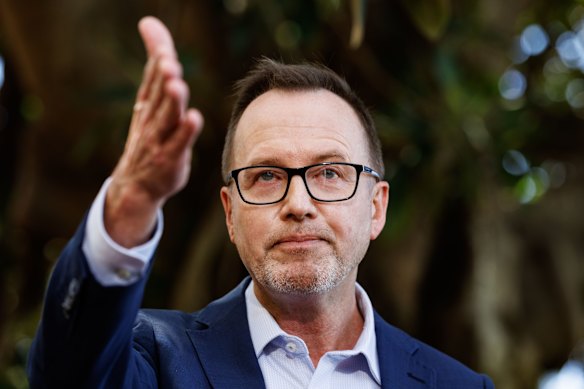
This is already the Greens’ message, though. Pressed again on what’s been missing, Shoebridge says: “I have been hearing people want a party that is going to be out there overtly fighting for them. Going into parliament and rejecting [the status quo and incremental change] loudly, clearly, and directly.
“The feedback I’ve been getting about the team that we put together, Steph Hodgins-May and myself, is there is this powerful sense that we have the leadership team connected to a party room that is up for this fight. Look at my political history.”
That was the combative approach of Max Chandler-Mather, the one-term MP and firebrand who is now leading the party’s think-tank, the Green Institute. Both he and Shoebridge have emphasised another missing factor: a grassroots mass movement of everyday Australians.
“People often ask how to recreate the political success and energy of UK Greens leader, Zack Polanski or New York Mayor Zohran Mamdani,” Chandler-Mather wrote in an open letter to the Greens’ MPs on Tuesday, before the leadership vote.
“The recipe for their success doesn’t just lie in their policies, rhetoric or even organising strategy. It lies in the process by which they won their elections.”
One way to do that, he argued, was giving all Greens’ members a say in choosing their leader. “We say we want to build a movement ... But if we’re serious about that it means putting real power and trust in the hands of ordinary people – and trusting they will make the right choice,” he says.
It didn’t happen this week, but the debate has gained fresh energy. Meanwhile, Chandler-Mather’s Green Institute has been working on the broader project, pulling together research and focus groups to help map the electorate and guide the Greens’ targeting strategy.
Core to the vision is a version of the Greens that sets itself apart from Labor and positions itself as an alternative party of government – not a crossbench party that helps the government pass progressive legislation. Shoebridge has indicated this could see a return to a more obstructionist approach to parliament than the past 18 months under Waters.
Prime Minister Anthony Albanese, a notorious Greens detractor, has rubbished Shoebridge’s vow to replace Labor. “It was somewhat concerning ... at a time when we see a rise of a far right-wing party,” he said this week. “It sounded a lot like some of the people who didn’t win their seats at the House of Representatives election last year.”
But the Greens took a different message out of their election result. The party’s 2025 election review, which was not made public, said the party did not do enough to differentiate itself from Labor. Its core campaign message – Keep Dutton out and get Labor to act – failed to make a compelling case for the Greens. Some within the federal party say they railed against the message at the time, but their complaints fell on deaf ears.
Expect that to change. The Greens are harnessing the populist language and promises that Mamdani and Polanski have used. “When we say that we want to tax these blood-soaked war profits of our export gas industry ... When we say that we want to put in guardrails and clear laws to stop US billionaire tech bros covering the country with AI data centres like mushrooms, it turns out that’s really popular,” Shoebridge says.
“I’m unashamedly populist because our agenda is unashamedly for the 99 per cent.”
Not everyone think the Greens should be following in Mamdani or Polanski’s footsteps. Australia’s political environment has typically rewarded centrism – at least until Hanson’s rise, which has not yet been tested at a federal election – and progressive issues are not under attack in the way they have been in the United States.
These sceptics emphasise that Mamdani captured the imagination of metropolitan voters in one of America’s biggest and most diverse cities, not the United States at large. And while Polanski made a strong surge earlier this year, regularly polling between 17 and 20 per cent, that was when then-prime minister Keir Starmer was flailing.
The UK Greens are since polling back at 10 per cent under UK Labour’s Andy Burnham. “It’s got nothing to do with the performance of Polanski,” says one observer. “When you’re not a major party, you don’t have the money or a megaphone. You are subject to political currents that are sometimes in your favour, and sometimes not.”
Another person in the state party says holding steady is good. “We need to appeal to soft Labor people. It’s tricky always trying to straddle two worlds,” they say.
But in the federal party, there’s a sense the small target approach is a wasted one. “Trying to pretend it’s good to be sitting on 12 per cent forever is wrong. We should be a natural option for disaffected voters,” one staffer says.
The other question is whether Shoebridge is the person to lead that project. Many think he has the energy the party needs. The smart and strategic former barrister from Sydney, who is renowned in parliament for his no-holds-barred approach to interrogation, beat both Hanson-Young and NSW senator Mehreen Faruqi to the leadership this week.
‘I’m unashamedly populist because our agenda is unashamedly for the 99 per cent.’
David Shoebridge, Greens leader
“People have their own ideologies and views, but everyone wants to feel like there’s someone with their hands on the reins who can drive something new,” says a Greens insider. “David is quite hungry for it, and has more appetite for risk and novelty and controversy.”
But some are concerned his elevation sends the wrong message for a party seeking to speak to a young, diverse and multicultural electorate. “There is a part of me that wishes he wasn’t a straight white man from Woollahra,” one state MP tells this masthead.
“Identity politics is destructive, but we already have the inner city, latte-sipping elites image,” says another staffer. “We want to appeal to a worker population. Hearing from some rich white dude who was a barrister is not that compelling.”
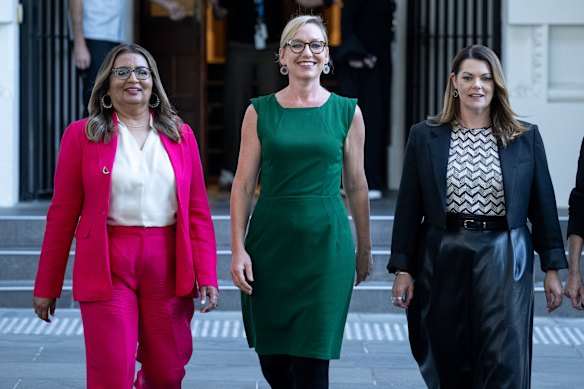
Faruqi, who said she would now be free to act “outside the constraints of the leadership team” on Wednesday, has often called for more diverse representation in the Greens. She has previously described them as “still a very white party”. This week, a clip re-emerged of her speaking about experiencing racism within the Greens during a 2023 press conference.
One staffer points to the defections of Indigenous senators Lidia Thorpe and Dorinda Cox in recent years, which left no Indigenous representation in the parliamentary party. “When the two other women of colour have left the party and the third has been a competent and able deputy leader that is never considered for the leadership, it’s not a great look for a party that’s whole thing is being progressive, welcoming and diverse,” they say.
Still, others think that progressive politics is trending towards a firmer focus on economic issues. “It’s not papering over issues of racism, but acknowledging the primacy of class as the frame that unites everyone, and has been proven to win or come close to big victories. It’s not talking about identity politics, it’s talking about inequality,” one person says.
Will it work? Resolve pollster Jim Reed says the Greens are typically viewed as a niche progressive-left option. “They’ve always faced a dilemma. Do they stay true to their environmental or progressive values and remain a minority force that occasionally wins seats and tries to influence Labor, or do they grow and try and replace Labor by becoming more mainstream?”
He says polling trends have shown the Greens either losing ground – in the last federal, Queensland and ACT elections – or standing still. “Our polling tells us this is a consequence of their metamorphosis from an environmental movement to one of international causes, like Gaza, spreading them too thin,“Reed says.
“With the exception of Bob Brown, most Greens leaders we’ve tested over the years have failed to cut through outside their core base, but it’ll be interesting to see if Shoebridge’s vim and vigour allow him to compete with some big personalities in politics right now.”
Cut through the noise of federal politics with news, views and expert analysis. Subscribers can sign up to our weekly Inside Politics newsletter.
KioskNews shows a cleaned-up reading view extracted from the publisher’s page — the original always lives on their site, not ours.