The symbolism behind Raila Odinga’s pentagon-shaped mausoleum
Translate
IRENE MWANGI
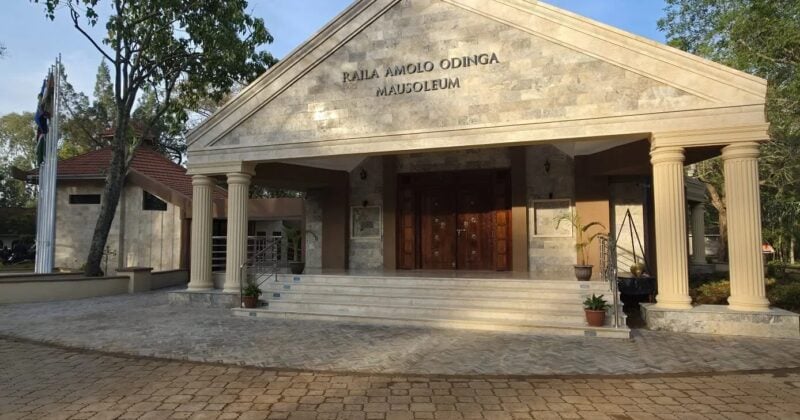
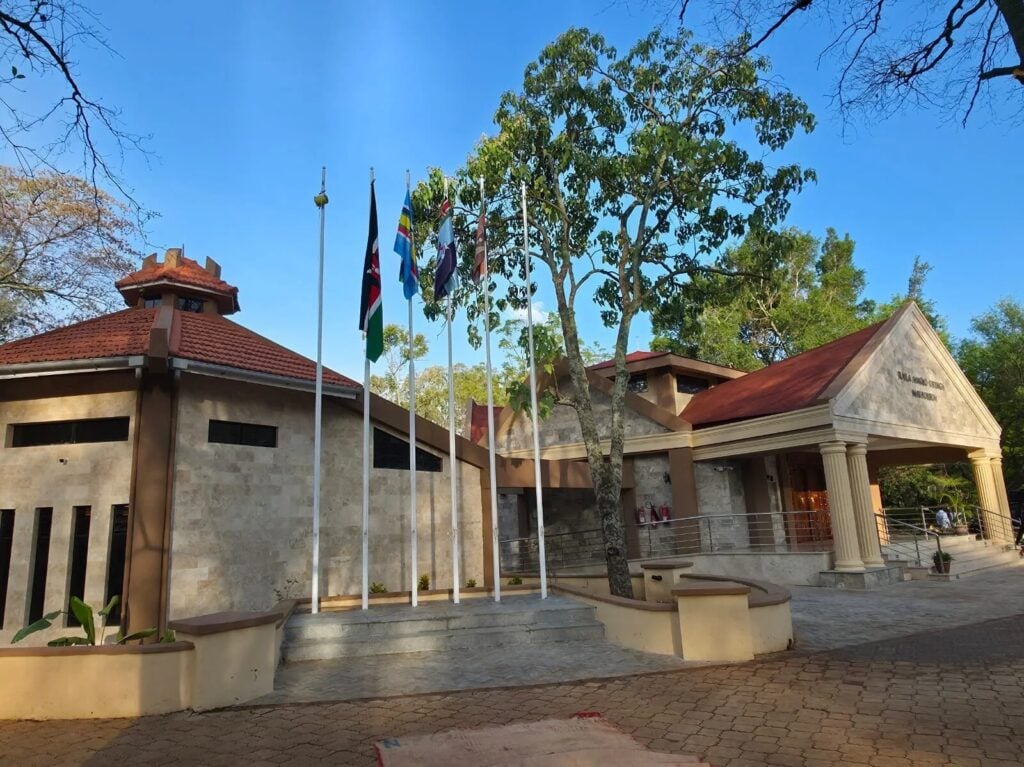
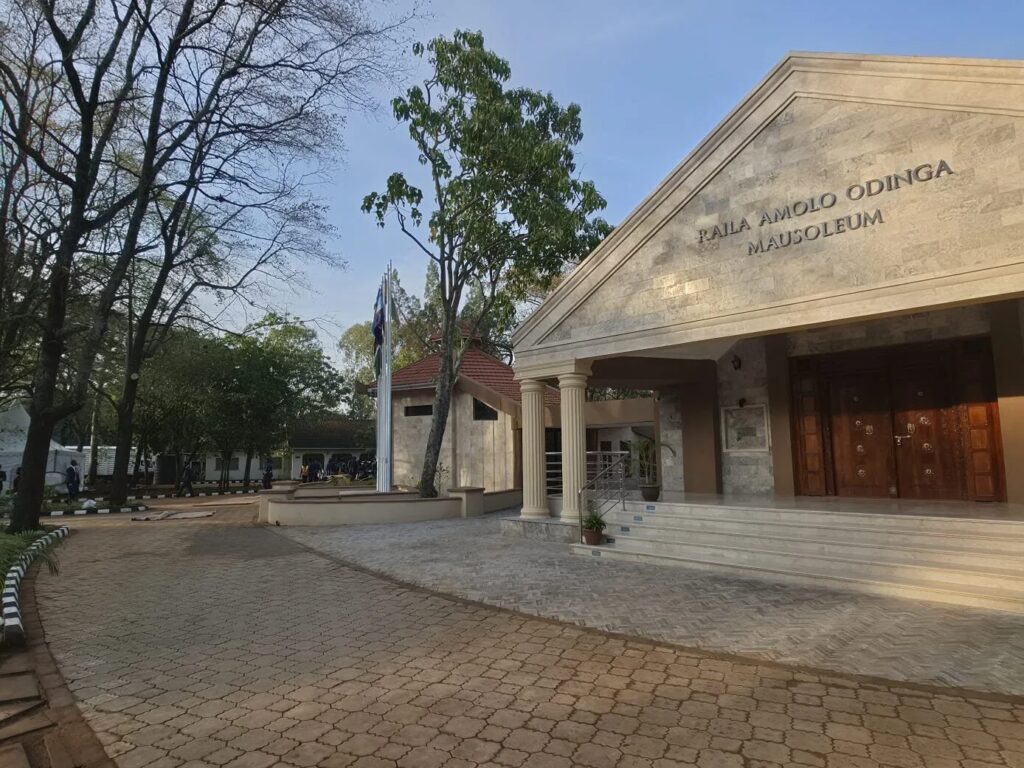
NAIROBI, Kenya Oct 7 – The unusual pentagonal shape of the late former Prime Minister Raila Odinga’s mausoleum at Kango ka Jaramogi in Bondo was deliberately chosen to reflect a key symbol associated with his political life.
The Kenya Defence Forces officers involved in guiding President William Ruto and other dignitaries through the facility during its handover to the Odinga family have explained the thinking behind the design.
Samson Malaki said the five-sided structure draws inspiration from the raised fist that became one of the most recognisable gestures associated with Odinga.
According to Malaki, the fist was not intended as a gesture of confrontation, but as a symbol of strength and a call for Kenyans to come together.
He said the five fingers of the raised hand informed the decision to adopt a pentagonal form for the mausoleum.
“In as much as he was raising that particular fist, he wasn’t raising that fist in defiance, but he was raising that fist to call people to unity. It is five, which represents a pentagon, and it’s actually what informed the design of this mausoleum,” Malaki explained.
The design also establishes a visual connection between Raila’s final resting place and that of his father, the late Jaramogi Oginga Odinga.
While Jaramogi’s mausoleum has six sides, the structure housing Raila’s remains has five. Mr Malaki said the architects deliberately worked with the two geometric forms to create a sense of continuity between the neighbouring structures.
“The Jaramogi Mausoleum is actually hexagonal in shape. The Raila Mausoleum is pentagonal in shape. And for the purposes of that architectural harmony, we tried to play around with the geometry of Jaramogi Mausoleum, which is hexagonal, and we came up with the Raila Mausoleum, which is pentagonal,” he said.
The explanation adds a political dimension to what might otherwise appear to be an architectural choice.
The number five has featured at important moments in Odinga’s political journey, most notably during the build-up to the 2007 General Election.
‘Pentagon’
The term “Pentagon” became synonymous with the Orange Democratic Movement’s senior leadership in the run-up to the 2007 presidential nominations.
It referred to a group of five prominent politicians who were positioning themselves for the party’s presidential nomination before the contest at Kasarani.
Odinga eventually secured the ODM ticket, with the other members of the group supporting his presidential campaign as the party entered the 2007 General Election.
Nearly two decades later, the pentagon has acquired a different meaning at his final resting place.
The symbolism of the five-sided mausoleum, according to its designers, links Mr Odinga’s familiar raised-fist gesture with the broader theme of unity that defined much of his political messaging.
The structure therefore serves not only as a burial site but also as an architectural representation of elements associated with his public life.
Its pentagonal form stands alongside Jaramogi’s hexagonal mausoleum, creating what the KDF officer described as a deliberate architectural relationship between father and son.