How Sardar Vallabhbhai Patel helped build modern Ahmedabad
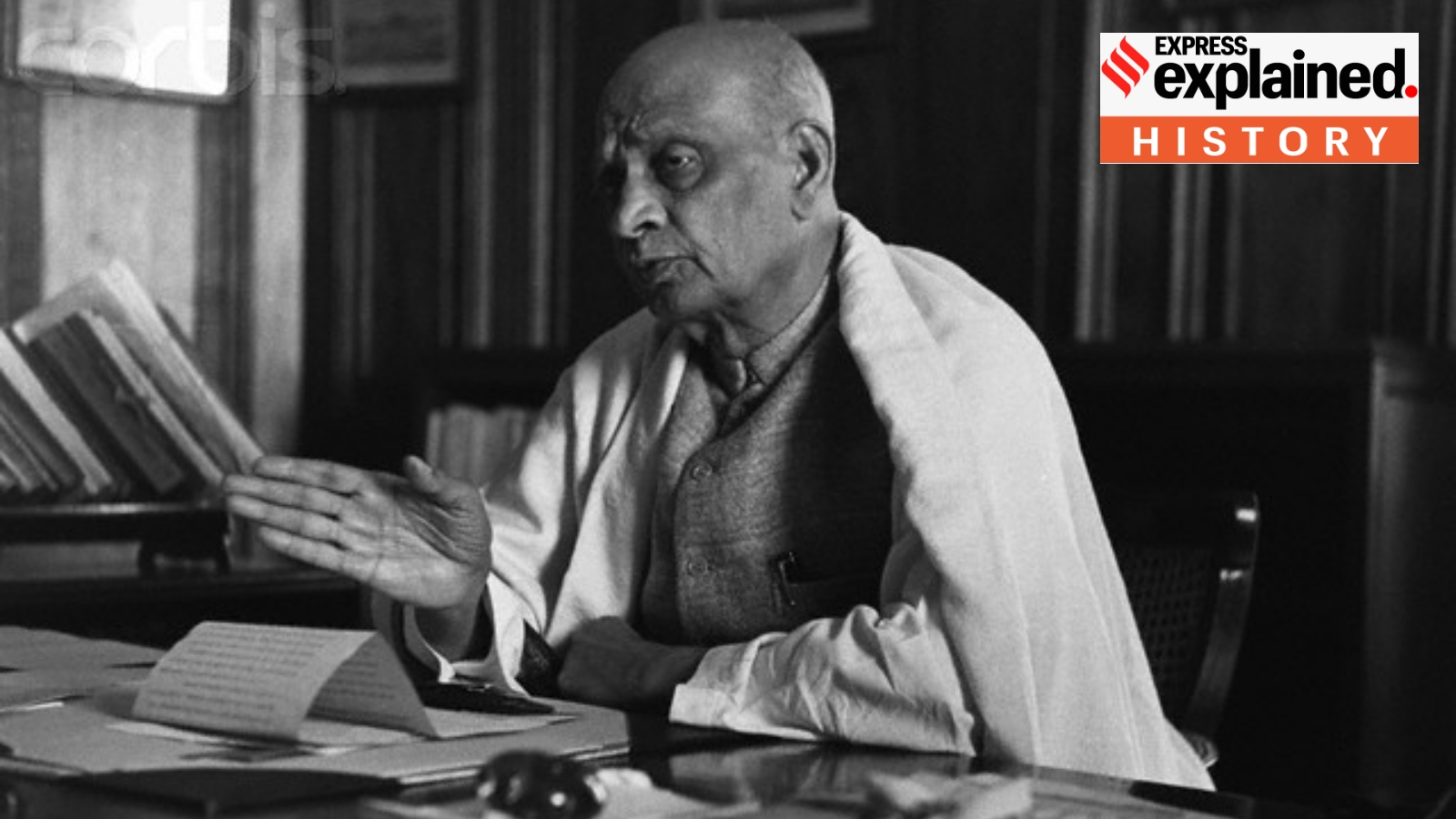
It was October 31, 1950. Sardar Vallabhbhai Patel was addressing a huge gathering at a ground near Lal Darwaja in the heart of Ahmedabad on his 76th birthday. It had been 22 years since he had quit the job as president of the municipality — Ahmedabad had by then become a municipal corporation.
So overwhelmed were the over two lakh people who had gathered to listen to his one-and-half-hour-long speech that they pooled together Rs 15 lakh as a gift, which he promptly donated to the Gujarat Provincial Congress Committee to be spent on public works. This would be his last speech in Ahmedabad before he passed away on December 15 that year.
In December 1959, then President Rajendra Prasad had unveiled a statue of Patel on this very ground, which would later be developed as a municipal garden named after him. Today, Sardar Baug is a grand redeveloped garden that Union Minister Amit Shah inaugurated last year.
On the 151st birth anniversary of the “Iron Man of India”, we look at the annals of history to understand how Patel’s contributions helped shape the modern city of Ahmedabad.
Why Vallabhbhai Patel chose Ahmedabad over Bombay
After studying law in England, Vallabhbhai Patel returned to Bombay (now Mumbai) in 1913. The government offered him the post of a judge and professorship at Bombay Law College, but he refused and decided to settle in Ahmedabad, establishing a practice as a criminal lawyer.
Records of the Ahmedabad Municipal Corporation recall him saying: “When I was serving the city of Ahmedabad, I had a kind of mental peace. If the work for which I had laid the foundation was not completed, I would have been sad. …If I had not left, I would have changed the ‘face’ of Ahmedabad…”
His association with Ahmedabad Municipality started in 1917 when he was elected councillor from the Dariapur ward, a byelection he won by just one vote. That election was later declared void — he again contested and won, this time unopposed. In 1924, he went on to become president of the Ahmedabad Municipal Board.
Story continues below this ad
Ahmedabad Municipal Commissioner Banchha Nidhi Pani told The Indian Express, “Sardar Vallabhbhai Patel believed that strong local governance and civic responsibility were the foundation of a stable nation. His approach to leadership continues to shape how cities like Ahmedabad grow, plan, and serve its people. His ideals helped define modern India and continue to guide this city’s path.”
Town planning schemes
Ahmedabad, which was founded in 1411 by Sultan Ahmed Shah, was largely a city confined to the fort walls. Patel expanded the city outside it, with town planning schemes adding new roads and drainage systems, libraries, schools, hospitals, and other public amenities.
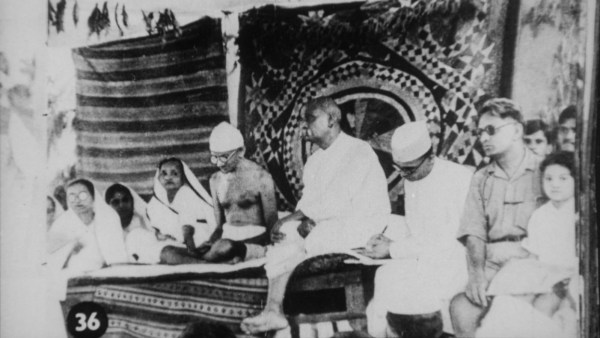 Mahatma Gandhi and Sardar Vallabhbhai Patel seen during the Bardoli Satyagraha, where Patel’s leadership earned him the title “Sardar”. Photo: Wikimedia Commons
Ahmedabad-based historian Rizwan Kadri said, “It was Sardar Patel who brought an amendment to appoint qualified teachers to provide good quality education to Muslim students. He was also the first to come up with the idea that the municipality should start schools, and also introduced free primary education.”
Founding co-operative societies
Sardar’s Ahmedabad, Ahmedabad’s Sardar, a publication by the Ahmedabad Municipal Corporation (AMC) that Kadri authored commemorating Patel’s 150th birth anniversary, mentions how Patel experimented with the power of “co-operation”.
Story continues below this ad
The Brahmakshatriya Co-Op Housing Society — Gujarat’s first and India’s second “co-operative housing society” — came into being in 1924 in Ahmedabad’s Kochrab suburb, kicking off a large-scale movement. According to Kadri’s book, it was owing to Patel’s inspiration that milk producers in Kheda (Kaira) district organised as a co-operative, which later became famous as “Amul”.
Leading from the front in relief operations
When Ahmedabad was hit by plague in August 1917, Patel was then chairman of the health and sanitation committee and led a massive campaign to clean up the city.
Former deputy commissioner of the AMC, Trikambhai Zalavadiya, said, “Schools and offices were closed. Many people left Ahmedabad, but Vallabhbhai remained at his residence in the Bhadra area. He would go about the streets cleaning them, distributing insecticides in the affected areas.”
Vir Vallabhbhai (1928), the first biography of Patel by Mahadev Desai (who was Gandhi’s personal secretary for 25 years), cites Patel’s flood relief work: “When the government was sitting with its hands folded, the volunteers sent by Vallabhbhai reached the flood-affected areas. The government was also amazed by the organisation and efficiency of the flood relief committee…”
Roads, and a radio station
Story continues below this ad
Relief Road — the road leading to Ahmedabad’s railway station — is also a Patel brainchild. Earlier, the city had one thoroughfare called Richie Road (now called Gandhi Road) but as the traffic load on it increased, Patel proposed to build another road to provide relief. Although the road is officially called Tilak Marg, it continues to be popular as Relief Road.
Ahmedabad also got a radio station in 1927 thanks to Patel, who thought the city needed entertainment.
AMC records reveal that on September 21, 1933, Gandhi had said in a speech in Ahmedabad, “Even in his sleep Vallabhbhai would dream about India…. He would dream of Ahmedabad, he would think of ‘my municipality’, ‘my waterworks’.” Gandhi’s speech goes to show how involved Patel had been in his job.
After he resigned from the Ahmedabad Municipality on April 13, 1928 — in protest against the appointment of a chief officer — Patel left for Bardoli to mobilise peasants in a satyagraha against the British government’s arbitrary increase in land tax. What followed is history: his leadership in the struggle earned him the title of “Sardar”.
KioskNews shows a cleaned-up reading view extracted from the publisher’s page — the original always lives on their site, not ours.