The 6 Most Amazing Books of the 1980s, Ranked

Sign in to your Collider account
The 1980s left a strange noise in literature. Supermarkets hummed, televisions talked in the background, empires kept rewriting themselves, old violence came home wearing new clothes, and families sat at kitchen tables pretending the past had stayed buried. The decade’s greatest books knew exactly how false that comfort was.
These six novels feel alive because they do not behave like museum pieces. They sweat, shout, whisper, grieve, hallucinate, accuse, and remember. Some turn history into myth. Some turn domestic life into horror. Six novels caught the real frequency of the 1980s. And, this is how they stack up. Let's get started.
6 ‘White Noise’ (1985)

White Noise feels like a panic attack happening under fluorescent supermarket lights. The story tracks Jack Gladney, who has a soft, crowded suburban life, a blended family, an academic title in Hitler Studies, and the kind of daily routine where background noise almost becomes a religion. Scanner beeps, television chatter, radio warnings, brand names, weather updates, the world keeps talking until silence itself feels suspicious.
Then the Airborne Toxic Event rolls over the town like a black chemical thought nobody knows how to process. Jack evacuates, stares at the plume, checks his pulse, adjusts his academic robes, and realizes that death has finally entered the room without metaphor. Don DeLillo’s genius is how funny and terrifying the whole thing feels at once. The Dylar obsession and Willie Mink spiral push the book into absurd noir, but the real horror is simpler. Modern life has taught everyone to consume fear instead of understanding it.
5 ‘The Color Purple’ (1982)
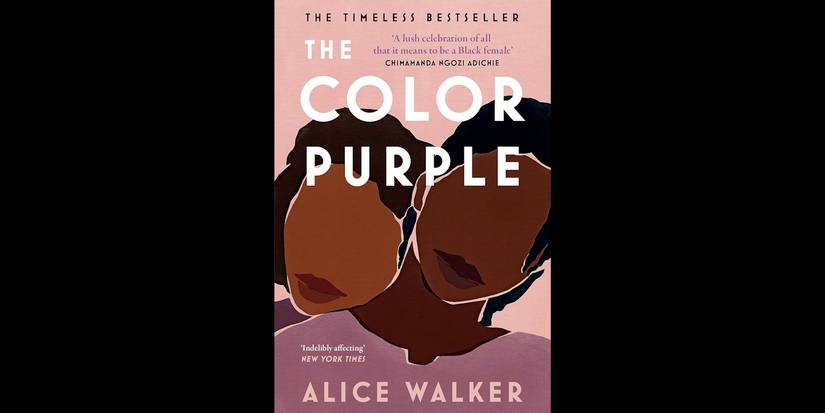
There are books that announce their power loudly, but Alice Walker takes a far quieter, far more devastating path in The Color Purple. The story begins with Celie writing into silence because nobody around her has allowed her a voice. Her world is rural Georgia, hard work, abuse, lowered eyes, defensive hands, and letters to God that feel like survival pressed onto paper. The early pages hurt because Celie has learned to make herself small enough to endure.
However, everything shifts when Shug Avery enters the room. She brings glamour, music, warmth, danger, and a kind of tenderness Celie has barely been allowed to imagine. The book’s beauty comes through slowly, with hands unclenching, eyes lifting, and purple flowers in a field becoming proof that joy has been waiting outside the farmhouse all along. Walker turns trauma into transformation without sanding down the pain. Celie leaving Albert and building a life of her own feels completely earned, like a soul standing upright after years on its knees.
4 ‘The Handmaid’s Tale’ (1985)
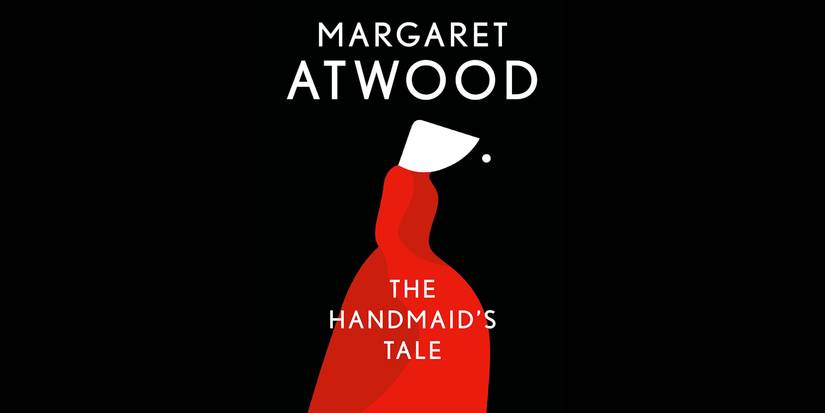
The scariest thing in Margaret Atwood’s The Handmaid’s Tale is how small Offred’s world becomes. A room. A household. A prescribed walk. A red dress. White wings narrowing her vision until even looking sideways feels like a violation. Gilead does not need constant spectacle to terrify the reader. It controls breath, posture, speech, desire, memory, and the tiny movements of eyes beneath a lowered bonnet.
This book lets the danger arrive in whispers. The Commander’s private study should feel harmless, almost ridiculous, because the forbidden act is Scrabble. That is exactly why it chills. A word game becomes contraband. Attention becomes leverage. Nick becomes risk. Serena Joy becomes a different kind of prison. Every detail about Gilead drips in slowly, and the reader learns to mistrust every silence. The novel is instantly claustrophobic because it understands that oppression often begins by shrinking ordinary life until survival itself becomes rebellion.
3 ‘Blood Meridian’ (1985)
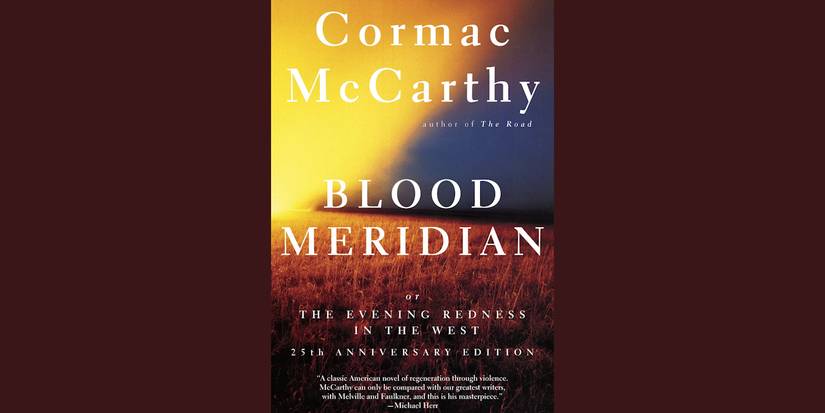
Blood Meridian reads like scripture dragged through dust, blood, and sunstroke. The Kid wanders into the American Southwest with hardly anything but instinct, then joins the Glanton Gang as their scalping raids turn the borderlands into a furnace of violence. The landscape is bone-white, sun-blasted, and merciless. Horses stumble. Leather dries with salt. Men stare into campfires like language has abandoned them.
Judge Holden is the nightmare that gives the book its monstrous gravity. Huge, hairless, brilliant, obscene, and almost mythic, he turns slaughter into philosophy and makes the gang’s brutality feel like part of some ancient cosmic argument. Cormac McCarthy’s prose is the real terror here. It can make a sunrise feel holy and a massacre feel inevitable in the same breath. The plot is horrific, but the atmosphere is worse, because the book seems to ask whether violence is history’s hidden language. Simply uncompromising.
2 ‘Midnight’s Children’ (1981)

Midnight’s Children has the energy of a city shouting through one boy’s skull. And, that boy is Saleem Sinai, who is born at the exact moment India becomes independent, and this impossible timing turns his life into a cracked mirror of a nation. Childhood, family gossip, magic, politics, bad luck, rivalry, and history all crash together until the book feels like it might burst its own seams.
Saleem’s telepathy is such a wild, brilliant device because it turns national identity into noise, hundreds of midnight children broadcasting through his mind, each carrying a different fragment of possibility. Bombay arrives through heat, spices, petrol fumes, sea air, crowded streets, and sentences that refuse to stand still. Shiva and Parvati pull the story toward rivalry and enchantment, while Saleem keeps trying to write everything down before his body crumbles. Salman Rushdie makes history feel messy, comic, wounded, magical, and terrifyingly alive. It is genuinely breathtaking in its ambition.
1 ‘Beloved’ (1987)

Beloved sits at number one because it does something so powerful that ghost story almost feels too small for it, even though it may be the greatest American ghost story ever written. 124 Bluestone Road is alive with grief before Beloved ever steps out of the woods. Sethe and Denver live inside a house where the past has weight, sound, temper, and appetite. Then Paul D arrives, bringing his own buried pain, and for a moment the house seems capable of breathing differently.
Beloved’s arrival changes everything. She is soaked, hungry, strange, intimate, and impossible to separate from the dead child Sethe has never stopped carrying. The red light in the hallway, the sugar water, Sethe smoothing her apron, Denver watching love turn dangerous, Toni Morrison makes trauma physically present. The supernatural element deepens the historical reality rather than decorating it. Slavery has not ended inside these bodies. Maternal love, guilt, memory, and survival all collide until language itself feels haunted. For sure, Beloved is monumental because no other book sounds like it, hurts like it, or heals like it.
Collider Exclusive · 8 Questions · 2 Minutes Which Iconic Fandom Should You Join? Harry Potter · Lord of the Rings · Star Wars · Star Trek
Eight honest questions about how you actually are: what you put on when you need cheering up, how deep you go into the things you love, what you argue about, what you keep on your shelf. Answer them and we will tell you where you belong. Four of the biggest fandoms on earth are taking new members, and they could not be more different from one another.
⚡Harry Potter(Wizarding World)
💍Lord of the Rings(Middle-earth)
⚔️Star Wars(A Galaxy Far Away)
🖖Star Trek(The Final Frontier)
01
What do you put on when you need cheering up? Nobody is brave about this one.
02
How deep do you go into something you love? There is no shallow end here, only different deep ends.
03
What do you and your friends actually argue about? Every fandom has one argument it has been having for years.
04
How do you feel about a room full of strangers? Every one of these comes with a very big room.
05
Where would you rather spend a week? Pick on instinct rather than on budget.
06
What do you believe about people, mostly? All four of these stories have an answer, and they disagree.
07
What is actually on your shelf? Look over at it before you answer.
08
What do you actually want from a story? Eight questions in, this is the one that picks your fandom.
Membership Confirmed Your Fandom Is…
Four of the largest communities on the planet, and four completely different reasons to belong to one. Here is yours, what it would give you, and the argument you would be having within a week.
Harry Potter
You belong to the fandom that is really about comfort. Hogwarts works on people because it is a place rather than a plot, and the pull is not the wizard war so much as the corridors, the food, the weather and the sense that somebody is expecting you.
- You are drawn to belonging, which is why this fandom sorted itself into houses within about five minutes and has never stopped.
- This is the most social of the four, and the one most likely to know which type every single person in your life would be.
- The books are built to be reread rather than analysed, and rereading is exactly what you do with things you love.
- The new HBO series is bringing the whole thing back one book at a time, which means the arguments are about to start all over again.
Lord of the Rings
You belong to the deepest fandom on this list, the one where somebody has always read further than you and is quietly delighted to say so. Middle-earth rewards patience more than any other world in popular culture.
- You like the sense that the story you are reading is only the visible part of something enormous, which is precisely how Tolkien built it.
- This fandom takes adaptation seriously to a degree that other fandoms find slightly alarming, and it has good reasons for that.
- Your favourite thing about the books is probably the bit that is not action at all, which is the walking, the songs and the long goodbyes.
- Nobody here thinks heroism belongs to the powerful, and the whole story exists to make that argument.
Star Wars
You belong to the loudest and largest tent of the four, the one where three generations are all watching the same thing and none of them agree about any of it. That disagreement is not a flaw in this fandom, it is the main activity.
- You want something you can share with absolutely everybody, from a six year old to a grandparent, and this is the only one on the list that really does that.
- Nobody argues like Star Wars fans argue, and the argument has been running since roughly 1980 with no sign of resolution.
- The pull here is sensory before it is narrative, since it is the sound design, the score and the look of a used and dented galaxy.
- You would be first in the queue, in costume, with strong opinions and a genuinely good time.
Star Trek
You belong to the thinking fandom, the one that turns up for the argument rather than the explosion. Trek has always been a series of ethical problems in space, and the people who love it love being asked what they would have done.
- You are an optimist in a way that is currently unfashionable, and this is the only major franchise still willing to say the future might be better.
- The best episodes are the ones where nobody fires anything, which is a sentence that makes perfect sense to this fandom and to nobody else.
- Starfleet Academy brought the franchise back to a classroom in 2026, which is appropriate, because Trek has always been a bit of a seminar.
- You would want the conversation afterwards more than the episode itself, and here you will always find somebody willing to have it.
KioskNews shows a cleaned-up reading view extracted from the publisher’s page — the original always lives on their site, not ours.