What happens after govt handouts? Singapore NTU researchers use AI to find out
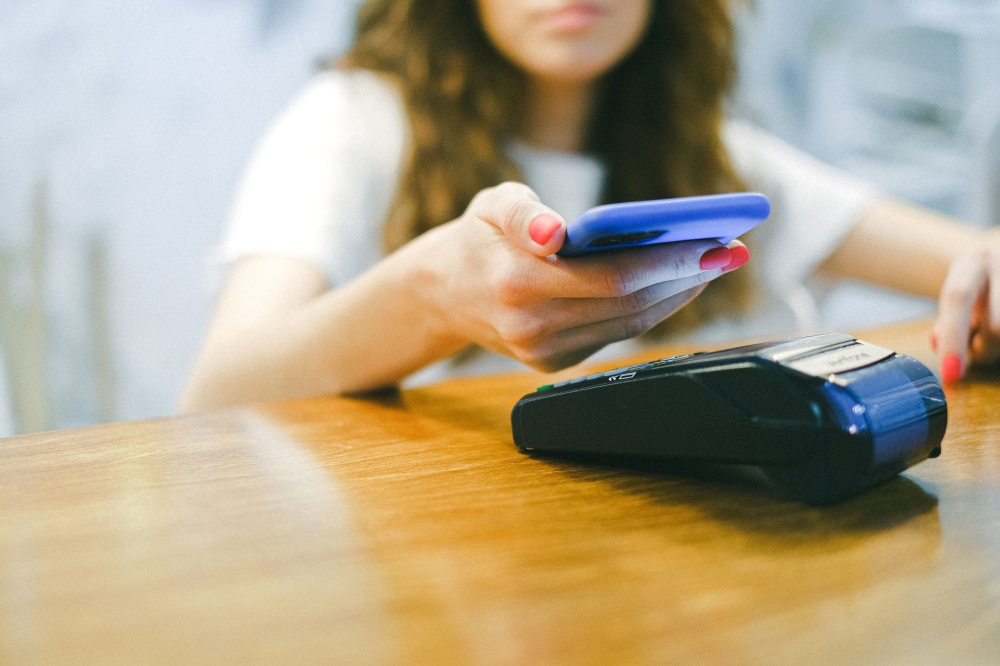

A four-member team at Singapore’s Nanyang Technological University is training AI tools on anonymised transaction data from a mobile budgeting app to help predict how governments' cash handout policies might influence spending. — Pexels pic
By Malay Mail
First Published: Sunday, 13 Sep 2026 12:59 PM MYT
Last Modified: Sunday, 13 Sep 2026 1:03 PM MYT
SINGAPORE, Sept 13 — Researchers in Singapore are developing an artificial intelligence tool that could help policymakers estimate how people might respond to economic measures such as cash handouts before the policies are implemented.
The tool, developed by four researchers at Nanyang Technological University (NTU), is designed to predict whether people are likely to spend or save additional money, what they might spend it on and how different policy designs could affect the outcome, The Straits Times reported today.
The project is among 14 worldwide selected for funding by OpenAI from more than 400 submissions to a call for proposals launched in April.
The NTU team, led by Nanyang Business School Provost’s Chair Professor in Information Systems Hyeokkoo Eric Kwon, will receive US$100,000 (S$126,800 or RM407,000) to develop and test the unnamed tool over the next six months.
The system is trained using transaction data from more than one million users of a South Korean mobile budgeting app, covering spending, retailers and monthly income between 2023 and 2025.
The data was collected from bank notifications, messages and emails sent to users when transactions were made, with names and bank account numbers removed and spending amounts, income and purchase times grouped into broader ranges.
Kwon said the system uses only anonymised data, with safeguards intended to prevent individual users from being identified.
“There should never be a situation where the data can only be matched to one profile. Depending on the level of sensitivity of the data, a profile is sufficiently anonymised if a minimum of three, five or 10 users share those exact same characteristics,” he was quoted as saying.
The researchers will then use AI agents to simulate how households might respond to proposed government policies.
For example, if a government were to give every citizen S$100 in cash vouchers, the system would estimate how much additional spending the measure could generate, where the money might be spent and how the results could differ under another policy design.
Kwon said conventional economic simulations often rely on rules based on interviews and surveys, which may not fully reflect how people behave when they actually receive money.
“Qualitative interviews and surveys are conducted to set these rules, but there is often a gap between how people actually behave and how they respond in surveys,” he said.
The researchers plan to test the AI against real-world spending data from South Korea, including transactions recorded before and after two rounds of government cash handouts distributed in July and September 2025.
Recipients had to spend the handouts at eligible retailers by November 2025, giving the team data against which to compare the system’s predictions.
The researchers also aim to make the tool open-source and capable of being used with different populations by February 2027.
The system is intended to analyse other information, including interests and political views, to improve its predictions and provide an explanation for how it reaches its conclusions.
Half of the OpenAI funding will be provided in cash, while the remainder will come as credits for subscriptions to OpenAI’s AI models.
KioskNews shows a cleaned-up reading view extracted from the publisher’s page — the original always lives on their site, not ours.