Section 18 of 2023 CEC Act in focus as poll panel defends decision-making before Supreme Court
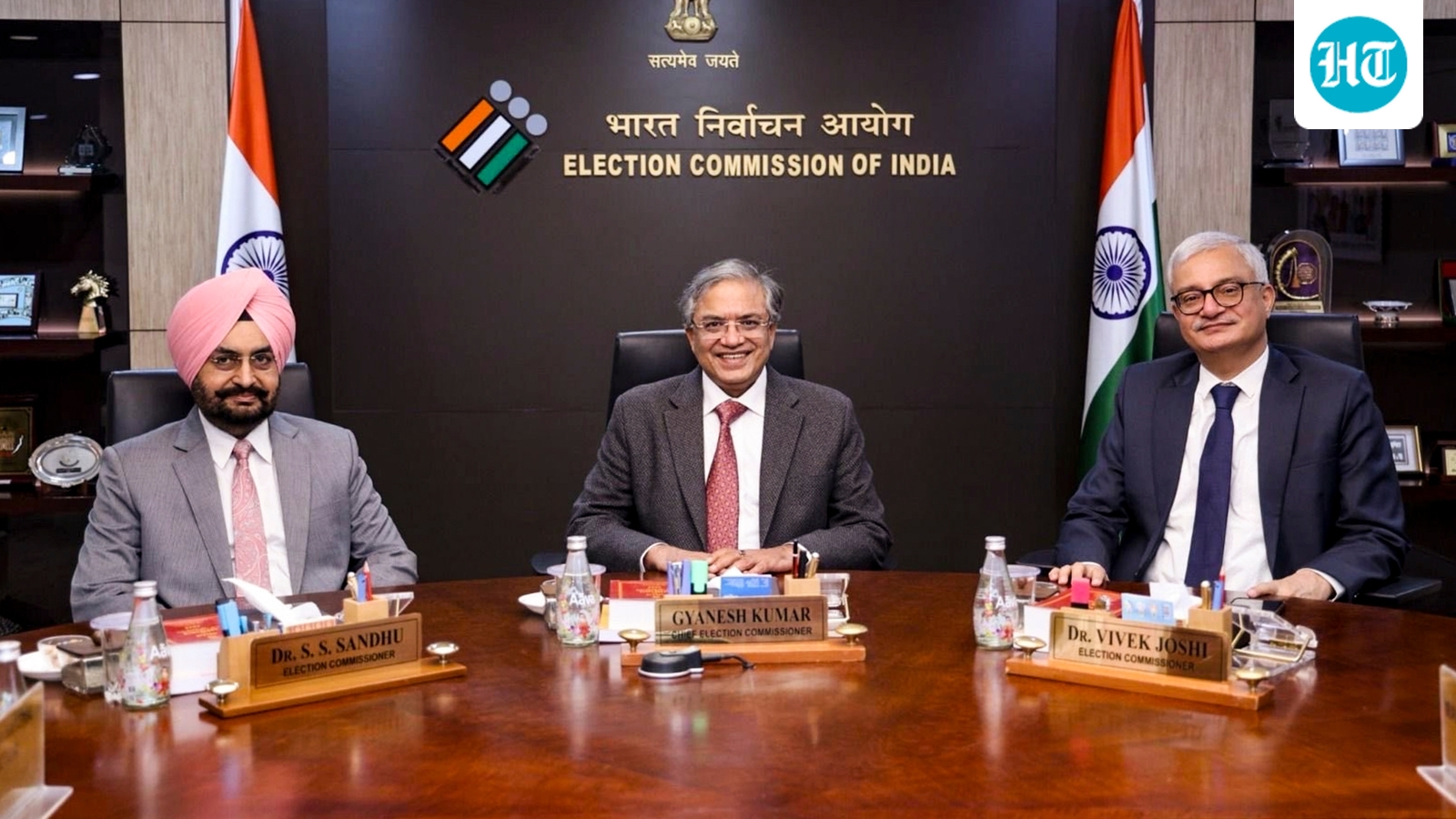
The Election Commission of India's counter affidavit filed in the Supreme Court on Monday, relied heavily on Section 18 of the Chief Election Commissioner and Other Election Commissioners (Appointment, Conditions of Service and Term of Office) Act, 2023.
The commission states that its three orders on the special intensive revision (SIR), issued on June 24, 2025, October 27, 2025 and May 14, 2026, were made unanimously. The Opposition petitioners, led by Rahul Gandhi, argue that the commission’s collective powers were exercised unilaterally by Chief Election Commissioner Gyanesh Kumar.
What the section says
Section 18 has two parts. Sub-section1 allows the commission, by unanimous decision, to regulate the procedure for transacting its business and to allocate that business among the CEC and the other commissioners. Sub-section (2) deals with the decisions themselves. All business must be transacted unanimously “as far as possible”, and if the CEC and the other commissioners differ, the matter is decided according to the majority opinion.
In a three-member commission, this means that two commissioners can prevail over the third, including the CEC. Under Article 324(3), the CEC is the commission's chairman, but the 2023 law gives the chair neither a veto nor a casting vote.
Not a new rule
Section 10 of the Election Commission (Conditions of Service of Election Commissioners and Transaction of Business) Act, 1991, had identical language. The 2023 Act changed the appointment process for the CEC and election commissioners and added Section 16.
That section protects a person who is or was CEC or an election commissioner from civil or criminal proceedings for acts done or words spoken while discharging their functions.
Petitioners have argued in court that this immunity did not exist in the earlier law, making the question of collective decision making more important.
What the ECI says
The affidavit, filed through deputy election commissioner Bhanu Prakash Yeturu on behalf of the commission, Kumar and election commissioners Sukhbir Singh Sandhu and Vivek Joshi, argues that a query, suggestion or objection raised by an individual commissioner during deliberations is not by itself a “decision” under Section 18.
Matters put up before the commission, it says, are discussed collectively and decided after considering the views expressed. Such decisions are taken at meetings or on noted files, and these decisions carry their signatures.
In an article published last month, The Indian Express reported that Sandhu and Joshi recorded written objections at least 14 times between November 2025 and August 2026.
The ECI later said “internal checks-and-balances" were standard practice within multi-member constitutional body, but all final decisions of the poll body are taken unanimously.
The poll panel reiterated its stance in the counteraffidavit filed in Supreme Court on Monday and said that it didn't violate the law governing its decision-making process.
What the petitioners say
The petitioners argue that the requirement of collective decision-making cannot be met by subsequent approval, or by treating individual objections as routine administrative exchanges.
They seek a declaration that no communication, order or direction can be represented as an act of the commission unless it is backed by a unanimous or majority decision. They say that if the exercise of collective powers by one member is established, it would raise questions about compliance with Article 324 of the Constitution and Section 18.
Also Read: RTI reveals Cabinet Secretariat sent election commissioners’ letters to CEC Gyanesh Kumar
What courts have said before
The Supreme Court in TN Seshan v Union of India (1995) held that the CEC has no superior authority over the other commissioners and that the commission is a multi-member body.
The hearing on the INDIA bloc petition will show whether the court reads Section 18 as setting a recorded process for decisions, or only as a rule for settling disagreements once they arise.
KioskNews shows a cleaned-up reading view extracted from the publisher’s page — the original always lives on their site, not ours.