BMKG records 118 earthquakes in Bandung since August 11
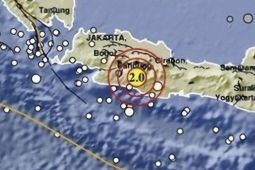
Bandung (ANTARA) - The Meteorology, Climatology, and Geophysical Agency (BMKG) recorded 118 earthquake events in Bandung District and surrounding areas between August 11 and September 17, 2026, as of 8 a.m. local time.
BMKG Director of Earthquake and Tsunami Wijayanto said here on Thursday that the 118 earthquakes ranged in magnitude from 1.0 to 3.4, with 13 of them being felt by residents.
"A total of 118 earthquake events were recorded, ranging in magnitude from 1.0 to 3.4, while 13 earthquakes were felt in Pangalengan, Talegong, Cisewu, and surrounding areas," Wijayanto said.
The felt earthquakes had an intensity of II-III on the Modified Mercalli Intensity (MMI) scale, meaning that the tremors were clearly felt indoors and, in some cases, felt like a passing truck.
According to BMKG's analysis, the earthquake epicenters formed a southwest-northeast linear pattern, approximately 5-8 kilometers west of the South Garut Fault's Kendang Segment and north of the Garsela Fault's Kencana Segment.
Wijayanto said the earthquakes were shallow and, tectonically, were associated with activity along a local fault in the area.
"The distribution of the earthquakes does not lie within the Garsela Fault's Kendang Segment, the Garsela Fault's Kencana Segment, or the Cicalengka Fault, but is located in an area that has not yet been mapped," he said.
He said the finding requires further study to identify the earthquake source that triggered the series of seismic activity in Bandung District and surrounding areas.
BMKG currently operates 35 seismic sensors across West Java to detect and record earthquake activity, including microearthquakes or small-magnitude earthquakes, with a high level of precision.
The agency will continue to monitor the seismic activity and provide updated information to relevant stakeholders and the public.
It also urged residents to remain calm and not be influenced by unverified information.
Related news: Geology agency conducts study on fault causing Bandung earthquake
Related news: Ministry disburses various aid for earthquake victims in Bandung
Related news: BNPB sends financial, logistical aid to earthquake victims in W Java
Translator: Ilham Nugraha, Katriana
Editor: Azis Kurmala
Copyright © ANTARA 2026
KioskNews shows a cleaned-up reading view extracted from the publisher’s page — the original always lives on their site, not ours.