Trump signals retreat from Bombardier sales ban, citing Kansas jobs
Anna Moneymaker/Getty Images News
President Donald Trump signaled Monday that he would abandon his threat to block Canadian aircraft manufacturer Bombardier (BDRAF)(BDRBF)(BOMBF) from selling jets in the United States, citing the company's employment and manufacturing ties to Kansas.
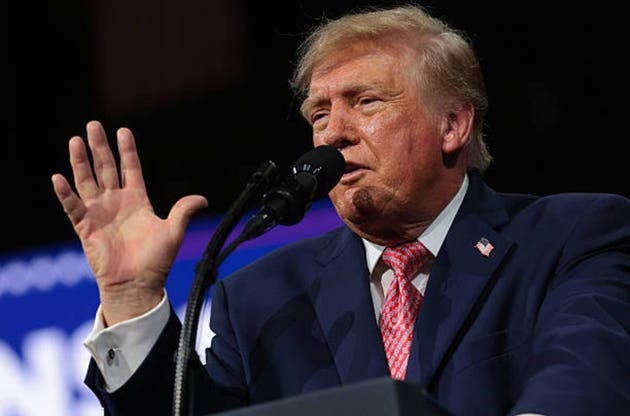
Speaking at a campaign rally in Park City, Kansas, in support of Republican Senator Roger Marshall's reelection bid, Trump credited the senator with drawing his attention to Bombardier's operations in the state. Although he did not identify the company by name, Trump indicated that he would support an aircraft manufacturer he had previously regarded primarily as a Canadian business.
For investors, Trump's apparent reversal could remove a significant regulatory threat to Bombardier's access to its largest market. The United States accounts for more than half of the company's revenue, making any restrictions on aircraft sales potentially disruptive to its business. However, the president's remarks did not establish whether his administration would formally withdraw its threatened restrictions.
The shift comes as Bombardier expands its operations in Wichita, where it maintains its U.S. headquarters. Last week, the company announced plans to invest $50 million in a new North American Learning Center to train aircraft technicians and mechanics. Bombardier employs more than 1,200 people in Kansas and maintains a U.S. supply chain involving approximately 2,800 companies across 47 states.
Trump threatened in September to prohibit Bombardier jet sales in the United States as trade tensions with Canada intensified following the collapse of tariff negotiations in August. The proposed restrictions drew opposition from Marshall and fellow Kansas Republican Senator Jerry Moran, both of whom urged the administration to consider the company's contributions to the state's aerospace industry and employment.
The apparent change in policy underscores the political complications of Trump's trade dispute with Canada ahead of November's midterm elections. Retaliatory tariffs and other trade restrictions have raised concerns about manufacturing supply chains and consumer prices, particularly in states where businesses depend on cross-border commerce.
Dear Readers: We recognize that politics often intersect with the financial news of the day, so we invite you to click here to join the separate political discussion.
KioskNews shows a cleaned-up reading view extracted from the publisher’s page — the original always lives on their site, not ours.