I’ve lived in my suburb for more than half my life. I would rather be elsewhere
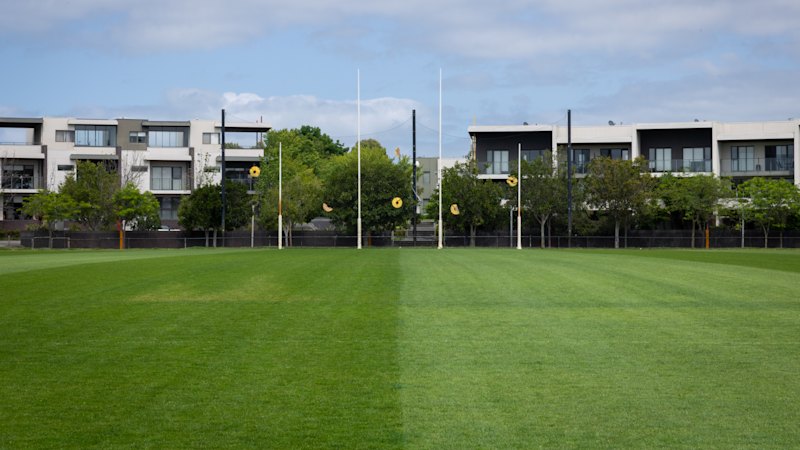
These days, it seems to me that everything in my suburb is borrowed from elsewhere. The streets are called Shakespeare and Anfield and Trentbridge, like names pulled from a British library. At Gigi’s Kiosk, the food stall behind the lake, they serve arancini balls, Sicilian cannoli and mozzarella sticks, as if we’re in Italy. The huge white disc of the kiosk roof, so space-age and otherworldly, looks like a UFO waiting to return to a place behind the stars.
We residents of Mulgrave arrive mostly from Shanghai, Mumbai and the islands of South-East Asia. Listen: the family next door speak Tamil in their kitchen, in an Aussie squall from their driveway and knew my grandmother decades ago from their upbringing in Bombay. We residents have origins in a world outside these kitsch houses, by personal bonds to places far beyond the borders of this suburb.
I have lived in Mulgrave for more than half of my life. I would rather be elsewhere. Mulgrave, Mul-grave: hear in this name the sound of soil overturning in a burial pit.
On summer nights, through flyscreen doors or open windows, I hear the drone of cement trucks heading down the Monash Freeway to expand another south-eastern suburb. On and on, excavating and flattening and “developing”. If I look across the streets of Mulgrave, I will scorn those kitsch modern houses, designed on computer programs to auction for millions of dollars, these tacky rows of uniform grey cubes that look like oversized Lego blocks.
What happens when you look down at the place where you live? What happens to your understanding of home?
Long before my family arrived here, Waverley Park was the pride of Mulgrave. That once-great football stadium hosted the 1991 AFL grand final. The stands could seat 92,000 people. But footy fans loathed the trek out to Mulgrave, those long nights post-loss spent in endless traffic, the dodgy, infrequent buses, the ridiculous distance to the train station. The AFL closed the stadium in 1999. The fanfare moved elsewhere. These days, my hapless young Tigers rent the last remaining grandstand before their real home on Punt Road is ready. I’ve seen those contented home owners waiting around the chain-link fence for the team to train.
In 2008, out of those fields of red clay, the old sprawling car park of the stadium, Mirvac decided to develop a housing estate. Back then, my parents bought a plot of land. There were no other properties when we arrived. There was no kiosk, no boardwalk, no arancini balls.
In those years, when there were more empty plots than homes, Mulgrave was enchanting. From my window, I would watch fantastic yellow diggers clank across the fields. Those hissing pistons were the size of my head. One day, my best friend found a hole in the fence that surrounded a grimy lake in the construction site. We climbed the rickety scaffolding on the half-finished houses, tossed screws to shatter windows and saw the sunset crimson the shards of glass at our feet.
We’d heard stories of riots after football games, cars burned and tossed in this rainwater pit, of a kid from Springvale who drank too much goon and drowned. We dared one another to swim in the filthy water. We revelled in this landscape that belonged to us. As my friend shivered and laughed in the mud, I invented stories of the people summoned to this abandoned waterway, of those degenerates who could never leave.
But, of course, Mirvac finished developing. They had repurposed that barren car park for modern homes with faux-sandstone facades. They cleaned the lake and tidied the shore and I began to despise my neighbourhood. Money had arrived. Comfort had spread. This suburb became like everywhere else in outer Melbourne: clean, uninspiring, devoid of distinction. Where so many rejoiced at this development, I hated what Mulgrave had become.
To contend with my estrangement, to preserve what had been erased, I wrote a novel and set it in this landscape before the era of painful change. In The Degenerates, I wanted to reclaim the dirty wonder of Mul-grave before my suburb was sanitised and sold.
The other day, I was on my usual walk around my neighbourhood, past the British street-names, the Italian delicacies, the alien kiosk. Along the redeveloped lake was a sign. “Danger: Water,” it said. “Do not swim.” Down a shore now landscaped to nurture native saplings, I found a man sitting over the fence with two fishing rods. He wore a grimy puffer and speed-dealer sunglasses. A woman and her designer poodle went the long way to avoid him.
“Have you caught anything?” I said.
“Nah.” His fingers were black from cigarettes. “Nothing in here. But maybe redfin.”
“How big are the redfin?”
“Only little.”
“I wonder how they got in here.”
“I wouldn’t eat them, anyway.” He wouldn’t put down his phone. “I don’t eat the freshwater fish. Only saltwater.”
Twenty years ago, this same lake was home to sharks and submarines, drowned teenagers and blown-out V8 engines, the symbols of our dreams and truest nightmares. Now, beside me, a well-adjusted father and daughter stared at this lout in disquiet. From the shade of the kiosk, we watched him cast his line. What was he doing? Thank God this lout had come to boring, moneyed Mulgrave. I was smitten. He wasn’t here to succeed. He wasn’t out to profit. Tell me what this wayward angel might catch out here. Tell me, please, what we will keep and never throw away.
Raeden Richardson is an author and essayist. His first novel, The Degenerates, was published in 2024.
KioskNews shows a cleaned-up reading view extracted from the publisher’s page — the original always lives on their site, not ours.