States to Nandan Nilekani task force: Give weightage to Class 12 board exam scores in NEET
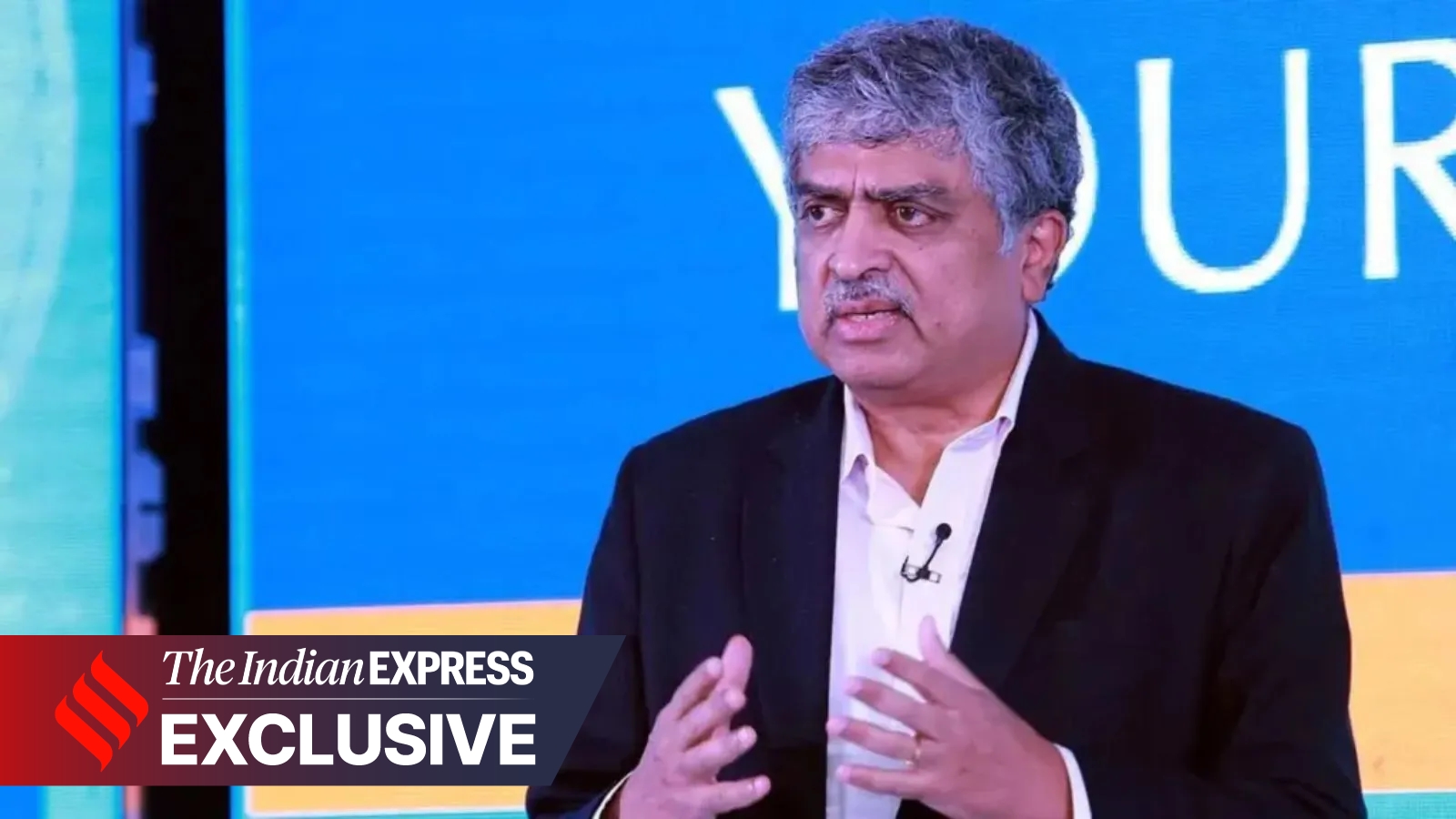
Providing weightage to Class 12 board exam scores in NEET-UG has emerged as a key proposal from several states cutting across the political divide during “consultative meetings” held so far with the Nandan Nilekani-led task force on exam reforms, The Indian Express has learnt.
Sources told this newspaper that some of the other proposals discussed in these meetings include offering more than one attempt in a year and adopting a Computer Based Test (CBT) mode.
“Irrespective of differing opinions about the NEET exam and political differences, a majority of states highlighted the importance of giving weightage to Class 12 board marks. A majority pointed out that as NEET is a common exam, dependence on one test ends up promoting coaching institutes due to which students are not preparing well for the board exams,” the sources said.
Some of the stakeholders were of the view that such dependence has also led to an increase in the number of “dummy schools”. “As soon as students pass the Class 10 exams, they take admission in dummy schools and rely on coaching institutes,” the sources said.
Government officials said that, except for Tamil Nadu, all the other southern states supported conducting NEET in CBT mode instead of the pen and paper test (PPT) mode. They said that discussions are also on about providing both “CBT and PPT” mode of conducting the exam, at least initially.
“There are discussions on giving students the option of choosing between PPT as well as CBT modes because they are preparing for PPT mode at present and, before switching to CBT mode completely, need to be prepared. Even when the IIT-JEE shifted to CBT, students were given both choices initially… the final decision on format will be taken by the Ministry of Health,” an official said.
“States have also suggested more than one attempt in a year so that the stress on the students gets reduced a little. Other concerns the states have highlighted are that the Centre should invest in CBT infrastructure, which can be used for testing and rehearsals,” the official said.
Story continues below this ad
One centre per district to ensure that students do not have to travel far for the exams, setting of question papers closer to the examinations, and institutional arrangements for coordination between Central testing agencies, state governments and district administrations, were also suggested.
Asked about Tamil Nadu’s long-standing opposition to NEET, the official said, “They highlighted that after the introduction of NEET, the share of candidates from the state board has gone down in comparison to CBSE and ICSE board schools in Delhi… In engineering, states have the flexibility of state quota seats at private institution seats. But in the case of medical entrance, there is only one common exam, NEET…”
The six-member High Powered Task Force (HPTF) was announced by Prime Minister Narendra Modi after Dharmendra Pradhan tendered his resignation as Education Minister following the student protests at Jantar Mantar on July 25.
The task force has completed meetings with all the southern states, Jammu and Kashmir, and Odisha, and is scheduled to hold consultations with northern states in the coming days.
Story continues below this ad
The Indian Express has previously reported that the task force held 18 high-level meetings and 40 consultative meetings within the first two months of its formation. The committee was expected to submit its report by October but has been given time till January 2027, said officials.
KioskNews shows a cleaned-up reading view extracted from the publisher’s page — the original always lives on their site, not ours.